

Trust and connection transform health programs from ‘services delivered’ into ‘services embraced
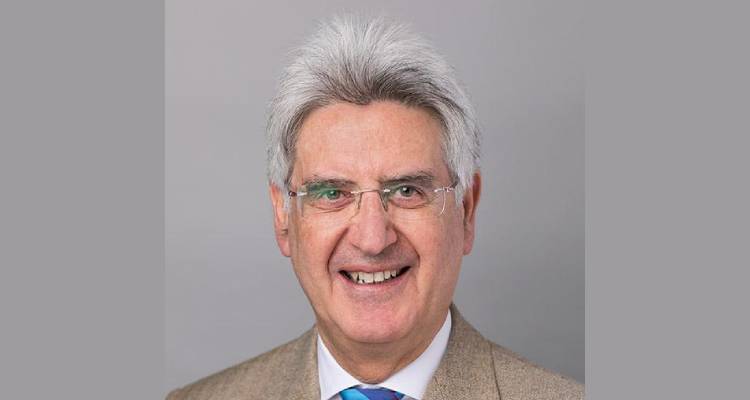
Francesco Arezzo, President of Rotary International for 2025-26, in an interaction with Kalyani Sharma explains how India’s polio legacy continues to power global health programmes. He emphasises the central role of trust, community engagement, and people-driven strategies in improving vaccine uptake, strengthening immunisation systems, and advancing preventive health. He also outlines how Rotary India’s scale, innovation, and volunteer network are shaping replicable health models for the world


India’s polio eradication story has become a global benchmark. How can the strategies used in India such as surveillance, strong community mobilisation, and last-mile delivery- be applied to strengthen global public health systems today?
India’s polio eradication journey remains one of the most instructive public health success stories in modern history. India has been Polio free since 2014 and on March 27, 2024, India marked the 10-year anniversary of being certified Polio Free by the World Health Organisation (WHO). It demonstrated that when surveillance, social mobilisation, and last-mile delivery work in harmony, even the most complex environments can achieve universal immunisation.
Strong and sensitive surveillance systems formed the backbone of India’s strategy. They enabled early detection, rapid response, and micro-planning at an unprecedented scale. Today, as the world nears global eradication, this same surveillance architecture continues to be essential for detecting poliovirus—especially asymptomatic circulation—and informing strategic vaccination responses.
India’s approach also proved that community engagement is indispensable. The mobilisation of local leaders, volunteers, and trusted voices created high levels of vaccine acceptance in communities that were once difficult to reach. This people-centered model is now informing global health programmes ranging from measles and rubella elimination to outbreak detection and maternal-child health initiatives.
Lastly, India demonstrated that last-mile delivery is both a logistical and social operation. Door-to-door vaccination, detailed micro-plans, and partnerships across government, civil society, and Rotary ensured coverage in diverse geographies. These pillars — surveillance, community trust, and last-mile reach — remain the foundation on which strong global health systems must continue to build.
According to the UN, India recorded over 9 lakh zero-dose children in 2024, highlighting persistent gaps in routine immunisation. What steps must countries like India take to close routine immunisation gaps, and how can Rotary’s experience in polio help address these challenges?
India has made remarkable progress in strengthening its health systems, yet the presence of more than 9 lakh zero-dose children in 2024 is a reminder that routine immunisation must remain an urgent national priority. Reaching the last mile requires unwavering political commitment, reliable primary healthcare infrastructure, and deep community-level trust building, particularly in underserved and remote regions.
These children represent invisible pockets of vulnerability, where immunity is weak or entirely absent. If the poliovirus enters these areas, it can circulate silently, spread rapidly, and potentially undo decades of hard-won progress. Such gaps don’t just weaken community protection—they create the very conditions in which both wild poliovirus and vaccine-derived strains can survive and multiply. Even one missed dose can break the protective shield built over generations. Ensuring every child receives timely vaccination is therefore not just important—it is critical to keeping the virus from finding a foothold again.
For more than 30 years, Rotary and our partners have led the global fight to eradicate polio. Our PolioPlus program was the first initiative to take on polio eradication at scale by vaccinating children across continents. As a core partner in the Global Polio Eradication Initiative (GPEI), Rotary continues to drive advocacy, fundraising, volunteer mobilisation, and awareness-building. Rotary members have contributed over US$2.9 billion and countless volunteer hours to help protect more than 3 billion children in 122 countries from this paralyzing disease. Our advocacy efforts have also helped governments commit over US$11 billion to the global eradication effort.
Our experience shows that sustained community engagement, local partnerships, and consistent door-to-door outreach are indispensable in closing immunisation gaps. As India renews its push to reach every child, Rotary members in India stand ready to support—mobilising volunteers, enhancing public awareness, and ensuring that no child, regardless of geography or circumstance, is left unprotected from life-saving vaccines.
The infrastructure created for polio eradication from cold-chain capacity to community-level volunteers now supports measles, rubella, and cervical cancer prevention. How can this infrastructure be further leveraged to accelerate national goals for measles-rubella elimination and HPV vaccination?
The infrastructure and partnerships built to eradicate polio represent one of global health’s most consequential investments and they remain invaluable assets for accelerating measles-rubella (MR) elimination and scaling HPV vaccination. To fully leverage this legacy, countries should adopt a deliberate, systems-level approach that uses existing strengths while closing remaining gaps.
First, the cold-chain and logistics networks established for polio vaccination can be repurposed immediately to ensure reliable vaccine storage and timely delivery for MR and HPV programmes — particularly for school-based campaigns and outreach to hard-to-reach communities.
Second, the community volunteer networks/channels and social-mobilisation strategies that earned community trust during polio drives can be used to raise awareness, counter misinformation, and generate demand for both MR and HPV vaccines.
Third, polio’s surveillance and data systems including rapid reporting and microplanning should be integrated with routine immunisation information systems to identify zero-dose children, monitor coverage in real time, and target interventions where they are most needed.
To translate these capacities into results, governments and partners must prioritise coordination: align national immunisation plans, provide refresher training for frontline workers, and fund the maintenance of cold-chain and data infrastructure. School health platforms should be strengthened for adolescent HPV delivery, with gender-sensitive communication and consent processes.
Rotary’s work has repeatedly shown that people accept health interventions not simply because they are available, but because they trust the person delivering them. Whether during polio eradication or during today’s vaccination and screening drives, it is the long-standing presence of Rotary members in communities- listening, reassuring, and engaging at a personal level- that shifts behaviour. Trust and connection transform health programs from ‘services delivered’ into ‘services embraced,’ ensuring that communities become active partners in their own wellbeing.
Finally, sustained political commitment and multi-sector partnerships involving governments, civil society, the private sector and organisations like Rotary are essential to secure financing and community support.
How do you see trust, empathy, and community engagement playing a decisive role in improving vaccine uptake, maternal-child health, and preventive care across low-resource settings?
In low-resource settings, trust and empathy are often more powerful than technology or infrastructure. Families are far more likely to vaccinate their children, attend antenatal clinics, or participate in preventive screenings when they feel respected, understood, and included in the process.
Empathy-led conversations, especially by community volunteers, women leaders, and local health workers, help overcome fear, misinformation, and cultural barriers. When communities are engaged as partners, not recipients, health-seeking behaviour rises dramatically. This is why Rotary’s approach emphasises relationship-building: because lasting health outcomes begin with human confidence, not just medical access.
With India being one of the fastest-growing Rotary regions, how is Rotary in India helping develop scalable and replicable health models- especially in immunisation, screening, and preventive health, that other countries can adopt?
India is today one of Rotary’s fastest-growing regions, with the second-highest membership globally and the second-highest fundraising contribution across markets. This scale, combined with deep community presence, allows Rotary in India to design and demonstrate health models that are both impactful and replicable.
With nearly 1.7 lakh Rotary members across 4,600+ clubs in India, Rotary continues to be instrumental in strengthening routine immunisation outreach, supporting MR and HPV awareness and immunisation efforts, and mobilising communities using the trust and networks established during the polio campaign.
In addition, Rotary-led models in India such as mobile screening units, school-based health education, maternal and child health camps, and community-level NCD (Non-Communicable Diseases) screening programmes are providing scalable templates that other countries can adapt to their own contexts.
By combining local innovation with global collaboration, Rotary members in India continue to demonstrate how community-driven, volunteer-led health initiatives can complement national priorities and help other regions accelerate progress in preventive and public health.
- Advertisement -
