

Inaugural International Ayurveda & Wellness Conclave 2026 charts Kerala’s global roadmap
124 delegates from 34 countries convene in Kozhikode as discussions span policy, research, education and medical value travel under the Kerala Brand

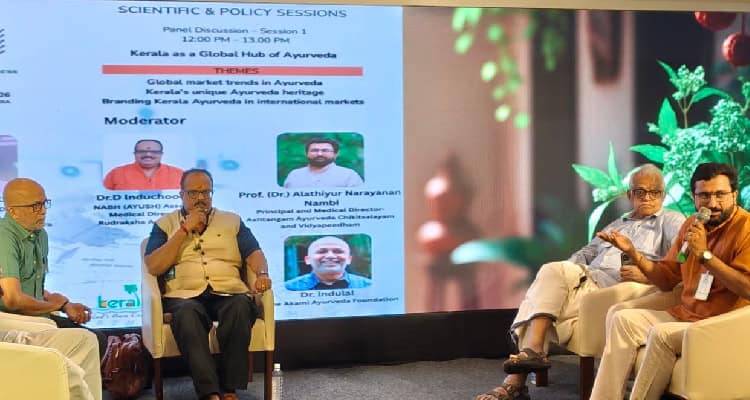

The First International Ayurveda & Wellness Conclave 2026 and the International Ayurveda Yoga Ambassadors Tour were held on 02–03 February 2026 in Kozhikode, Kerala, India. The conclave was organised by the Ayurveda Promotion Society (APS) in association with the Department of Tourism and allied tourism and health organisations. The event was covered by Express Healthcare.
The conclave aimed to promote Ayurveda under the ‘Kerala Brand’ by showcasing its uniqueness and positioning Kerala as a domain leader in wellness tourism at the global level. The two-day event brought together 124 international delegates from 34 countries, including wellness practitioners, educators, yoga instructors, digital influencers, institutional leaders and policy representatives. The event focused on fostering dialogue with global wellness markets through experience-based engagement to enable academic exchange, research collaboration and institutional partnerships.
Delivering the welcome address, Sajeev Kurup, Chairman, Organising Committee, expressed gratitude to the Ministry of Tourism, the Ayurveda Society and other sponsors for their support in organising the conclave, and acknowledged the participation of delegates. O. Sadasivan, Honourable Mayor, Kozhikode Municipal Corporation, stated that Kozhikode was pleased to host the conclave and referred to the discussions centred on the ancient practice of yoga, reflecting optimism among delegates.
The keynote address, delivered by K. Biju IAS, Principal Secretary, Tourism & Public Works, Government of Kerala, set the tone of the event, by referring to the relevance of holistic health, well-being and sustainability in the global health landscape. He highlighted the convergence of traditional knowledge and contemporary science, and alignment with evidence-based approaches shaping global health systems. He noted challenges including lifestyle disorders, mental health conditions, ageing populations, antimicrobial resistance and rising healthcare costs, and pointed to the limitations of intervention-based medical models. The shift towards preventive and integrative systems was emphasised, with wellness identified as a public health priority.
Ayurveda and Yoga were positioned as complementary systems supporting long-term well-being. Kerala was described as practising Ayurveda as a living medical system rooted in clinical application and intergenerational knowledge transfer, with preservation of classical texts, Ashtavaidya traditions, and integration of ecology, diet, lifestyle and seasonal rhythms. Reference was made to institutional education, regulated manufacturing, tourism and government support functioning within a unified framework. The conclave was presented as a policy initiative to position Kerala as an international hub for Ayurveda, Yoga and wellness, grounded in authenticity, quality assurance, ethical practice and economic impact.
Ayurveda and wellness were identified as health and knowledge assets. The selection of Kozhikode as host city was linked to its historical role in the exchange of knowledge, medicine and ideas between East and West, and its positioning as a gateway for wellness and collaboration.
During the felicitation address, P. Madhavan Kutty Warrier, Managing Trustee, Kottakkal Arya Vaidya Sala and Principal Adviser, Organising Committee – IAWC 2026, stated that the session marked the opening of the first International Ayurveda and Wellness Conference 2026, organised by the Department of Tourism in collaboration with APS and allied bodies, and noted that it would be followed by the International Ayurveda and Yoga Ambassadors’ Tour. The event coincided with Ayurveda Sena’s Foundation Day and the conclusion of the centenary celebrations of its charitable hospital. A message from the Honourable Prime Minister of India, Narendra Modi, referred to transformation in the Ayurveda and wellness sector over the past decade, citing export growth from ₹3,000 crore in 2014 to ₹6,500 crore at present and beneficiaries from nearly 65 countries, along with promotion through platforms including G20 and BRICS.
Building on these national and institutional developments, the conclave transitioned into focused thematic discussions.The first panel discussion examined global market trends in Ayurveda and positioning Kerala Ayurveda internationally. The discussion addressed global healthcare and wellness requirements, demand across complementary systems, product quality and suitability for international markets. The need to align products and services with global specifications while retaining core principles was highlighted, alongside bridging Ayurveda and management systems without compromising traditional values. Institutional history was traced to the early 20th century, with reference to a shift in the mid-1950s towards strengthening medical practice rather than hospitality-led models. Challenges in early acceptance, treatment duration and patient discipline were noted as formative phases. Experiential application of Ayurveda in Kerala, including immersive treatment practices and preventive care, was discussed. Traditional practices such as oil application and Takradhara were referenced, with emphasis on preserving methodologies rather than reducing them to modern equivalents. The role of education was discussed in the context of Kerala’s 18 Ayurvedic colleges and potential for international engagement. Regulatory challenges affecting ingredients such as Ashwagandha, Teluspora carica and Bella Zidakodi were noted. The discussion linked global shifts towards personal accountability in health systems with preparation for structured wellness services for domestic and international audiences.
Extending the discussion from markets and systems to philosophical and clinical integration, the second session focused on the relationship between Ayurveda and Yoga. The second panel examined wellness through an Indian and Ayurvedic framework, defining it as balanced functioning of body, mind and inner self. The role of yoga in maintaining stability and influencing physical health was discussed. Connections between Ayurveda and yoga were explored through concepts including chakras, nadis, Agni, dhatus and purification practices such as Panchakarma and Shatkriyas. Integration at clinical and programme levels was described, including cleansing therapies followed by structured yoga practice. The influence of therapies on energy systems, marma points and prana flow was discussed, with clinical experiences reflecting sustained integration in routine practice.
The discourse then moved from clinical integration to the question of validation and global acceptance. The third panel addressed research and international acceptance. Global shifts towards personalised and preventive healthcare and preference for plant-based ingredients were aligned with Ayurveda principles. Research was positioned within wellness frameworks, outlining pillars of safety, efficacy and mechanism of action, with safety identified as mandatory. The need for toxicity studies, standardisation, dosage validation and collaboration with modern research tools was emphasised. Evidence supporting whole-system, individualised Ayurveda over single-drug interventions was referenced, including research recognised by the European Society of Integrative Medicine and publication in a rheumatology journal. Distinctions between wellness claims and disease-treatment claims were discussed. Experiences from integrative oncology and palliative care settings were shared, referencing quality-of-life outcomes and management of treatment-related complications, and reinforcing the complementary role of Ayurveda and modern medicine.
Concluding the series of scientific and policy sessions, the final panel examined the travel and economic dimension of Ayurveda. The fourth panel examined medical value travel in Ayurveda. Kerala was identified as offering curative, preventive and rejuvenative care supported by hospitals, clinics, trained physicians, therapists and educational institutions. Availability of herbs and medicines, environmental conditions and cultural integration were referenced. The need to reposition Ayurveda beyond relaxation-focused perceptions was discussed, alongside accreditation, documentation, NABH standards and the role of the Ministry of AYUSH. Shifts towards experience-driven travel were noted, as well as contrasts between symptom-focused models and root-cause approaches. Investment in research, structured methodologies and insurance inclusion was emphasised. Insurance coverage gaps in Europe were identified, with reference to policy intervention to enable cross-border claims. The importance of environmental and infrastructure factors influencing treatment ecosystems was discussed. Regulatory frameworks governing Ayurvedic practice in Kerala were clarified, with mandatory qualifications and formal oversight noted.
The conclave concluded with a consolidated focus on positioning Kerala as a structured and policy-aligned hub for Ayurveda and wellness. Across sessions, discussions underscored the importance of research validation, education, accreditation, medical value travel frameworks and international collaboration in strengthening Kerala’s global engagement in Ayurveda and Yoga, while collectively reflecting the medical tourism value of India.
- Advertisement -
