

What 2026 holds for AI-led diagnostics, fully digital workflows, and wider access to modern dental care
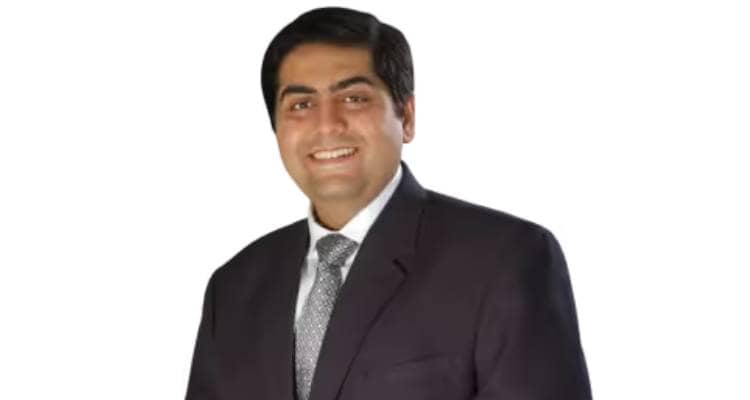
Dr Jaineel Parekh, Orthodontist, Laxmi Dental, stresses that 2026 is set to mark a defining shift for India’s dental ecosystem


The dental industry is entering a transformative phase. The year 2026 would be guided by three interconnected trends: the rise of AI in diagnostics, the adoption of fully digital workflows in dental practices, and the expansion of modern dental services to wider populations. For stakeholders from clinic owners and dental chains to public health planners and technology vendors understanding these dynamics is critical to making strategic investments and policy decisions.
AI-driven diagnostic
AI is no longer a novelty in healthcare diagnostics. In 2026, dental diagnostics will move from pilot to mainstream adoption. Image-based tools powered by machine learning will assist in spotting early caries, periodontal disease, bone loss, occlusion issues and even subtle changes in anatomical structures that human eyes may miss. The implications are profound: earlier detection, reduced human error, faster turnaround and improved patient outcomes.
In India, where the dental-care access gap is still wide, AI holds significant promise. Imaging tools embedded with AI can assist smaller practices in tier-II and tier-III towns to offer specialist-level diagnostics without the need for onsite radiologists or extensive training. Vendors are already offering cloud-based AI modules that integrate with intra-oral cameras, CBCT (cone-beam computed tomography) scans and panoramic radiographs making diagnostics more scalable and accessible.
Beyond imaging, voice-based AI assistants will begin to assist in patient history intake, triage and decision support. For example, a patient presenting with pain and swelling can be triaged through an AI module which identifies red-flags and recommends urgent referral thus optimising workflow and reducing delays.
However, 2026 will also be the year when regulatory and governance frameworks catch up. As AI tools get deeper into diagnostics, questions around data privacy, algorithm bias, validation, and medico-legal liability will come to the fore. Integrators will need to demonstrate not just performance, but explainability and safety.
Fully digital workflows
The second major shift is the transition of dental practices into fully digital workflows. In 2026, the expectation will be that a modern dental clinic or chain operates with seamless digital integration from appointment scheduling, patient records, imaging, treatment planning, prosthetic design, to billing and follow-up care.
Chair-side intra-oral scanners will become more affordable, allowing for digital impressions and CAD/CAM-fabricated restorations in-house or via cloud-connected labs. This reduces turnaround times, improves fit and patient experience. With integrated software platforms, clinicians can visualise 3D treatment plans, implant placement, orthodontic movement and share these with patients during consultations to enhance comprehension and consent.
One of the key enablers will be cloud-based practice management platforms that integrate with diagnostics, imaging, lab-connectivity and patient engagement modules. These platforms offer dashboards for clinic KPIs, track chair utilisation, automate recalls, monitor inventory and integrate with e-pharmacy or consumables ordering. The net effect: improved operational efficiency, reduced downtime and better patient throughput.
Tele-dentistry will also mature in 2026. Remote consultations, aided by smartphone images and connected intra-oral cameras, will enable triage and follow-ups outside the clinic. This is particularly relevant for rural and semi-urban India, where specialist access is limited. The workflow will link remote assessment with local clinic intervention seamlessly.
Wider access to modern dental care
Despite progress, India still faces significant oral-health access gaps. In 2026, modern dental care must rise beyond metro clusters to reach tier-II, tier-III cities and rural areas. The convergence of AI diagnostics and digital workflows offers a structural opportunity to broaden access.
Consider a hub-and-spoke model: a central advanced dental centre hosts imaging, lab, specialist services, while satellite clinics or mobile units use AI-enabled imaging and tele-dentistry to deliver care locally. In such a model, diagnostic bottlenecks are removed, specialist review happens remotely, and local providers deliver treatment guided by digital decision-support.
Moreover, financing models will evolve. Micro-insurance for dental wellness, subscription-based preventive dental programmes, and public–private partnerships will scale. The government’s push for digital health records and tele-health frameworks will support integration of dental services into broader primary-care delivery. Public health campaigns in 2026 will increasingly emphasise oral care as part of non-communicable-disease (NCD) prevention strategy positioning dental wellness as part of overall health.
Fully digital workflows rely on stable internet connectivity, cloud services and reliable power. In semi-urban or rural India, these infrastructure gaps remain a constraint. Until these are addressed, hybrid workflows will prevail. While costs of digital tools are falling, large-scale adoption in smaller clinics will depend on clear ROI. Practices must make the business case.
The year 2026 stands to be a watershed moment for dentistry in India. The combination of AI-led diagnostics, fully digital workflows and wider access to modern dental care presents a trifecta of opportunity. For the first time, small clinics in non-metropolitan areas can aspire to deliver high quality, tech-enabled services at scale and patients across geographies stand to benefit.
Yet, the road ahead is not without its challenges. Realising the promise will require strategic investment, system thinking, workforce readiness and regulatory clarity. For stakeholders who plan, 2026 offers a moment to re-architect dental care business models, deliver superior patient outcomes and broaden access in meaningful ways.
For the Indian dental ecosystem, this is not just a technological upgrade it is an inflection point. The practices that embrace change early will set the pace, redefine patient expectations and capture value in a digitally accelerated future of oral health.
- Advertisement -
