

Mental health in Budget 2026: Infrastructure is a start, awareness is the real shift
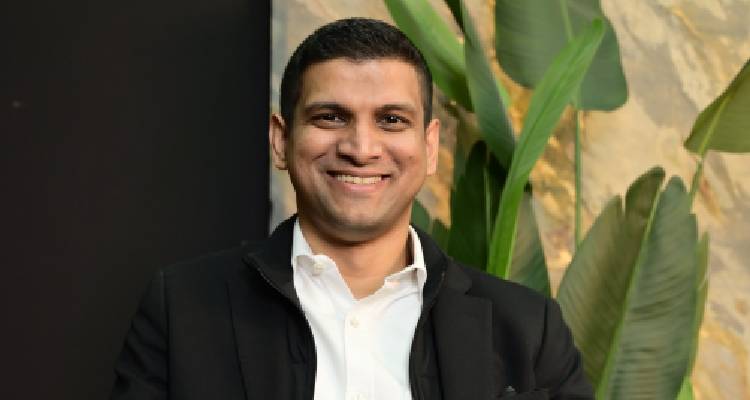
Deek Parassini, Wellbeing Coach, Truth-based transformational guide and Founder of LIAP Foundation stresses that mental health must be addressed by reducing societal pressure, strengthening emotional awareness, and creating supportive environments at home, work, and in society.


This year’s Union Budget spoke about mental health with seriousness. New national-level institutes. Expansion of existing centres like NIMHANS. On paper, this is progress. And it should be acknowledged as such.
For years, mental health was either ignored or whispered about. The fact that it now finds space in national policy tells us one thing clearly: the emotional distress of people, especially young people, can no longer be overlooked.
But acknowledging pain is only the first step. Understanding its roots is the real work.
Mental health is not just a medical problem
Mental health is often approached as if something is “wrong” with individuals. As if people need fixing. As if anxiety, burnout, and confusion appear in isolation.
That is not the full truth.
Most people today are not struggling because they are weak. They are struggling because the environment they live in constantly tells them they are insufficient. Be better. Be faster. Be richer. Be admired. Be successful. And do it all before a certain age.
When life becomes a race without rest, the mind naturally begins to resist. That resistance is labelled as stress, anxiety, or depression. But very often, it is simply the mind asking for meaning, not medication.
Infrastructure can support, but it cannot replace awareness
Institutes matter. Counsellors matter. Accessibility matters. Especially for those who have no support system, no language to express what they feel, and no one who listens without judgement.
But buildings cannot teach balance. Helplines cannot redefine success. Policies cannot replace human understanding.
If the same pressure-filled lifestyle continues, we will only increase the number of people seeking help, without reducing the causes that push them there.
Healing begins at home, not only in hospitals
A society’s mental health is shaped first at home.
A mother who takes care of her family — her children, her partner, her parents, her in-laws — and gives herself fully to that role is performing an act of deep service. If the universe recognises this as sacred, then society must stop measuring worth only through income, titles, or public recognition.
At the same time, service should never mean losing oneself. Over-giving without awareness is where many women silently break. Balance is not selfishness. Balance is intelligence.
When families honour rest, emotions, and individuality, mental health is protected long before therapy is needed.
What young minds are really asking for
When a child says, “I am not good enough,” it is not a disorder. It is a mirror reflecting unrealistic expectations.
When a young adult feels anxious about the future, it is often not illness. It is uncertainty multiplied by comparison.
Young minds are asking for more time from their parents.
Not more toys. Not better schools. Not bigger screens – But Time
Time to be listened to without correction. Time to be understood without judgement. Time where phones are kept aside and presence is real.
Many children are not emotionally hungry because parents do not love them. They are hungry because parents are tired, distracted, pressured, and constantly running. Love exists — but time is missing.
We are teaching children how to compete, but not how to understand themselves.
We are teaching achievement, but not acceptance.
We are teaching survival, but not stillness.
Mental health education must therefore go beyond coping mechanisms. It must include clarity about perception — how thoughts are formed, how fear is created, and how comparison distorts reality.
Mental health is a social responsibility
The Budget has opened a door, and now society must decide whether it wants to walk through it consciously or mechanically. What we truly need are conversations, not just consultations; emotional literacy, not only prescriptions; workplaces that value humans, not just output; and schools that nurture confidence rather than fear.
Mental health is not about fixing broken people — it is about correcting broken perspectives. When perception changes, pressure dissolves, and when pressure dissolves, healing begins. Mental health, therefore, is not a department to be managed, but a direction we must choose every day, as individuals and as a society.
- Advertisement -
