

India’s fertility-care workforce: The talent challenge behind IVF expansion
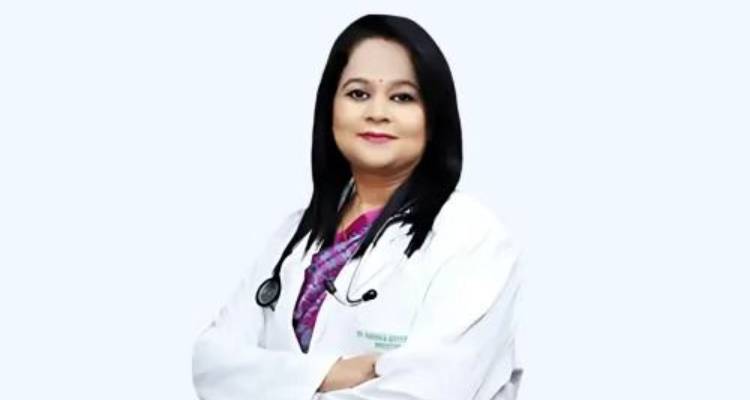
Dr Richika Sahay Shukla, Co-founder and Medical Director, IndiaIVF, discusses the growing fertility ecosystem in India, the need for skilled fertility teams, and why talent and training must keep pace with the expansion of IVF care


In fertility clinics across India, a small scene repeats itself every week. A young couple sits down for a first consultation, and before the file is even opened, the wife leans forward with a whispered request: “Please don’t ever call our home number. The family doesn’t know.”
The nurse shuts the door without being asked. The counsellor sets her tea aside and waits. The receptionist quietly replaces the contact on the file with an office mobile and marks it in red.
No classroom teaches this. Years inside a fertility centre do.
That scene is worth remembering amid the excitement around India’s IVF boom. New centres are opening in Lucknow, Indore, Patna and Guwahati — towns from where couples once boarded overnight trains to the metros to find a good lab. The machines are the easy part. A credit line will fetch a laser, an incubator and a fine microscope by Friday.
A trained fertility team cannot be ordered over the phone.
It takes far more than a doctor and a lab
An IVF centre stands on many shoulders, and every set of those shoulders takes years to build.
Start with the fertility specialist. After MBBS and a postgraduate degree in gynaecology, reproductive medicine asks for years more — fellowship training, thousands of scans, supervised retrievals and transfers. Then the hardest skill of all: judgment. Which protocol suits which body. When to proceed, and when to look a couple in the eye and advise a month’s rest. No book teaches that. A decade beside good seniors does.
The embryologist is the field’s watchmaker. ICSI — placing one sperm inside one egg — is watchmaker’s work under a microscope, except the watch is someone’s whole future. A fresh science postgraduate needs two to three years of supervised work before routine cases can be trusted to her hands, and five or more before she can run a lab alone. Embryos don’t forgive a learning curve.
The IVF nurse is a specialist in her own right, though the system rarely calls her one. She teaches a shaking husband to load an injection at his dining table. She answers the 11 pm panic call — “the dose was two hours late, is everything ruined?” — in a voice that lowers two heartbeats at once. She knows the drugs, the theatre, and the exact moment to simply hold a hand and say nothing.
The counsellor may be the most undervalued person in the building. Infertility grief has a strange shape; it returns every month, quietly, and no one brings flowers. Counselling here is a field of its own — marriages under strain, decisions about donor eggs or sperm that the law rightly wants explained with care. This work cannot be handed to whoever is free.
And the centre head, rarest of all, must understand clinical flow, lab discipline, staff burnout, billing complaints and the law — all at once, all day. A manager can be hired in a week. A person who knows why the counselling room must never sit beside the billing counter cannot.
This specialty hurts differently
Fertility care is unlike almost any other branch of medicine. A fracture swells. A fever burns. A cardiac patient clutches his chest, and the whole ward moves.
Fertility patients walk in looking perfectly healthy. Nothing shows.
Their pain lives elsewhere — in the aunt at every wedding asking for “good news”, in the bedroom silence after yet another single line on a test, in treatment hidden from their own parents. Infertility rarely hurts the body. It hurts everything else.
That is why empathy in this field isn’t a soft skill; it’s a clinical skill. A nurse can be taught to load an injection in a week. She cannot be taught in a week to notice a wife flinch when the word “donor” is spoken too loudly in a corridor. A large share of couples tell no one at all — not even family. A good fertility team guards secrets the way a lab guards embryos.
The law is part of the job
There is a further layer outsiders rarely see: in this field, the law sits in the room.
Under the PCPNDT Act, every scan is documented and every form filled. And when a relative asks, half-joking, “boy or girl?”, everyone in the centre — from front desk to lab — must know the only answer: “We don’t know, we can’t know, and we will never tell.” Not for fear of inspection. Because it’s wrong, and it’s illegal, in that order.
The ART Act has raised the bar further — registration, qualified people in defined roles, careful consent, strict rules for donors, records preserved for years. Good for patients. But it means a centre head must read law the way she reads balance sheets, and a new nurse’s induction must cover Acts as much as injections. A careless clinic can lose its licence — and bruise the trust the whole field runs on.
Where the gap bites
When expansion runs faster than training, strange things happen. A junior with eighteen months of experience becomes a “lab head” because a new centre needs a name on the door. A nurse from a general ward is handed an IVF theatre with no bridge training. Consent files get signed by managers who have never read the Act they are signing under.
An honest admission belongs here: even the best team cannot promise anyone a baby. What a trained team can promise is that every egg, every embryo and every decision gets the fullest care the field knows how to give. A talent shortage threatens exactly that promise. The question couples ask most often isn’t about machines. It is, “Will you be there at every step?”
Trust travels with people, not buildings.
What can be done
Treat training as infrastructure. India needs structured fellowships not just in clinical embryology but in fertility nursing, infertility counselling and ART-centre management, with counted hands-on hours, the way surgery counts cases. ART and PCPNDT modules belong in every induction, refreshed yearly. Juniors should practise on simulators before touching a real cycle. Recruit nurses and science graduates from the same smaller cities where demand is rising, train them in established centres, and send them home. People rarely leave the city their parents live in.
And retain the people already there. Sane rosters. Career ladders for nurses and counsellors. Senior staff paid to teach, not only to perform. Someone for the caregivers themselves to talk to, because they absorb grief all day and have nowhere to put it.
People stay where they are seen.
When a couple says a clinic is the first place where they didn’t have to explain themselves, that sentence is not earned by degrees alone. It is earned by a nurse, a counsellor, a receptionist, an embryologist behind glass — and by years of learning no machine can shortcut.
Hope is scaling across India. Skill and tenderness must scale with it.
- Advertisement -
