

India’s next healthcare revolution will come from electronics, medicine and biotechnology working together
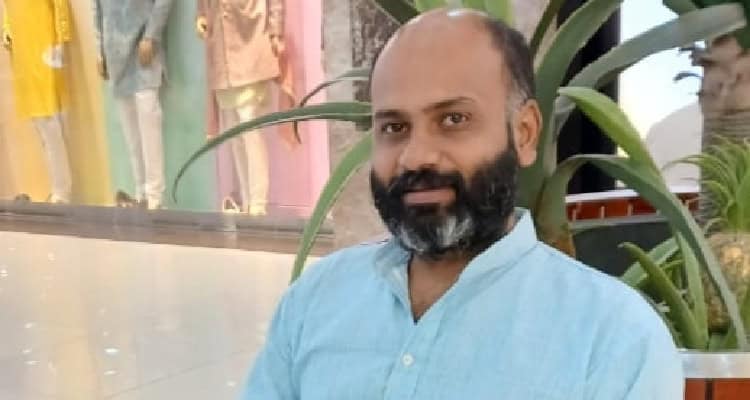
Kiran S Pillai, Founder of Vastuta Think Tank, highlights the need to bring electronics, medicine, biomedical engineering and biotechnology together to build India’s next generation of healthcare technologies


India has built strong capabilities in medicine, engineering, pharmaceuticals and information technology, but these capabilities have often developed in separate worlds. The doctor works on the patient, the electronics engineer works on circuits and devices, the biomedical engineer works on medical technologies, and the biotechnology researcher works with cells, proteins and biological systems. Each field is advancing rapidly, but the greatest healthcare innovations may emerge when these disciplines begin working together from the beginning.
The healthcare problems facing India are too complicated to be solved within a single discipline. An ageing population, chronic diseases, rural healthcare gaps, shortages of specialised medical professionals, rising healthcare costs and the need for continuous
monitoring all require new technological approaches. These approaches will increasingly combine biology with electronics and medicine.
The electronics engineer is becoming an important participant in healthcare innovation because modern medicine is increasingly dependent on the ability to sense, measure, process and communicate biological information. Sensors can measure physiological signals. Electronic systems can monitor patients continuously. Portable devices can bring diagnostics outside hospitals. Wearable technologies can collect information over long periods. Miniaturised electronics can make medical equipment smaller, cheaper and more accessible.
But electronics alone does not know what a biological signal means.
That is where medicine becomes essential.
A physician understands whether a measurement is clinically meaningful, which variables matter to a particular disease, how patients should be monitored and what action should follow from an abnormal result. An electronics engineer may be able to create a highly sensitive sensor, but the clinical team has to determine whether the information generated by that sensor actually improves diagnosis or treatment.
Biomedical engineering creates an important bridge between these worlds.
Biomedical engineers can translate medical requirements into engineering specifications. They can work on medical instrumentation, prosthetics, imaging systems, rehabilitation technologies, biomaterials and other technologies that directly interact with the human body.
Biotechnology adds another dimension.
Biotechnology deals with biological processes at the molecular and cellular level. Advances in genomics, molecular diagnostics, tissue engineering, synthetic biology and bioprocessing are creating new possibilities in healthcare. Many of these possibilities will require electronics to become practical outside specialised laboratories.
Consider diagnostics. Biotechnology may provide a method for detecting a particular biomarker associated with a disease. Medicine can determine whether that biomarker is clinically useful. Biomedical engineers can develop an appropriate testing system. Electronics engineers can develop the sensing, processing and communication hardware. Manufacturing companies can produce the device at scale.
The final innovation is not biotechnology alone, electronics alone or medicine alone. It is the combination.
This is where India has a major opportunity.
India has a large medical ecosystem, a substantial engineering education system, growing electronics manufacturing capabilities, a strong pharmaceutical industry and an expanding biotechnology sector. Yet the connections between these communities can be much stronger.
Universities frequently organise themselves around departments. Medical colleges have one institutional culture. Engineering colleges have another. Biotechnology departments operate separately. Electronics companies have their own commercial priorities. Hospitals have immediate clinical priorities.
Innovation happens when these boundaries become more permeable.
A hospital should be able to present a real clinical problem to an engineering and biotechnology team. Instead of beginning with the question, “What technology can we build?”, researchers could begin with, “What problem does the patient have?”
That distinction matters.
Technology-driven innovation sometimes produces impressive devices looking for applications. Healthcare-driven innovation starts with a problem and asks what combination of technologies can solve it.
India needs more of the second approach.
Medical colleges could create structured partnerships with electronics and biomedical engineering departments. Biotechnology researchers could participate in these programmes where biological diagnostics or therapies are involved. Students could work in multidisciplinary teams rather than developing projects entirely within their own departments.
An electronics student working on sensors should be able to spend time understanding clinical workflows. A biotechnology student should be able to work with engineers who can explain how biological measurements can be converted into affordable devices. Medical students should have opportunities to participate in technology development and understand the possibilities and limitations of engineering.
This would change the culture of innovation in universities.
A final-year project could become something much more meaningful than a demonstration for an academic evaluation. A student team could identify a problem in a hospital, develop a prototype, test it under appropriate supervision, improve the design and eventually work with an Indian manufacturer.
Some of these projects could become companies.
The economic opportunity is significant. Healthcare technology is a global market, and India should not limit itself to being a large consumer of imported medical equipment. The country can become a producer and exporter of affordable healthcare technologies.
Electronics is particularly important in this ambition.
India’s expanding electronics manufacturing ecosystem can provide the foundation for producing sensors, monitoring systems, diagnostic instruments and other medical technologies. But healthcare products have different requirements from consumer electronics. Reliability, safety, regulatory compliance, sterilisation, accuracy and long-term performance become critical.
This is why medical and biomedical expertise must be involved from the design stage. The same principle applies to biotechnology.
Biotechnology discoveries often remain within laboratories because converting a scientific discovery into a practical diagnostic or therapeutic product requires additional capabilities. Engineers can develop instruments and manufacturing processes. Electronics specialists can create portable testing systems. Medical professionals can validate clinical relevance. Entrepreneurs can create business models.
The path from biological discovery to patient benefit is therefore a long chain. India needs to build institutions that connect that chain.
One particularly promising area is point-of-care diagnostics. India has millions of people who cannot easily access sophisticated laboratories. A diagnostic technology that requires expensive equipment and highly trained personnel may not be practical in many locations.
A combination of biotechnology, electronics and biomedical engineering could change this.
A biological assay could identify a disease marker. A miniature electronic system could detect the result. Software could interpret the measurement. A portable device could display the result. A doctor or healthcare worker could then use that information to make a clinical decision.
Such a system could potentially move sophisticated diagnostics closer to the patient.
The same integration can be applied to chronic disease management. Patients with diabetes, cardiovascular conditions and other long-term illnesses increasingly require continuous or repeated monitoring. Instead of depending entirely on occasional hospital visits, healthcare systems could combine wearable sensors, biomedical technologies, biological measurements and clinical decision-making.
This would shift part of healthcare from episodic treatment towards continuous monitoring.
Artificial intelligence will add another layer to this ecosystem, but AI should not be treated as the entire solution. Algorithms need reliable data. Reliable data requires sensors and instruments. Sensors need electronics. Biological measurements require biotechnology. Clinical interpretation requires medicine.
AI may sit on top of the system, but it cannot replace the system underneath.
This is an important point for India’s current technology ambitions. The country has enormous enthusiasm for artificial intelligence and software, but healthcare innovation cannot be reduced to applications and algorithms. Someone still has to build the sensor. Someone has to understand the biology. Someone has to validate the clinical usefulness. Someone has to manufacture the device.
The physical foundations of healthcare technology matter.
This also creates an opportunity for India’s engineering education system. Electronics engineering should not be viewed exclusively through the lens of telecommunications, consumer electronics or computing. Healthcare can become a major application area for electronics graduates.
Similarly, biotechnology education should become more connected with engineering and product development. Biomedical engineering should become a genuine bridge between clinical science and engineering rather than operating as a narrow academic category.
Medical education can also benefit.
Doctors who understand technology do not need to become engineers. They simply need enough technological literacy to recognise opportunities and communicate clinical requirements effectively. A doctor who can explain a problem clearly to an engineering team may initiate an innovation that would otherwise never happen.
India could encourage hospitals to create clinical innovation offices where doctors, engineers, biomedical scientists and entrepreneurs work together. These offices could identify recurring problems, develop partnerships with universities, evaluate prototypes and help promising technologies move towards commercialisation.
This would also reduce the distance between hospitals and manufacturing.
A device designed without understanding manufacturing constraints can become prohibitively expensive. Engineers working with manufacturers from the beginning can
design products that are easier to assemble, repair and scale. Electronics companies can advise on component availability and supply chains. Biomedical specialists can ensure that cost reduction does not compromise clinical performance.
The result could be products specifically designed for Indian conditions.
India’s healthcare challenges are not identical to those of wealthy countries. A device intended for a major metropolitan hospital may have to operate very differently from one used in a small district hospital or a rural health centre.
Electricity reliability, internet connectivity, technical support, transportation, maintenance and staffing all matter.
Indian engineering can turn these constraints into design requirements.
A successful Indian healthcare technology industry should therefore not simply imitate products developed elsewhere. It should develop technologies for the realities of Indian healthcare and then take those technologies to other emerging markets with similar requirements.
This could create an unusual competitive advantage.
The combination of medicine, biomedical engineering, electronics and biotechnology can become a distinctly Indian innovation model. It can combine scientific capability with engineering frugality and a huge real-world testing environment.
But this will require institutional change.
Universities need more multidisciplinary laboratories. Hospitals need stronger relationships with engineering and biotechnology institutions. Industry needs access to clinical problems. Researchers need pathways from laboratory discoveries to prototypes and products. Students need opportunities to work across departments.
Most importantly, innovation should be organised around problems rather than academic boundaries.
A cancer diagnostic problem should not belong exclusively to a biotechnology department. A wearable monitoring problem should not belong exclusively to an electronics department. A rehabilitation problem should not belong exclusively to a medical department. These are shared problems requiring multiple capabilities.
India already has the talent.
The challenge is connecting it.
The next generation of healthcare innovation may therefore come not from one extraordinary discipline but from the spaces between disciplines. Electronics can make biological information measurable. Biotechnology can explain what is happening inside the body.
Biomedical engineering can convert scientific knowledge into usable technology. Medicine can determine whether the technology actually helps the patient.
When these capabilities work together, India can move from importing healthcare technology to designing it, manufacturing it and exporting it.
That is the ecosystem India should begin building now.
- Advertisement -
