

Why Online Chikitsa chose the chemist over the clinic
Online Chikitsa stopped asking patients to come to it. It went where they were already going, the local chemist's shop. Now, the company is looking to turn this familiar point of access into a sustainable healthcare delivery model.


A daily-wage worker in a village in UP has a fever that won’t go away. The nearest doctor is in a bigger town. Getting there means a bus ride, a lost day’s pay, and often a family member who has to come along. So the worker does what millions do every day and walks to the neighbourhood medical store.
Smriti Tandon built a company around that habit. About 70 per cent of patients at Online Chikitsa’s partner stores walk in without a prescription, she says. They aren’t at the pharmacy because a doctor sent them. They are there because it is the place they know and trust.
Online Chikitsa chose to build on that habit instead of fighting it. By setting up e-clinics inside medical stores, the company found a way to connect patients with doctors without asking them to visit a separate healthcare facility. The shift also changed how the company approached expansion, moving from its own physical centres to a network of local partners.
A gap you can count
Doctor density in rural India is estimated at about three per 10,000 people, against 13 per 10,000 in urban areas, as per media reports.
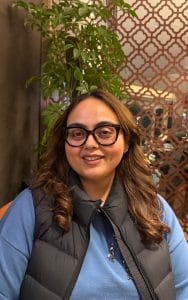
For Tandon, co-founder of Online Chikitsa, the problem was personal before it became a business. She spent about a decade in the automobile industry, where she kept seeing employees ask for salary advances to pay for healthcare. She had also grown up in Lucknow, around crowded government hospitals and packed OPDs.
“When we are privileged, we have access to a doctor. We know that it’s not that difficult. But discoverability of a doctor is a bigger challenge,” she says.
The first model didn’t work
In 2017, Online Chikitsa set up physical centres in UP, offering diagnostics, e-clinic services and health camps, with doctors visiting from time to time.
It was an expensive way to learn a lesson. The centres needed capital, and patients simply weren’t walking in. “We were still an outsider,” Tandon says.
The company had to rethink its approach. Instead of building more centres, the team began looking at where patients were already going for help.
The answer was the neighbourhood medical store. Patients were familiar with these stores and often approached them first when they had a health problem.
For Online Chikitsa, this offered a different way to reach patients. Rather than investing in standalone facilities and waiting for people to walk in, it could work through an existing local network.
Moving into the chemist’s shop
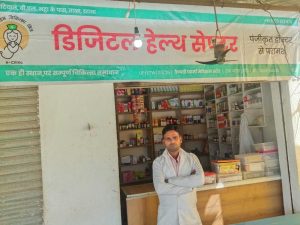
In 2019, the company changed course. Instead of asking patients to find its centres, it began setting up e-clinics inside medical stores.
The model is simple. Store staff are trained to record basic details such as blood pressure, weight and BMI. The patient is then connected to a doctor over video. Consultations start at ₹50.
The network now has more than 650 partner stores across Uttar Pradesh, Chhattisgarh, Jharkhand, Rajasthan, Bihar, Haryana and Karnataka, Tandon says. About 356 are in Uttar Pradesh.
The model brings together the medical store’s local presence and Online Chikitsa’s access to doctors. It also allows the company to build its network through partnerships rather than relying entirely on its own physical infrastructure.
The next question is how effectively this network can be expanded while ensuring that the model works for both the company and its pharmacy partners.
Telemedicine is no longer the hard part
India has already shown that people will consult doctors on a screen. The government’s eSanjeevani platform has delivered more than 49 crore consultations since 2019 and has over 2.4 lakh healthcare providers on board as of August 11, 2026, according to the Press Information Bureau.
Tandon is candid about what that means for her company. “Telemedicine has been a very established practice. No innovation in that, to be very honest.”
For Online Chikitsa, the challenge is no longer just connecting a patient to a doctor. It is ensuring that the consultation leads to appropriate treatment and that patients return when they need further care.
What happens after the prescription?
“Treatments were only episodic,” she says. A patient gets a medicine, feels better and stops taking it. That is a small problem for a fever and a serious one for a chronic condition. Take hypertension. A patient is told to come back in six months. What happens in between?
This is why Online Chikitsa has shifted its focus from access to continuity of care. It has built internal tools with doctors to track outcomes and follow-ups. About 38 per cent of patients don’t need another consultation, and about 60 per cent come back, Tandon says. Some can’t be reached at all because their mobile numbers aren’t available.
She sees a role for digital tools and AI, but not as a replacement for the doctor. “It’s not about replacing the clinical judgment. It’s about connecting that entire treatment journey of a patient.”
The longer-term idea is to track whether a medicine dispensed at the store was actually taken, whether it worked, and whether the treatment later had to change or stop.
For the company, this means looking beyond individual consultations to the larger treatment journey. Follow-ups and patient tracking could help build a more sustained relationship with patients, although the challenge will be to make these processes work as the network expands.
Women are now the majority
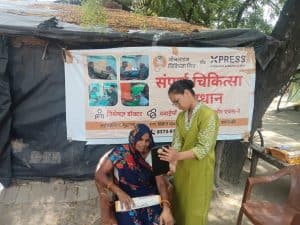
Women make up 56 per cent of Online Chikitsa’s patients, up from 22 per cent when it started.
Women in rural and semi-urban areas often find it harder to travel to bigger towns because of household responsibilities and other constraints, Tandon says. The company has responded by offering female doctors across specialties, including general medicine, cardiology and dermatology, not only gynaecology.
The changing patient profile also highlights the role of local access points in helping people seek medical advice without having to travel long distances.
Why the chemist is a partner
The medical store isn’t just lending a corner for a video call. It has a stake in the business.
A doctor-backed prescription helps the store sell more medicines, Tandon says. Online Chikitsa writes prescriptions using generic names, so the store can choose what to dispense based on availability and margins rather than being tied to one brand, except where a branded product is required.
The partnership is central to the model. The medical store provides the local presence and access to patients, while Online Chikitsa connects them to doctors. The arrangement is intended to give both sides a reason to participate.
The company doesn’t charge doctors. Its revenue comes from consultations and its medical-store partnerships. It is bootstrapped, and Tandon says the aim is commercial sustainability, not a valuation or an exit.
“We want to make it commercially sustainable to actually make it more purposeful.”
For a business built around affordable consultations and local partnerships, commercial sustainability is critical. The company needs a model that allows it to serve patients while giving its partners a reason to continue participating.
What comes next
Online Chikitsa plans to explore becoming a distributor, which Tandon says could help partner stores improve their margins on medicines.
The move could deepen its relationship with the pharmacy network by extending the partnership beyond consultations. It would also bring the company closer to the medicine supply chain.
The bigger bet is on connecting patient data across the whole journey. She points to digital health records, ABHA and AI as the building blocks. A 2025 review puts ABHA IDs at 720 million, with 62 per cent linked to rural individuals, according to the Pharmacy Journal. The goal is a patient history that builds over time, so each consultation isn’t a standalone event.
For Online Chikitsa, the opportunity lies in bringing together local pharmacies, remote consultations and patient follow-up. The challenge is to make these elements work together as the business grows.
India has proved that crores of consultations can happen online. The harder question is whether they can add up to a continuous course of treatment.
Online Chikitsa’s answer is to put the doctor not where the patient has to travel, but where the patient already goes. Its next test is to make this approach work as both a healthcare delivery model and a sustainable business.
[email protected]
[email protected]
- Advertisement -