

From first response to system ownership
Dr Sandeep Gore, Director-Emergency Medicine, Fortis Hospital Mulund, Mumbai, and Chairman, Emergency Medicine Council, Fortis Healthcare, speaks to Kalyani Sharma about the evolution of emergency medicine in India, the need for trained manpower and stronger pre-hospital care, and how technology can help build a more responsive emergency care system

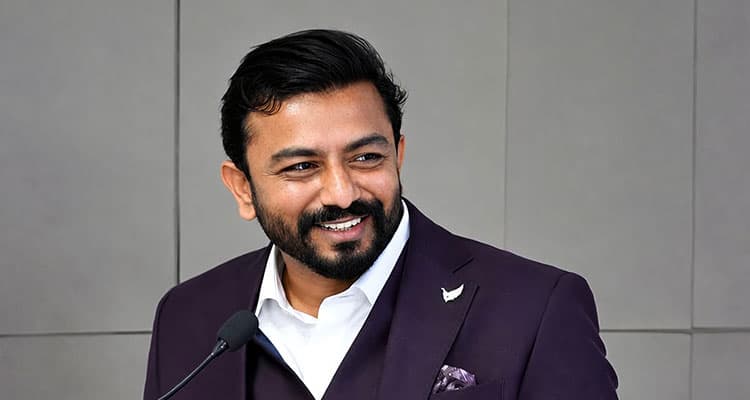

You have seen emergency medicine evolve considerably during your career. How has your own journey evolved from treating individual emergencies to building a system?
I trained in emergency medicine at Christian Medical College (CMC), Vellore, which has a very high volume of emergencies. That is where I developed my core skills, including intubation and ventilation, inserting lines and intercostal drains, and stabilising polytrauma patients.
After CMC, I joined Jahangir Hospital, Pune, as a consultant with independent clinical decision-making authority. That was my first opportunity to apply these skills independently. One of the early experiences that gave me confidence was a prolonged CPR case where the patient achieved return of spontaneous circulation and eventually walked out of the hospital. We were also among the first teams to reach and rescue patients during the German Bakery blast in Pune.
A resuscitation case we handled was later reported in the media, and that’s what brought me to Fortis’s attention. I joined Fortis in 2011.
We had several prolonged CPR cases at Fortis, including patients who were revived after 40-45 minutes of CPR without neurological deficits. Saving a patient and seeing that person walk out of the hospital on their own legs seven or eight days later gives you a gratification that is difficult to find elsewhere.
That was the individual excellence part of my journey. But we realised that this level of care had to be available around the clock. Emergency medicine cannot depend on one individual being present 24 hours a day. The same standard of care must be delivered irrespective of the time.
So, we built an emergency medicine team, developed protocols and invested extensively in training doctors and nurses. We also started tracking outcomes.
For example, in acute heart attack cases, revascularisation has to happen within the recommended time frame. Over the last year, in more than 90 per cent of our relevant cases, we achieved door-to-balloon times within 90 minutes. Our emergency department also recorded no heart attack deaths in calendar year 2025.
Emergency medicine is not a one-man show. If I perform CPR and the patient survives, it is a collective effort involving doctors, nurses and the entire team. Building a self-sustaining system is therefore very important.
Today, we have 18 doctors in our emergency department, including some of our former students who are now consultants. When you train people, they carry forward the approach and mindset they have learnt.
When you entered emergency medicine, emergency departments in India were very different from what they are today. What was the turning point that helped establish emergency medicine as a specialty in its own right?
I found emergency medicine exciting because you are working at the border between life and death. At that time, however, there was no established concept of emergency medicine as a specialty in India. I learnt that the first emergency medicine department had been established at CMC Vellore and decided to train there.
The importance of emergency medicine is clear because any delay in evaluation, diagnosis or treatment can increase mortality and morbidity. The major change came when emergency medicine received specialty status in 2009. But the emergency medicine movement began well before that; it has always been a movement for the people, by the people, of the people.
Earlier, in many places, the emergency department was essentially a transit point, with junior doctors assessing patients and directing them elsewhere. Once emergency medicine became an established specialty, trained clinicians began taking ownership of the patient and ensuring that time-bound care happened.
That ownership culture has been the game changer. Take a STEMI patient; when someone comes in with chest pain, it’s our job to do the ECG and relevant tests, diagnose, stabilise, involve the cardiologist early, and ensure timely revascularisation.
Emergency medicine is increasingly being recognised as a resuscitation-based specialty dealing with some of the most decisive moments in a patient’s care.
What are the biggest gaps that India needs to address now?
The biggest challenge is skilled manpower. You can build an emergency department and equip it with high-end technology, but equipment alone cannot deliver outcomes. You need doctors and nurses who are trained to use that infrastructure effectively.
Infrastructure can be built relatively quickly if resources are available. Building a highly competent emergency medicine workforce takes years. There is no shortcut to developing clinical judgement, resuscitation skills and the ability to make decisions under time pressure.
I’ve personally discussed the emergency medicine demand-supply gap with NITI Aayog, focusing on the need to expand training capacity and create more emergency medicine programmes.
The other major challenge is pre-hospital care.
Suppose someone develops a heart attack on the 40th floor of a building. Ideally, a trained emergency response team should reach that patient quickly. But in cities such as Mumbai, traffic can make this extremely difficult. In many Western countries, ambulances have dedicated lanes and can reach patients within defined response times.
India needs to strengthen the entire chain, from prehospital care to the hospital emergency department.
You describe the modern emergency department as a command centre. What does that mean in practice?
The modern emergency department is no longer simply the first point of contact. It is the most decisive point of contact. Take a patient with a heart attack. We also track the outcome. How quickly are we diagnosing these patients? How many are being revascularised within the recommended time? That is what quality means.
The same applies to stroke. In stroke, time is brain. Every minute of delay can result in the loss of millions of neurons. When a patient presents with suspected stroke, we immediately activate the imaging pathway so that appropriate treatment can be initiated quickly.
Another example is breathing difficulty. The cause could be asthma, anxiety, pulmonary embolism or several other conditions. Point-of-care ultrasound (POCUS) can help us rapidly identify certain conditions and guide further investigation. In polytrauma, we need to control bleeding, stabilise the airway and circulation, identify serious injuries and activate appropriate teams. If there is significant blood loss, a massive transfusion protocol needs to be activated.
POCUS is increasingly becoming a visual extension of the stethoscope. We can put the probe on the chest, heart or abdomen and rapidly assess what may be happening.
It is an adjunct to clinical judgement, not a replacement for it. Its value is also that it can help us see changes in real time. That is what I mean by the new-age emergency department.
How can emergency medicine reach rural and district-level healthcare facilities?
Emergency medicine cannot be limited to large tertiary hospitals. It must extend from the village to the district hospital and then to the tertiary centre.
At the village level, a primary healthcare doctor should be able to manage common emergencies and stabilise patients before transfer. Rural and district hospitals need competent emergency teams so that more patients can be treated locally instead of being referred unnecessarily.
The principle should be – refer less, resolve more.
For example, a snakebite occurring in a village should ideally be treated there rather than automatically transferring the patient to a distant tertiary centre. Similarly, a patient with acute gastroenteritis who primarily requires fluids should not necessarily need a tertiary hospital.
The demand-supply gap is stark; India likely has only 10- 15 per cent of the emergency medicine workforce it needs. We need to expand training capacity and create more programmes, with pathbreaking measures to close this gap faster than the current pace allows.
India needs an integrated emergency care system comprising pre-hospital care, rural emergency care, district hospital emergency care and tertiary emergency care. This requires both infrastructure and trained manpower.
Where can technology help bridge these gaps?
Artificial intelligence has a significant role to play, particularly in situations where there are grey areas and a senior clinician may not immediately be available.
A junior doctor may be uncertain about a particular decision. An AI-based system, working under appropriate clinical supervision, could support decision-making using established algorithms and clinical information.
Telemedicine is another important area. It can allow doctors in smaller centres to access expert opinion. Data tracking is equally important.
Technology can help through AI, telemedicine, POCUS, simulation-based training and data systems. We also need district-level emergency command centres, similar to existing 24×7 toxicology helplines, where doctors in smaller centres can share an ECG or clinical parameters with an experienced emergency physician for real-time guidance.
Can India develop emergency care models suited to its own scale and disease burden?
Yes. India has its own challenges and opportunities.
But the Indian context is different from the Western context. Our emergency departments are often crowded and do not operate in a controlled environment.
At the same time, India has a major advantage: patient volume and clinical diversity.
We follow guidelines from organisations such as the American Heart Association and the European Society of Cardiology, but we also need to track what happens when those guidelines are applied in the Indian setting.
Our biggest opportunity is data. Every day, Indian EDs resuscitate large numbers of patients, but few of these experiences are documented and published. It’s not that the work isn’t happening; it’s that we’re not capturing and sharing enough of it.
India already contributes through research, simulationbased training, POCUS and advanced capabilities like ECPR. With our patient volume and diverse disease burden, systematically documenting outcomes could position India as a major contributor to global emergency medicine learning.
You are also a high-altitude mountaineer. Has that experience influenced how you practise emergency medicine? And what gives you the greatest satisfaction today?
High-altitude mountaineering and emergency medicine are both passions of mine, and the parallels between them run deep.
I have climbed to around 6,153 metres in Ladakh and have been part of several Himalayan expeditions.
Before climbing a mountain, you have to understand the challenge in front of you. You study the route, terrain and weather, assess your fitness, select the right equipment and develop backup plans.
The same mindset applies to emergency medicine.
If I need a skill, say, advanced resuscitation, I have to prepare for it and prove I can perform it. You can’t just say you know how to insert a line or intubate a patient. You have to develop the skill and demonstrate it.
There is also a fear factor in both situations. When you are climbing at 6,000 or 7,000 metres, you are aware of the risks. In emergency medicine, you are also dealing with lifeand-death situations. You have to manage that fear and still make an objective decision.
I have fallen into a crevasse and was pulled out by two colleagues. You have moments where you have to decide whether to continue or turn back. That mindset has stayed with me.
In emergency medicine, you have to make decisions in limited time, explain the situation to the family, involve them in the decision-making process and execute the plan.
The greatest satisfaction today comes when doctors whom I have trained save a patient’s life. Recently, one of our doctors told me about a patient who arrived with an unrecordable blood pressure. She stabilised the patient and achieved a good outcome. When someone you have trained is able to independently manage such a situation, it gives you a different kind of satisfaction. I call it vicarious joy.
I can relate this to mountaineering as well. My 13-year-old son recently climbed two mountains, including Kedarkantha and Kuari Pass. When he summited, I felt the same kind of happiness that I would have felt from my own summit.
What gives me optimism is the interest among young doctors, their willingness to learn and the resuscitation capabilities I’ve seen across the country give me real hope for the field.
Almost every hospital has a success story involving its emergency medicine team. That gives me a very optimistic view of the future. I believe the next 10-15 years of modern medicine will see emergency medicine play an increasingly important role.
You have been involved in building and standardising emergency care across the Fortis network. Based on this experience, what should be the priorities for Emergency Medicine in India over the next few years?
The future of Emergency Medicine is not about creating a few excellent Emergency Departments, it is about creating systems of excellence. Across our network, we have standardised pathways for STEMI, stroke, sepsis and trauma, created outcome based dashboards, strengthened resuscitation and POCUS capabilities, and used clinical governance to continuously improve care.
India now needs the same approach at scale: stronger pre-hospital care, standardised Emergency Departments, trained emergency physicians and nurses, regional networks for time-critical emergencies, and national quality benchmarks.
Most importantly, we must move from measuring infrastructure and volumes to measuring outcomes time to treatment, survival and quality of care.
My vision is simple: wherever an emergency occurs in India, the patient should receive the right care, at the right place, at the right time.
[email protected]
[email protected]
- Advertisement -
