

Drug-Resistant Brain TB in Children: Early Diagnosis to Prevent Neurological Damage
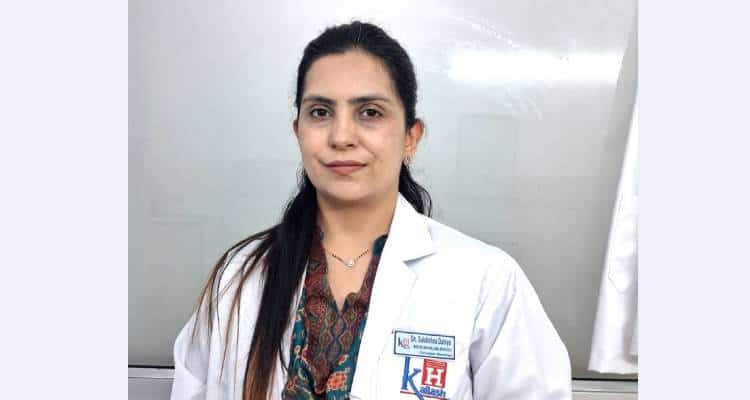
Dr Sulakshna Dahiya, Consultant Neurologist, Kailash Hospital, Greater Noida, a unit of Kailash Healthcare Group, highlights the challenges in diagnosing drug-resistant brain TB in children, the importance of timely treatment and the need for multidisciplinary care to prevent long-term neurological complications


Tuberculosis still remains one of the major public health concerns in India. However, while pulmonary TB is well studied, there are other organs that can be affected by the disease, such as the brain and the central nervous system. Central Nervous System Tuberculosis (CNS T B), which encompasses tuberculous meningitis and brain tuberculomas, is particularly important in children, as the late diagnosis and treatment of the disease may lead to permanent damage of the central nervous system. This is especially true due to the presence of some cases of drug-resistant tuberculosis.
Identifying the warning signs
Central Nervous System Tuberculosis in children differs from other forms of TB, making its early diagnosis rather difficult. Symptoms such as headache, vomiting, fever, excessive sleeping, irritability, changes in behavior, convulsions, limb weakness, inability to walk, visual disturbances, and changes in consciousness should be considered seriously, especially if these symptoms develop and become worse over time.
It may be particularly difficult to identify some of the symptoms of CNS TB in young children. Poor feeding, lethargy, developmental delay, motor dysfunction, behavioral change, or changes in the way of interaction with the parent can indicate neurological disorder in children. Since children do not always know how to express their feelings, adults have to look at any behavioral or physical changes in children.
Why diagnosis can be difficult
One of the difficulties associated with CNS TB is the fact that there are other diseases that share similar signs and symptoms, thus making it difficult for doctors to make an accurate diagnosis. It means that where a patient has presented with signs such as fever and headaches or seizures, the doctor will need to investigate for other possible causes.
To make the diagnosis, physicians might use a combination of clinical examination, imaging studies (MRI or CT scans), cerebrospinal fluid analysis, and microbiological or molecular studies. Testing for drug resistance is one of the things that needs to be done since ordinary methods of treating TB might not work on resistant strains.
There are instances whereby the bacteria levels in the CSF fluid might be quite small, thus making it quite difficult for doctors to diagnose. It means that doctors will need to look at all aspects before making a proper diagnosis and treatment.
The added complexity of drug resistance
Drug-resistant TB happens in cases when the TB bacteria are not sufficiently sensitive to one or more anti-TB drugs. In the context of CNS disease, it raises an especially complicated issue since it is necessary not only to assess the sensitivity of the bacteria but also to make sure that the medication is able to enter the CNS.
Therefore, the treatment of such a condition might be complicated since it requires specialist knowledge, extended time and constant monitoring of response and potential side-effects. Based on the type of resistance and the patient’s state, the treatment regimen will differ considerably from the treatment of drug-sensitive TB.
Another aspect is adherence. Treatment of TB involves a prolonged course of medication, and interruption of treatment might lead to its inefficiency and even higher resistance. It is essential to provide proper counselling of patients’ families regarding the schedule of taking the medications, visits and the importance of full-course treatment.
Prevention of neurological complications
The issue with CNS TB is that complications might appear even before the diagnosis is made. Inflammatory processes and infections could cause complications such as hydrocephalus, seizure disorders, cerebrovascular complications, cranial nerve dysfunction and increased intracranial pressure. These complications in children can affect cognitive functions, learning, movement and development.
Timely diagnosis and treatment can be useful for lowering the chance of permanent neurological damage. Nevertheless, recovery from brain TB does not always imply that all the issues have been solved since some children may need neurological, developmental, physiotherapy, occupational or psychological therapy depending on the severity of the complications.
A multidisciplinary approach is necessary
Besides the prescription of medicines for the treatment of tuberculosis, the treatment of brain TB resistant to medications in children requires the collaboration of several specialists. It is necessary to take into account the state of health of the child and to use the services of such physicians as pediatricians, neurologists, infectious disease specialists, radiologists, microbiologists, and rehabilitation specialists.
Timely monitoring of the child’s clinical and imaging allows doctors to evaluate the results of treatment and detect complications that require prompt treatment. Parents need to be aware of symptoms indicating the necessity of immediate hospitalisation, such as increased drowsiness, convulsions, nausea, weakness, changes in consciousness, or visual and behavioral changes.
It is necessary to note that parents should never neglect any neurological symptoms since early diagnosis of brain tuberculosis resistant to medications can be rather complicated. Proper diagnosis and treatment are essential in order to recover successfully from brain TB.
In the case of children, whose brain and nervous system have not developed yet, early diagnosis and treatment are not only about healing the disease but also about saving neurological functions and proper development.
- Advertisement -
