

GenNext Hospital Summit 2025 Pune focuses on building future-ready hospitals
Express Healthcare convenes healthcare leaders to discuss technology, financing, workforce and care delivery at Pune edition of its flagship summit

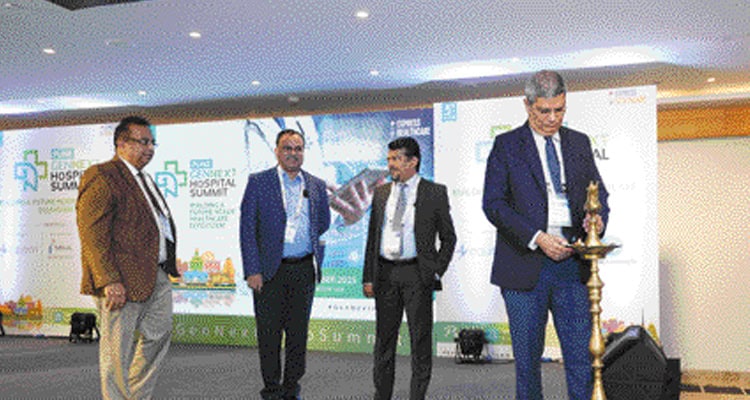

Express Healthcare organised the GenNext Hospital Summit 2025 – Pune Edition on 21 November 2026 in Pune. This flagship series aims to facilitate the development of next-generation hospitals equipped to navigate the rapidly evolving healthcare landscape and meet changing patient expectations.
The overarching theme for this year was “Building a Future-Ready Healthcare Ecosystem.”
The summit brought together leaders, experts, and key decision-makers to explore emerging trends, address pressing challenges, and discuss opportunities shaping new-age hospitals. The event was supported by Gold partners – Equitron and ZOTA Healthcare, and Silver partners – Altus Airflow and Konica Minolta
GenNext Hospital Summit Pune featured distinguished speakers who shared valuable insights on digital acceleration in hospitals, the future of healthcare delivery, and the dynamic expectations of the next generation.
The event commenced with a welcome address by Express Healthcare, setting the tone for the day by outlining the vision of the GenNext Hospital Summit 2025 Pune series. This was followed by a traditional lamplighting ceremony, marking an auspicious beginning to the proceedings.
Leadership roundtable: Building a future-ready healthcare ecosystem
The healthcare landscape is undergoing rapid transformation, shaped by technological advancements, shifting demographics, and evolving patient expectations. Against this backdrop, the leadership roundtable centred on the highly relevant theme, “Building a FutureReady Healthcare Ecosystem.”
The esteemed panel comprised Vinod Sawantwadkar, CEO, Jehangir Hospital (Moderator); Dr Sunil Rao, Group COO and Medical Director, Sahyadri Hospital and Behram Khodaiji, CEO, Ruby Hall Clinic. During the leadership roundtable, the panel underscored that future-ready hospitals must anchor themselves in patient-centricity while embracing technology that is both advanced and cost-effective.
They emphasised the need for adaptable infrastructure and scalable workforce models to meet the demands of a rapidly changing healthcare environment. Sustaining quality without compromising affordability emerged as a key priority, calling for ecosystem-wide collaboration, including insurers and suppliers.
The leaders further stressed that workforce development—through structured training, burnout mitigation, and stronger clinicalplus-hospitality systems—is essential for long-term resilience. As hospitals continue to generate vast volumes of data, the focus must now shift from mere collection to meaningful utilisation, enabling improved patient outcomes and operational excellence.
Digital acceleration in hospitals
Dr Kishore Kumar, Founder Chairman and Executive Director of Cloudnine Hospital, presented his insights on how digital acceleration (DA) is redefining modern healthcare, especially in obstetrics and paediatrics. He highlighted that DA is here to stay and holds immense potential to enhance diagnostics, enable personalised care, and significantly improve patient outcomes. However, he emphasised that its successful adoption requires addressing ethical, technical, and regulatory challenges to ensure that AI complements— rather than replaces—the expertise of healthcare professionals.
Looking ahead, he noted that DA-enabled wearables, predictive analytics, telemedicine integration, and collaborative digital ecosystems will steer the next phase of healthcare transformation.
Services, Jupiter Hospital Pune
Cybersecurity in healthcare
In his session on ‘Cybersecurity in Healthcare’, Dr Chandermani, Unit Head-Medical Services, Jupiter Hospital Pune, highlighted that cybersecurity is now intrinsically linked to patient safety
He emphasised that prevention is far easier and more cost-effective than dealing with the aftermath of an actual attack. He stressed the importance of building a strong cybersecurity culture that protects both people and data.
According to him, hospitals must treat cybersecurity with the same discipline as infection control—proactive, rigorous, and embedded into routine operations to minimise vulnerabilities and ensure safe, uninterrupted care.
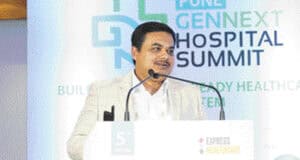
Home healthcare-Why should hospitals think about it?
Dr Ravi Pratap, Consultant and Head of Emergency Medicine, Jupiter Hospital Pune presented on ‘Home Healthcare-Why Should Hospitals Think About It?’ He outlined why home-based care is becoming an indispensable extension of hospital services in India. He explained that the sector initially witnessed rapid growth due to rising patient needs and convenience driven expectations, but this boom also led to the mushrooming of unorganised bureaus, thin operating margins, and widespread misconceptions about home healthcare being an unprofitable venture.
Dr Pratap stressed that hospitals missed an opportunity by staying away from the space, even though home healthcare directly extends the continuum of care, builds patient trust, and reduces logistical and financial burdens for families.
To tap into this potential, he emphasised the need for hospitals to form dedicated teams instead of diverting existing staff, integrate insurance partners for sustainable models, and leverage their inherent strengths—established brand credibility, in-house diagnostics, trained clinicians, and the ability to organise this fragmented sector. He concluded by urging hospitals to adapt proactively, noting that “when the winds of change blow, some build walls and others build windmills.”

Specialist, Equitron Medica Private Limited
From washing to sterilisation: Hidden design choices that shape daily CSSD realities
Presenting on ‘From Washing to Sterilisation: Hidden Design Choices That Shape Daily CSSD Realities’, Stinita Dsouza, Senior Marketing Specialist, Equitron Medica Private Limited, explained how smart, practical design decisions can significantly improve the day-to-day functioning of hospital CSSDs.
She shared that Equitron’s systems are engineered for compact, disruptionfree installation, allowing them to fit smoothly into new or existing setups and move through standard hospital lifts without requiring on-site assembly
She further noted that the equipment delivers substantial efficiency gains by using just 12 to 15 litres of water per phase— reducing detergent usage, shortening heating time, and lowering the total cost per cycle. She also added that Equitron’s heat-exchanger-based design ensures cooler, more consistent pump performance, which enhances operational stability and keeps noise levels low for longterm, reliable sterilisation workflows.
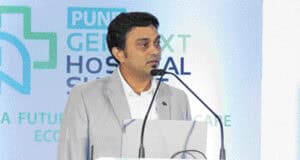
Strategy and Planning, Konica Minolta
Healthcare India Pvt Ltd
Transforming X-Ray services with Dynamic Digital Radiography (DDR)
In his session on Transforming XRay Services with Dynamic Digital Radiography (DDR), Manan Sanghvi, Project Leader – Business Strategy and Planning, Konica Minolta Healthcare India Pvt Ltd, highlighted how Konica Minolta’s DDR technology is redefining diagnostic imaging.
He explained that Konica Minolta offers the only solution capable of capturing both anatomical and functional motion on a large field of view—while maintaining a low radiation dose. This motion-based diagnostic capability, he noted, enables clinicians to advance beyond static X-rays and contrast-dependent tools, supporting applications ranging from pulmonary embolism detection to musculoskeletal instability assessments.
He emphasised that DDR transforms traditional X-ray departments into future-ready diagnostic hubs by enhancing speed, reducing operational costs, and integrating seamlessly with AI-driven workflows, ultimately strengthening hospital ROI and improving clinical decision-making.
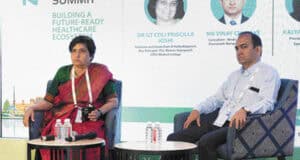
Principal (PG), Bharati Vidyapeeth (DTU) Medical College and Vinay Chutake, Consultant – Medical Technology, Deenanath Mangeshkar Hospital
Fireside chat on radiology
In the fireside chat on radiology, Dr (Lt Col) Priscilla Joshi, Professor and Head – Department of Radiodiagnosis and Vice Principal (PG), Bharati Vidyapeeth (DTU) Medical College and Vinay Chutake, Consultant – Medical Technology, Deenanath Mangeshkar Hospital, discussed what it truly means to build future-ready radiology services. The conversation highlighted that the radiology of tomorrow depends not only on advanced hardware but equally on agile workflows, strong digital integration, and operational resilience. Both experts agreed that the biggest barrier to adopting new technologies is not cost or capability—but change management within institutions.
They noted that AI will deliver real value in healthcare only when it drives meaningful clinical outcomes: saving time, reducing errors, or directly improving patient survival. Tools built on hype without measurable impact will inevitably fade. The discussion also underscored the importance of effective procurement, where clinicians must appreciate financial considerations, and finance teams must understand clinical needs to arrive at balanced, rational decisions. The speakers concluded that no single vendor can offer best-in-class HIS, RIS, PACS, and modality systems, making multi-vendor integration with strong IT support the most practical and future-proof approach for hospitals.
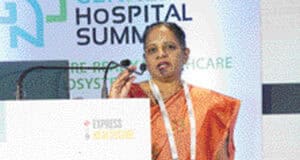
Obstetrician, Gynaecologist, Medicolegal
Expert and Vice President, IMA Maharashtra
Futuristic healthcare establishments: What to expect?
Speaking on ‘Futuristic Healthcare Establishments: What to Expect?’, Dr Meenakshi Deshpande, Senior Consulting Obstetrician, Gynaecologist, Medicolegal Expert and Vice President, IMA Maharashtra, outlined the major shifts shaping tomorrow’s healthcare ecosystem. She emphasised that the future will move decisively from traditional, hospital-centric “sick care” to proactive, personalised, and technology-enabled wellness management.
Dr Deshpande highlighted key drivers including rising healthcare costs, increasing chronic diseases, ageing populations, digital health adoption, and growing consumer expectations. She pointed to transformative trends such as AI-driven diagnostics, telemedicine, remote monitoring, wearable devices, precision medicine, robotics, automation, and big data analytics—all of which will redefine how care is delivered, accessed, and experienced.
She noted that these advancements will empower patients, shift care delivery closer to homes and communities, improve clinical outcomes, and create new workforce roles focused on technology enabled care. However, she also cautioned that challenges such as data privacy, ethical considerations, unequal access, and workforce shortages must be addressed to ensure equitable progress. Dr Deshpande stressed the need for stronger emergency departments, robust triaging systems, wider telemedicine utilisation, and nation-wide organ donation implementation. Ultimately, she envisioned a future-ready healthcare ecosystem that prioritises patient satisfaction, good clinical outcomes, affordability, and sustainable wellness—supported by digital health cards, fair pricing policies, expanded insurance penetration, and strengthened medico-legal safeguards.

Mahapatra, CFO, Ruby Hall Clinic; Dr Rakesh Shah, COO, KEM Hospital; Kishore Chavan, Head – Central Purchase Department, Dr D.Y. Patil Medical College, Hospital and Research Centre
Panel discussion: Evolving landscape of healthcare financing in India
In the panel discussion on ‘Evolving Landscape of Healthcare Financing in India’, Jyoti Prakash Mahapatra, CFO, Ruby Hall Clinic; Dr Rakesh Shah, COO, KEM Hospital; Kishore Chavan, Head – Central Purchase Department, Dr D.Y. Patil Medical College, Hospital and Research Centre; and Lt Col (Dr) Kushagra Patel (Retd), CEO, Raigad Hospital and Research Centre (Moderator) examined the financial realities shaping hospitals today.
The panel emphasised that self-sustainability in healthcare increasingly relies on data-driven decision-making, strict cost containment, and improving operational efficiency across every department. They discussed how hospital margins continue to shrink due to government schemes, insurance-driven pricing pressures, and rising input costs—making operational optimisation a survival imperative rather than a choice.
The speakers highlighted that while private equity investment in Indian healthcare has grown nearly tenfold in the last five years, investors remain sharply focused on profitability and sustainable returns, further pushing hospitals to streamline operations. They noted that India continues to undervalue healthcare, with disproportionately low reimbursement rates for essential medical services compared to global standards—reflecting a systemic undervaluation of care delivery.
The panellists also pointed out that the escalating costs of medical infrastructure, rapid technology obsolescence, and increasing capital expenditure burdens demand innovative financing models. These include CSRlinked funding channels, consumable-based vendor partnerships, and volume-based operational strategies aimed at balancing affordability, quality, and financial viability within India’s evolving healthcare ecosystem.
- Advertisement -