

Innovation is now rooted in local realities
The 2026 ASCO Breakthrough meeting unites Asia-Pacific oncologists to advance cuttingedge research and collaboration. Dr Vanita Noronha, renowned oncologist at Tata Memorial Hospital (TMH), discusses innovations in cancer care and the importance of clinicians submitting research and participating in discussions at the event. Dr Noronha is also part of the ASCO Breakthrough Program Committee

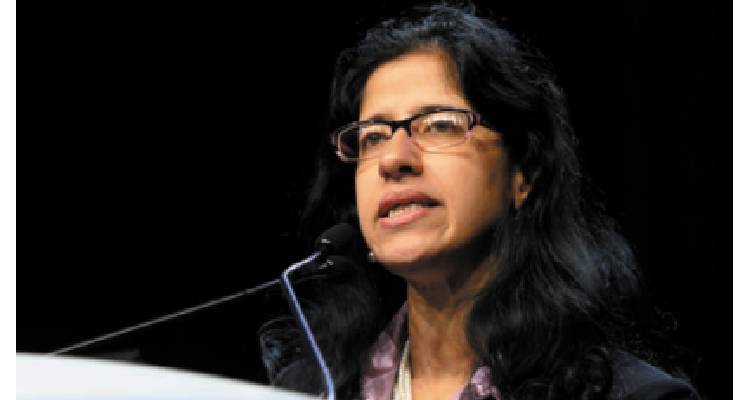

As a cancer survivor and oncologist at TMH, Mumbai, how has your work and personal experience shaped your cancer research and treatment approach in India?
As an oncologist and a breast cancer survivor in a low- and middle-income country (LMIC), my personal journey has deeply shaped how I approach cancer research and care.
At TMH, we care for thousands of patients annually, with many having severe financial constraints for even basic medical care. My experience in battling cancer has made me even more committed to driving innovations in oncology that are effective and accessible.
At TMH, our research mostly focuses on cost effective, pragmatic solutions suited to patients and healthcare systems, like low cost immunotherapy regimens. I strongly believe that patient-centred research grounded in clinical evidence and socioeconomic reality can maximise patient impact. My journey has reinforced that science must serve people, not just publications.
What key trends and shifts have you observed in India’s cancer research towards molecular profiling, immunotherapy, and personalized medicine?
Indian oncology has evolved from a one-sized-fits-all approach to one based on personalised, precisionoriented, and pragmatic care. Innovation is now rooted in local realities.
Molecular profiling is increasingly integrated into managing lung, breast, and gastrointestinal cancers. Immunotherapy is gaining traction, but the expensive, high-immune checkpoint inhibitors are affordable to less than 3 per cent of patients. Therefore, our focus is on developing low-dose, cost-effective, and rational combinations, as seen in ongoing trials at TMH.
We are also seeing more Indian-led studies in realworld data, geriatric oncology, and supportive care, which are highly relevant but often underrepresented globally.
What shapes research and cancer care priorities in India and globally?
It is driven by a complex interplay of disease burden, biology, affordability, and access. In India, affordability and equity are central considerations. Globally, innovation and new technologies often drive research. In India, impact and scalability must lead the change to address challenges like late-stage presentation, limited screening, and infrastructure gaps. There is now greater collaboration between academic centres, industry, and government bodies to align priorities. Global consortia participation positions India’s data for international understanding and generates context-specific evidence for practitioners.
How can global recognition for Indian oncologists elevate the visibility of region-specific studies, and bridge the gap between western research and local needs?
Global recognition on an ASCO stage validates and amplifies India’s high-quality oncology research. The unique challenges faced by LMICs are elevated to the global conversation.
Our studies have challenged the thought that innovation must be expensive. ASCO Breakthrough offers invaluable opportunities for networking, collaboration, and mentorship, where Indian studies are seen, critiqued, and cited, worldwide.
It adapts Western advances like molecular testing and immunotherapy into locally feasible frameworks through resource-stratified guidance, which are particularly valuable in countries like India. ASCO is bridging different realities and strengthening oncology as a global discipline.
From your work in gefitinib trials and geriatric oncology advocacy, what advice do you have for aspiring researchers seeking ASCOlevel recognition?
Address real needs in patient population with scientific rigour, persistence, and clarity of purpose.
To those aiming for recognition at platforms like 2026 ASCO Breakthrough in Singapore:
◆ Plan early. The abstract submission window is from December 3, 2025, to February 24, 2026 (11:59 p.m. ET).
◆ Prioritise real, costeffective, and patient-centred studies.
◆ Seek mentorship and collaboration. Science thrives in peer discussions.
◆ ASCO offers abstract submission fee waivers for authors residing in LMICs.
◆ 2026 ASCO Breakthrough will be held in Singapore from June 25-27 2026 at the Raffles City Convention Centre.
Registration opens early December 2025. Find out more on breakthrough.asco.org
- Advertisement -