

There is an urgent need to build well-connected cancer care networks
Dr Bhawna Sirohi, Medical Director, Vedanta Medical Research Foundation discusses India’s healthcare transition and the growing cancer burden outside major cities. She also speaks on the urgent need to strengthen public healthcare delivery, build well-connected cancer care networks, and shift from late to early-stage diagnosis through prevention, screening, and integrated models of care, in an interview with Kalyani Sharma

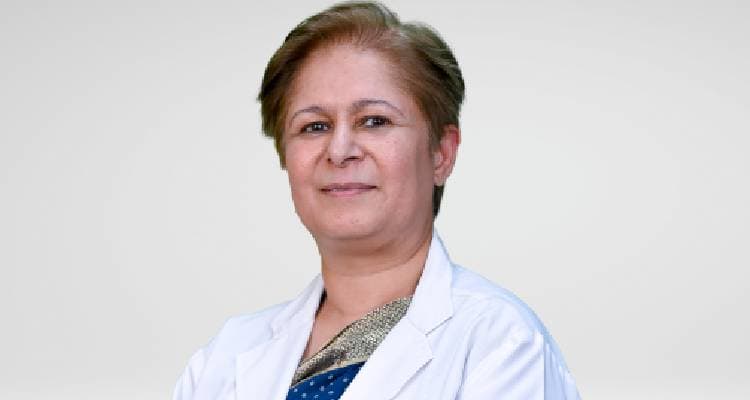

How do you see the cancer care landscape evolving in India, particularly in nonmetro and semi-urban regions?
India’s healthcare landscape is undergoing an important transition. Centres of excellence have shown what is possible in delivering high quality, evidence-based care. The real challenge now is scale and equity. A growing share of India’s cancer burden will be borne by people living outside major cities, and our systems must evolve to meet them where they are.
There is an urgent need to strengthen public healthcare delivery and build well connected cancer care networks. Non-metro and semi-urban regions need access to care that is close to home, supported by strong referral pathways to higher centres when needed. Huband-spoke models, where district and secondary hospitals are linked to comprehensive cancer centres, will be critical to achieving this.
Along with this, cancer care requires trained multidisciplinary teams, reliable diagnostics, radiotherapy, and imaging. Investment in human resources, education, and locally relevant research must go hand in hand with physical expansion.
The needle must shift from late to early-stage diagnosis. This requires behavioural and mind-set change and wider use of technology. Investing in research and infrastructure is equally important. If done well, this evolution can improve outcomes and redefine how India delivers complex healthcare at scale, ensuring that where a person lives does not determine the care they receive.
What role do prevention and early screening play in reducing the overall cancer burden, and where does India still need to improve?
Prevention and early detection are the most effective and cost-efficient ways to reduce the cancer burden. In India, many common cancers, including breast, cervical, head and neck, and GI cancers, are still diagnosed at advanced stages, which leads to higher treatment costs and poorer outcomes.
India needs to strengthen population-level prevention and screening efforts. Tobacco and alcohol cessation, HPV vaccination, menstrual and reproductive health education, and community-based screening must be scaled up. Awareness alone is not sufficient. Stigma, fear, and misinformation continue to delay screening, especially in rural and interior regions.
From a policy standpoint, cancer should be made a notifiable disease across all states and union territories. When public funds support cancer treatment, it is essential to capture the true disease burden. Strong population-based cancer registries in every state will allow better planning and designing of region-specific strategies, as cancer patterns vary widely across the country.
A key national priority should be cervical cancer elimination. HPV vaccination is one of the most effective cancer prevention tools we have, and it must be scaled up alongside cervical cancer screening using simpler approaches such as HPV DNA testing and selfsampling to significantly reduce disease burden.
Finally, training frontline health workers such as ASHA, Mitanins, and Ayush doctors to recognise early warning signs and ensure timely referral can shift diagnosis to earlier stages.
From a clinician and public health perspective, what are the biggest challenges in ensuring timely cancer diagnosis and continuity of care?
One of the biggest challenges is fragmented care. Patients move between multiple centres without clear referral pathways, leading to delays, repeated investigations, and loss to follow-up. Limited diagnostic capacity at the primary and secondary care levels also contributes to late-stage presentation.
Financial toxicity further delay care, particularly at the diagnosis stage. Despite government schemes, diagnostic tests are often not covered, making cancer care unaffordable for many families. Along with stigma, fear, and low awareness in rural and interior areas, this results in delayed diagnosis.
Another challenge is the rapid expansion of cancer centres without uniform standards or accountability. While accessibility is important, there is limited visibility on treatment related complications, early mortality, and long-term survival. Transparency and accountability are essential to safeguard patients and improve quality of care.
There is a strong need for systems that support credentialing of cancer centres, peer review, and routine reporting of outcomes. At the same time, better coordination between government programs, healthcare providers, and credible NGOs is needed. India’s population and cancer burden are large, and fragmented efforts will not deliver results. Bringing these stakeholders together through shared data and collaborative planning is crucial to improving patient outcomes and continuity of care.
How important is a multidisciplinary approach in oncology today, and how does it impact patient outcomes and quality of life?
Cancer treatment is no longer about a single doctor or a single therapy. It requires close collaboration between medical, surgical, and radiation oncologists, along with pathologists, radiologists, nurses, palliative care teams, and allied health professionals
This approach leads to better clinical decisions, avoids unnecessary or excessive treatment, and improves symptom control. Importantly, it helps focus on outcomes that truly matter to patients, including quality of life, functional ability, and dignity of care. In resourcelimited settings, multidisciplinary care also supports treatment deescalation, allowing us to deliver effective care without adding avoidable toxicity or cost.
Vedanta’s BALCO Medical Centre focuses strongly on prevention, screening and treatment—how does this integrated model help bridge gaps in access to quality oncology care in Central India?
Vedanta’s BALCO Medical Centre (BMC) is built around the idea that cancer care should be continuous and patient-centred. From prevention and screening to treatment, rehabilitation, and palliative care, services are designed to create a smooth, well-coordinated patient journey that is easy to navigate and focused on timely care.
In a region like Chhattisgarh, where patients often travel long distances for care, this model helps reduce delays, financial toxicity, and treatment dropouts. Community outreach, government collaborations, mobile screening units, teleconsultations, and affordable treatment protocols allow patients to enter the system early and remain within it.
At the same time, BALCO Medical Centre focuses on generating regional cancer data and building locally relevant evidence. This supports better planning of services, improves resource allocation and policy making.
With initiatives such as mobile screening units, government collaborations and advanced treatment infrastructure, how is BALCO Medical Centre shaping a more affordable and accessible cancer care ecosystem for underserved communities?
BALCO Medical Centre’s mobile cancer detection van reaches interiors of Central India to educate communities and screen for common cancers. For many people, this is their first interaction with the healthcare system.
What matters most, however, is closing the loop from screening to treatment. Screening has limited value if patients are not supported beyond diagnosis. When someone screens positive at a camp, we ensure they are guided into treatment, either at BMC or at another appropriate facility. Bridging this gap between is critical to improving outcomes.
Government healthcare schemes have been a significant step forward, and most patients treated at BMC are covered under these programs. However, diagnostic costs are often not funded, which remains a major challenge for poor patients. To address this, we work with several credible NGOs and have an in-house charitable fund that supports diagnostics, treatment gap funding when scheme limits are exhausted, and nutritional support. This helps ensure that patients are not lost at any stage of care.
When people return to their families and communities healthy, they are able to remain productive, support livelihoods, and contribute meaningfully to society.
From an infrastructure standpoint, Vedanta’s BALCO Medical Centre is equipped at par with the best cancer centres in the country. With growing trust and patient footfall, we continue to expand our services and introduce newer technologies. Alongside clinical care, we place equal focus on education and research. Through the introduction of superspecialty academic programs, we are building local capacity and strengthening the oncology workforce. Clinical research helps us better understand cancer patterns in our population and generate evidence that is relevant to our region.
[email protected]
[email protected]
- Advertisement -
