

Beyond survival: Why India must make mobility a public health priority
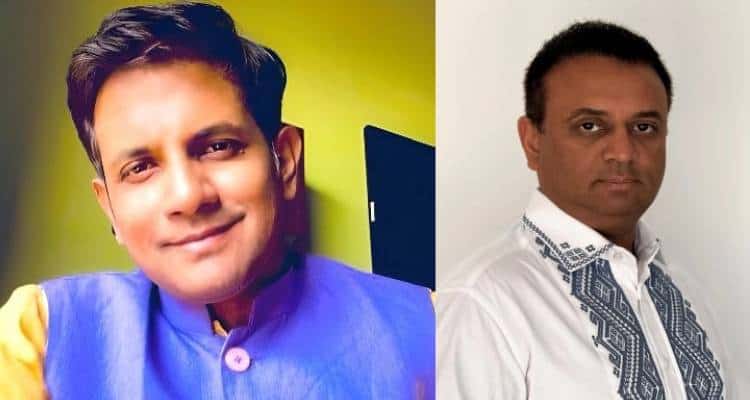
On World Health Day, Tuhin A. Sinha, National Spokesperson, BJP, and Nagender Parashar, Director, Parashar Industries shift the spotlight from conventional metrics of care to a more fundamental, yet often neglected dimension—dignity


On World Health Day, conversations around healthcare often gravitate towards hospitals, insurance, and disease management. These are important. But they are not enough.
Because health is not only about survival. It is about dignity. It is about the ability to stand, to walk, to work, and to live with purpose.
And for millions of Indians who live with limb loss, that dignity begins with something as fundamental—and as overlooked—as a prosthetic.
The unfinished story of inclusion
India today stands at a powerful intersection of technological ambition, defence preparedness, and social responsibility. As one of the fastest-growing major economies, we are building digital infrastructure, expanding manufacturing, and shaping global conversations on innovation.
Yet, the real test of progress lies elsewhere. It lies in how we respond to those who have sacrificed the most, and those who are most vulnerable.
For a soldier injured in the line of duty, a factory worker disabled in an accident, or a young diabetic patient facing amputation, the loss is not just physical. It is economic. It is social. It is deeply psychological.
A prosthetic, in such cases, is not a medical accessory. It is a bridge back to life.
And yet, for far too many Indians, that bridge remains out of reach.
A system that needs reimagining
India’s prosthetics ecosystem reflects a familiar paradox. There is intent. There is innovation. But there is no unified system.
Advanced imported prosthetics can cost anywhere between Rs 5 lakh to Rs 50 lakh, placing them far beyond the reach of most households. Low-cost alternatives exist, but often fall short on durability, comfort, and adaptability especially in India’s diverse and demanding conditions.
Access remains another structural challenge. With only a limited number of certified prosthetists serving a vast and geographically dispersed population, rural India remains largely excluded from advanced care.
Equally concerning is our continued dependence on imported technologies. In a domain that intersects healthcare, defence rehabilitation, and advanced manufacturing, this dependence is not just an economic concern. It is a strategic one.
But perhaps the most critical gap lies beyond the device itself. Rehabilitation in India remains fragmented. Mobility without physiotherapy, skill development, and mental health support does not translate into reintegration. It often leads to quiet exclusion.
A moment of opportunity
Globally, prosthetic technology is undergoing a transformation. Lightweight carbon-fibre limbs, 3D-printed solutions, and AI-enabled bionics are redefining what is possible.
India has both the capability and the scale to participate and lead in this transformation.
But leadership will not come from isolated innovation. It will come from mission-driven thinking.
This is why the time has come to consider a National Prosthetics Mission—one that brings together healthcare, defence, industry, and innovation under a single strategic framework.
Such a mission must be anchored in four principles.
First, access must be universal. Prosthetic care should be fully integrated into public health frameworks, including Ayushman Bharat, ensuring that cost is never a barrier to mobility.
Second, innovation must be indigenous. India must invest in designing prosthetics that are not only affordable, but also rugged, adaptable, and suited to Indian terrain and lifestyles. This is where Make in India must extend beyond manufacturing into meaningful design and engineering.
Third, rehabilitation must be holistic. A prosthetic is only the beginning. True reintegration requires physiotherapy, skill training, employment pathways, and psychological support. Mobility must lead to productivity.
Fourth, collaboration must be systemic. Government, startups, MSMEs, defence institutions, and civil society must work as partners, not in silos.
From welfare to nation-building
This is not a conversation about charity. It is a conversation about nation-building.
Every individual who regains mobility is not just a beneficiary. They are a contributor. A worker. A taxpayer. A citizen who can participate fully in the economy and society.
In a decade defined by Atmanirbhar Bharat and the vision of Viksit Bharat 2047, prosthetic innovation must be seen as both a social imperative and a strategic opportunity.
India has the potential to become a global hub for affordable, high-quality prosthetics serving not only its own population but also the developing world. In doing so, it can align economic growth with social impact in a way that few sectors can.
Redefining health, restoring dignity
The larger shift we need is conceptual.
Prosthetics must no longer be seen as specialised medical devices. They must be recognised as public goods. As national assets. As enablers of dignity, independence, and inclusion.
This vision aligns closely with global development priorities, including the Sustainable Development Goals—particularly those related to health, decent work, and reduced inequalities.
But more importantly, it aligns with India’s own civilisational ethos—that progress must be inclusive, and development must carry everyone forward.
The next step
India has already demonstrated that it can build at scale. The next step is to ensure that this scale translates into inclusion.
A nation that aspires to lead cannot afford to leave mobility behind.
Because when an amputee walks again, it is not just a personal victory.
It is a national one.
- Advertisement -