

Doctors are trained to be entrepreneurs: Reflections on a journey shaped in medical school
Harshit Jain, MD, Founder and Global CEO of Doceree emphasizes that applying a doctor’s diagnostic mindset to systemic problems can drive meaningful innovation in healthcare.

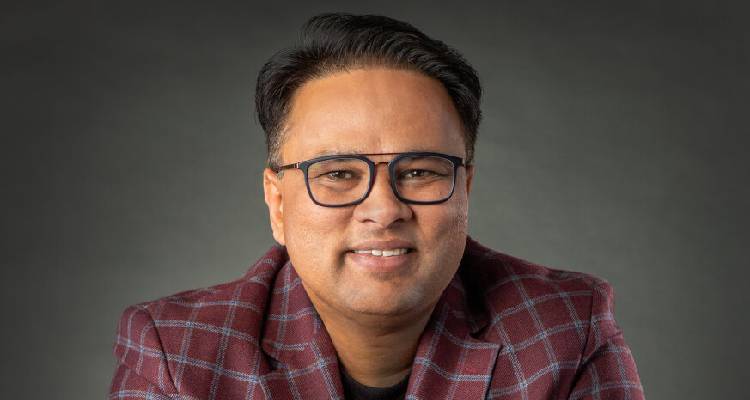

The dissection hall at University College of Medical Sciences in Delhi taught me more about entrepreneurship than any MBA program ever could. I just didn’t know it at the time.
When my classmates and I entered medical school in 2000, we were focused on the obvious challenges: surviving the brutal syllabus, enduring endless hospital postings, and somehow emerging as competent physicians. We believed we were being trained to examine patients, interpret lab results, and write prescriptions—the traditional path of a doctor.
We were wrong. Our medical school was teaching us something far more valuable: how to build things that didn’t exist, solve problems that had no clear answers, and lead when certainty was a luxury we couldn’t afford.
In other words, we were being trained as entrepreneurs. We just didn’t have the vocabulary for it yet.
The Unconventional MBA
There was no course titled ‘Entrepreneurship for Doctors.’ Instead, the lessons came disguised as clinical training. The dissection hall demanded precision, perseverance, and emotional resilience—skills every founder needs when the product doesn’t work and the funding is running out. Emergency room shifts forced split-second decisions with incomplete information, the exact condition startups operate under daily.
Surgery rotations tested not just our knowledge but our courage—the confidence to voice a hypothesis even when unsure, to act decisively when lives hung in the balance. Hospital corridors became our first marketplaces of ideas, where late-night debates built intellectual resilience and camaraderie fuelled ambition.
Most importantly, our internship taught us the greatest entrepreneurial truth: you may not know everything, but you will know enough to act. In medicine, as in startups, waiting for perfect information means watching the patient die.
From Diagnosis to Solution
It took me years to recognize that my entrepreneurial journey didn’t begin with a pitch deck—it began with clinical reasoning. Medical school taught us to move past symptoms to root causes, to design treatment plans that addressed systemic problems, not just surface complaints.
When I transitioned from clinical practice to healthcare advertising, I applied this diagnostic thinking to a different kind of problem: the broken communication system between pharmaceutical companies and physicians. Doctors were drowning in information yet starving for relevance. Marketing messages reached us, but never when we needed them, never in the context that mattered.
Most people adapted to this dysfunction. I couldn’t. That discomfort—that physician’s instinct that something vital wasn’t working—led me to explore solutions in healthcare technology.
I didn’t set out to build a business. I approached it the way I’d been trained: identify the ailment, understand the root cause, design an intervention. The diagnosis was straightforward—healthcare communication was built around messages, not around doctors. The question became: how do you deliver contextual, workflow-integrated information that supports clinical decisions rather than interrupting them?
This shift from treating individual patients to addressing systemic inefficiencies wasn’t a departure from medicine—it was an extension of it.
The Doctor-Entrepreneur Advantage
Physicians possess a unique entrepreneurial skillset that’s often overlooked. Every practicing doctor already navigates the complexities of running a practice: assessing needs, managing resources, complying with regulations, building trust, and optimizing operations—all while maintaining the highest ethical standards around privacy and patient care.
This combination of skills becomes increasingly valuable as medicine converges with technology, behavioral science, data analytics, and design thinking. The next wave of healthcare innovation will require leaders who understand both clinical complexities and human stakes—people who can speak the language of medicine and the language of innovation.
The question isn’t whether technology will transform healthcare—it’s whether that transformation will be led by people who understand what happens at the bedside.
An Evolving Practice
My own path has taken unexpected turns. The shy medical student who once avoided asking questions now hosts conversations with healthcare innovators. I’ve written about the intersection of medicine and communication, exploring how we might do better for both patients and physicians.
But these evolutions make sense. Medical training doesn’t just teach you to treat disease—it teaches you to identify problems others have learned to ignore, to trust your diagnostic instincts even when they lead you off the traditional path, and to persist when the solution isn’t obvious.
That’s not just medicine. That’s entrepreneurship.
The Choice We Don’t Have to Make
Healthcare stands at an inflection point. The shift from reactive to predictive medicine, from generic messaging to contextual communication, from digitized processes to genuinely human-centered digital experiences—these transformations are already underway.
Physicians won’t stop practicing medicine. They’ll expand what medicine means. Some will innovate within clinical practice, others through research, policy, education, or technology. All of these paths are valid. All of them need the same foundation: the ability to diagnose problems, the courage to challenge established systems, and the persistence to find better answers.
Looking back at my time in medical school, I realize the institution prepared us not just for a profession, but for possibility. My classmates have chosen different paths—clinics, research, policy, business, technology. But we all emerged with the same training: to see problems clearly, to act despite uncertainty, and to measure our work by the impact it creates.
Medical schools around the world are producing these problem-solvers every single day. Some will cure diseases, others will cure systems. Both are practicing medicine. Both are essential.
The only question is whether we’ll recognize what we’ve been trained to do.
- Advertisement -
