

We are building a rural eye-care workforce that can address avoidable blindness at scale
Dr Umang Mathur, CEO and Cornea Specialist, Dr Shroff’s Charity Eye Hospital highlights the role of structured training, CSR collaboration, and workforce development in rural eye care in conversation with Neha Aathavale

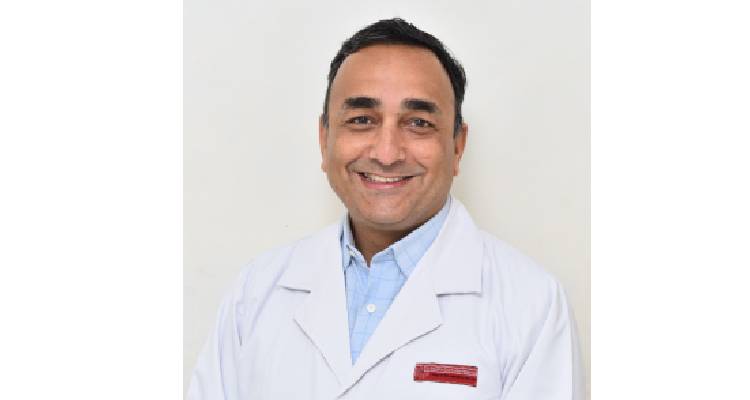

India faces a significant shortage of trained ophthalmologists and paramedics in rural regions. How will Phase II of the Standard Chartered–Shroff’s Eye Care Education Academy help bridge this manpower gap over the next few years?
Phase II of the Standard Chartered–Shroff’s Eye Care Education Academy will build a stronger rural eyecare workforce by expanding structured training for medical officers, ophthalmic fellows, and paramedical staff. With the new wet lab, A–V training room, and strengthened curricula, the Academy will enhance surgical skills, standardise learning, and increase the number of job-ready professionals. Over the next 3 years, this will enable SCEH to deploy more skilled manpower to secondary and vision centres, directly addressing the shortage of trained eye-care providers in underserved regions.
One of the core goals of the Vrindavan rural academy is to empower women through skill-building and employment. What specific roles and opportunities will this initiative create for women in the eye care sector?
The Vrindavan rural academy will create dedicated pathways for women to enter and grow within the eye-care sector. Through structured training in roles such as Ophthalmic Assistants, Vision Technicians, Counselors, and Operating Theatre Technicians, the academy will equip women with employable clinical and technical skills. With handson exposure in the mock clinics and patient-care areas, the initiative will enable women from rural communities to secure stable jobs, advance professionally, and become key contributors to strengthened rural eyecare services.
Training 2,000 professionals and supporting 100,000 surgeries annually by 2027 is a large-scale goal. What training methodologies and operational frameworks will ensure quality and sustainability across the hub-and-spoke model?
To train 2,000 professionals and support 100,000 surgeries annually by 2027, the Academy will implement a standardised, competencybased training model supported by robust and structured curriculum . Hands-on learning through the wet lab and mentored surgical exposure will ensure uniform quality across all cadres. A strong hub-andspoke framework, with Vrindavan as the training hub and secondary centres as practical learning sites, will enable continuous skill reinforcement. Regular assessments, digital learning modules, and monitored logbooks will ensure consistency, while ongoing faculty development like train the trainers data driven quality reviews will sustain performance across all centres.
Corporate – Healthcare partnerships are becoming integral to healthcare expansion. How does the collaboration with Standard Chartered Bank reflect broader trends in CSR-led capacity building within India’s healthcare sector?
The collaboration with Standard Chartered Bank reflects a broader shift in India’s CSR landscape, where corporate partners are increasingly investing in capacity building rather than episodic aid. In the eye-care and wider healthcare sector, this means supporting structured training programs, strengthening rural delivery systems, and developing skilled human resources that create longterm impact. By partnering with institutions like SCEH to build training academies, corporates are helping expand access to quality care, bridge workforce shortages, and create sustainable models that benefit underserved communities well beyond the project period.
As SCEH expands its training and service footprint, what long-term impact do you envision on addressing the rural blindness burden, and how does this initiative align with SCEH’s larger mission for universal eye health?
As SCEH expands its training and service footprint, the long-term impact will be a stronger rural eye-care ecosystem capable of addressing avoidable blindness at scale. By developing a steady pipeline of skilled ophthalmologists, optometrists, and allied paramedics, the initiative will enhance early detection, timely surgeries, and continuous care in underserved areas. SCEH has already helped make many villages blindness-free through its trained ophthalmologists and paramedical teams, and this initiative will further accelerate that impact. Aligned with SCEH’s mission of universal eye health, the expanded training and service model will reduce the rural blindness burden, improve access to sightrestoring care, and build a sustainable system where skilled professionals continue to serve and uplift rural communities.
[email protected]
[email protected]
- Advertisement -
