

Why India needs a health score, not just a credit score
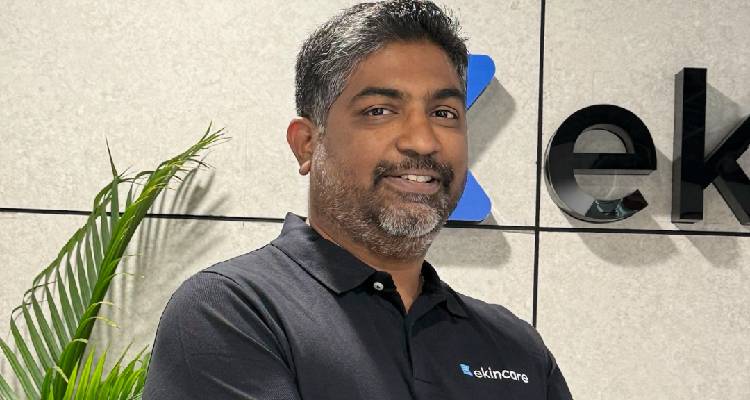
Kiran, CEO & Co-founder, ekincare highlights the need for a unified, data-driven “health score” system to shift India’s healthcare from fragmented, reactive treatment to integrated, preventive care.


This is where the idea of a health score becomes critical. It is not a futuristic concept but a practical approach to reorganize the delivery and experience of healthcare. The concept of a health score would be a dynamic and continuously evolving measurement of the individual’s health risk profile. It would gather information from different sources to provide a longitudinal profile.
Much like how a credit score is a measure of financial discipline over time, a health score would be a measure of behavioral and physiological trends over time, encompassing risk and improvement. This would enable early identification of risks and interventions to mitigate them to prevent illness. Healthcare moves from being reactive to being proactive, managing risk before it becomes unmanageable.
Globally, this is already an evolving phenomenon. In the UK and US, health data is increasingly being used to set insurance premiums, forecast disease risk, and develop prevention strategies. This difference is not just technological capability but, but the ability to integrate and activate data across the care continuum.
For India, the opportunity is both a health and an economic one.
The cost of treating advanced-stage chronic diseases is much higher when compared to treating them at an early stage. Various public health studies, as well as estimates by the Indian Council of Medical Research, have also confirmed this fact. From a macroeconomic point of view, this translates into higher insurance claims and financial burdens on people, as well as losses to employers.
Prevention, therefore, is not just a clinical priority. It is a financial necessity. Building such a system does not require starting from scratch. India already has the foundational infrastructure. Programs like the Ayushman Bharat Digital Mission are building blocks for an interoperable health records system, and the digital ecosystem in general has proven that the country can scale to its population.
What is needed now is convergence.
Firstly, there needs to be a smooth flow of health-related information between service providers, e.g., hospitals, diagnostics, pharmacies, etc. This must be underpinned by a consent-driven model, which means individuals have control over their information. Subsequently, there needs to be an analytics layer on top, which can interpret the information and provide insights, thus providing a more personalized approach. The transition from fragmented data to connected intelligence is what will make a health score viable.
India has already shown that it can build systems that redefine access at scale. A credit score transformed how financial trust is assessed and extended. A health score has the potential to do the same for healthcare. Because in the long run, the true measure of a nation’s progress will not just be how well it manages capital, but how effectively it safeguards the health of its people.
- Advertisement -
