

Technology can expand reach while strengthening quality and confidence in healthcare delivery
From shaping national health policy to guiding digital healthcare, C.K. Mishra, now Independent Director at Practo,reflects on governance,technology,and patient-centric care in an exclusive interview with Neha Aathavale

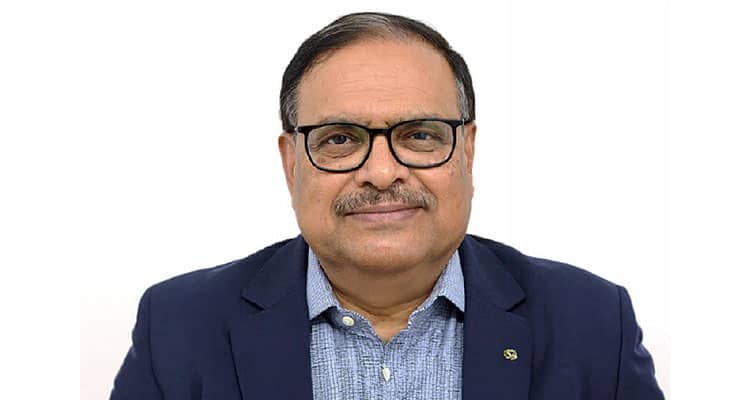

Having spent decades in public health policymaking, how do you see your policy and governance experience shaping your role at Practo?
Building healthcare is not a project, it is an ongoing national effort. Even the most well-designed systems require continuous strengthening, because the scale and diversity of India make this one of the most complex sectors to manage. Over the years, I have been involved in building and overseeing systems at national scale, where multiple stakeholders and very different realities must work within a shared framework. In such a context, governance is not just about oversight but about ensuring that systems remain aligned, accountable, and capable of delivering outcomes over time.
What is equally important is recognising that governments alone cannot solve all aspects of healthcare. New-age platforms and entrepreneurs are bringing fresh thinking to longstanding challenges particularly in areas like access, information, and decision-making. What Practo is building is not healthcare delivery itself, but an enabling layer, one that helps organise information, connect stakeholders, and support more informed choices. In a system as complex as healthcare, such neutral and credible platforms can play an important role in strengthening trust.
I see value in supporting such efforts. When ideas like these are built with scale and responsibility, they can meaningfully improve how people experience and navigate healthcare in India.
Different states having different levels of achievements, therefore the interventions will be different. (also worked in state, hence)
From your perspective, how can technology-led healthcare infrastructure help bridge existing gaps in India’s healthcare delivery system?
India’s healthcare system has always had to balance two realities. A) The need to serve at very large scale, and B) the need to ensure that quality is not unevenly distributed. Reaching the last mile, while maintaining standards of care, has been a constant priority.
Reaching the last mile, while maintaining standards of care, has been a constant priority.
Technology-led infrastructure can act as a force multiplier by extending access beyond physical limitations; enabling patients, even in remote or underserved areas, to access information, seek consultations, and explore options that may not exist locally. Equally important is the role technology can play in bringing transparency into the system. When information on providers, treatments, and outcomes becomes more visible and structured, it empowers patients to make informed choices. At the same time, it naturally encourages greater accountability across the system – not through enforcement, but through visibility. The real opportunity is to use technology to not only expand the reach but to strengthen the quality and confidence with which it is delivered.
As health-tech companies scale, how important is governance and institutional credibility in building trust and ensuring long-term sustainability?
“Trust is built in drops and lost in buckets.” In healthcare this holds most meaning. The system itself is interconnected between patients, doctors, hospitals, insurers. Each depends on the other, and in many ways, each holds the other accountable. When this balance is maintained, the system works in the interest of the patient.
As organisations grow, governance ensures that this balance is not disturbed. It brings discipline, keeps intent clear, and ensures that growth does not come at the cost of fairness or quality. For platforms that sit across the ecosystem, neutrality becomes important. They must be seen as enabling decisions, not influencing them. That is what builds confidence over time.
Ultimately, sustainability in healthcare comes only from one thing – doing right by the patient, consistently, and at scale.
How do you view the strategic timing of your appointment, especially as Practo expands into global markets like the US and UAE?
I have interacted with Shashank over time and have been impressed by his clarity of thought and his commitment to building for the long term. There is a clear intent to position Indian healthcare capabilities on the global map, and that is something we should take collective pride in. Healthcare is a complex sector in any country, and building a platform that can operate across geographies requires both conviction and discipline. Practo is among the first from India to take a healthcare platform of this nature to global markets, and that itself is a matter of significance.
This is also reflective of a larger shift. Our entrepreneurial ecosystem today is resilient and ambitious like no other. We have the ability to solve for scale and complexity here, and increasingly, to take those solutions to the world with confidence. This journey, therefore, is not just about one company. It reflects the growing confidence that solutions built in India can stand up to global expectations when pursued with the right intent and responsibility.
Looking ahead, how can policy, technology, and patient outcomes be better aligned to drive the next phase of healthcare growth in India?
The next phase of healthcare in India must be defined by outcomes. Access and capacity will always remain important, but the real measure of progress is whether care leads to better health for people. Policy, technology, and delivery systems must work in alignment to achieve this. Policy provides direction and sets the framework. Technology enables reach, transparency, and the ability to measure outcomes at scale. Providers remain central to delivering care with consistency and responsibility.
One of the key shifts required is towards greater use of data, not just for reporting, but for improving how care is delivered. When outcomes are visible, the system becomes more accountable, and over time, quality improves. India has both the scale and the capability to build a healthcare system that is accessible, accountable, and outcome-driven. The focus now should be on strengthening alignment across all parts of the system, so that the benefits of progress reach every citizen.
- Advertisement -
