

Insurance, not clinical capability, is the real barrier to surgical access
Dr Pradeep Chowbey, Group Chairman of Max Institute of Laparoscopic, Robotic, Bariatric Surgery and GI Surgery, examines the widening gap between clinical capability and insurance preparedness, and argues that India’s next healthcare challenge lies in ensuring reimbursement frameworks evolve in step with modern standards of surgical care

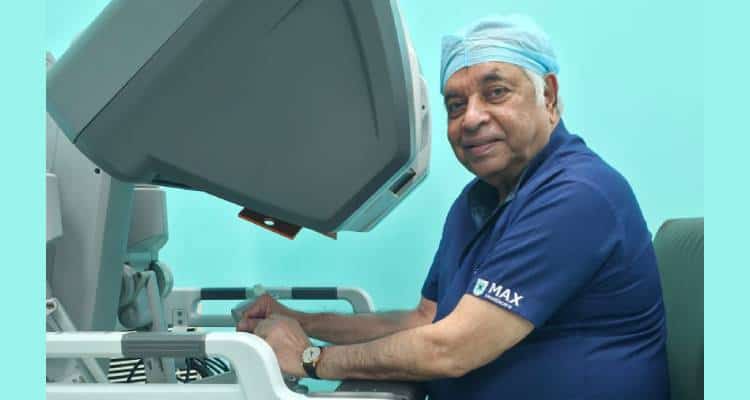

Consider a patient who arrives at a hospital with a diagnosis that warrants surgical intervention. The surgeon has assessed the case and determined that a robotic-assisted approach offers the best clinical outcome. The technology is available. The surgical team is trained. The procedure is recognised by the regulator. And yet, the patient hesitates — not because of fear of surgery, but because of fear of the financial path.
This is the defining access problem in Indian surgery today. Not capability. Not infrastructure. Not clinical readiness. Insurance awareness and readiness.
India has, over the past two decades, built genuine depth in advanced surgical practice. Minimally invasive and robotic-assisted approaches have moved firmly into the mainstream. Surgeons are trained, hospitals have built structured programmes, and the clinical evidence base has matured. Robotic-assisted surgery is no longer a peripheral option — it sits within the standard surgical toolkit, with the choice of approach guided by patient profile, disease complexity, and clinical judgement.
This shift is visible not just in tertiary centres, but increasingly across a wider network of institutions, including those in emerging urban markets. The conversation has moved beyond whether such approaches should be adopted, to how consistently and appropriately they can be integrated into routine care.
The regulatory framework has broadly kept pace. The Insurance Regulatory and Development Authority of India has recognised robotic-assisted surgery as a modern treatment method and indicated that it should not be excluded where medically indicated. Recognition, however, is not the same as access.
The operative question is not whether robotic-assisted surgery appears within coverage frameworks. It is what a policy actually pays, under what conditions, and how reliably a patient can access that support at the moment of need.
In practice, sub-limits and co-payment provisions attached to robotic-assisted procedures frequently reduce effective reimbursement to levels below those available for comparable conventional surgery. This creates a quiet but consequential distortion: patients are financially discouraged from choosing the approach their surgeon considers most appropriate. Coverage that exists on paper does not always translate into reliable access at the point of care, with uncertainty around cashless approvals often pushing patients toward reimbursement pathways instead.
For surgeons and hospitals, this introduces an additional layer of complexity. Repeated procedural justification and additional documentation requirements add friction even where the clinical rationale is well established. Over time, this begins to influence how consistently advanced surgical options are offered, introducing variability in access that is shaped as much by financial pathway predictability as by clinical need.
The patient in that consulting room is not a hypothetical. Across India, this scenario plays out daily. A clinically appropriate option is available, but the financial pathway to receiving it remains uncertain. That uncertainty, multiplied across millions of insured patients, represents an enormous and largely invisible burden on the healthcare system, delaying decision-making, introducing avoidable anxiety, and at times leading to the selection of a suboptimal surgical pathway on financial grounds alone.
There is also a broader system implication. When reimbursement frameworks do not keep pace with how surgery is practised, they risk slowing the natural progression of care. Hospitals that have invested in training, infrastructure, and programme development find themselves operating within constraints that are not clinical, but administrative. Patients, meanwhile, experience a system where availability does not necessarily translate into accessibility.
India’s next access challenge, then, is not to expand surgical capability further. It is to ensure that reimbursement frameworks keep pace with modern standards of care. That requires genuine parity in reimbursement for medically indicated robotic-assisted procedures, more predictable and consistent cashless pathways, and policy structures that reflect how surgery is actually practised today.
The technology is ready. The surgeons are ready. The question is whether the system that funds care is ready to catch up.
- Advertisement -