

Bridging the gap in sickle cell care: What india’s healthcare system must prioritise next
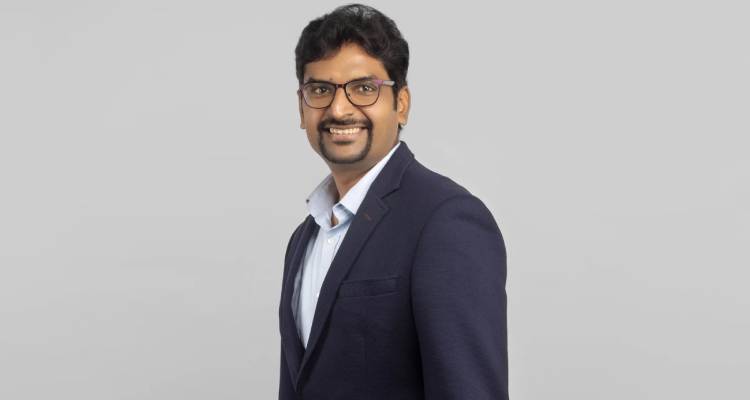
Dr Nitin Agarwal, Head – Donor Request Management, DKMS Foundation India, highlights the urgent need to move beyond screening and diagnosis in India's fight against sickle cell disease


There is a particular irony to sickle cell disease. It is not a mystery. We have known what causes it, how it progresses, and in many cases, how to cure it. And yet, in India, children continue to die from it every year. Quietly, in districts where the nearest specialist is a six-hour bus ride away, in families who were told their child had “weak blood” and sent home with iron tablets.
I have spent enough time working in the space of blood disorders to know that the gap between what medicine can do and what most patients in this country actually receive is not a gap of knowledge. It is a gap of will, infrastructure, and priority. And nowhere is this more visible than in how India has addressed sickle cell disease. Or rather, how it has not.
A disease hiding in plain sight
Sickle cell disease is a genetic condition in which red blood cells, instead of maintaining their smooth disc shape, deform into a rigid crescent. These cells get stuck in small blood vessels. They block vessels. They starve tissues of oxygen. For a patient, this means episodes of severe pain known as vaso-occlusive crises, which can last days, leave lasting organ damage, and in children, interrupt normal development entirely. The spleen, kidneys, lungs, and brain are all vulnerable over time.
India’s burden is staggering. The 2021 Global Burden of Disease study puts the all-age prevalence rate of SCD in India at 89.6 per 100,000 people. The states of Maharashtra, Madhya Pradesh, Chhattisgarh, Odisha, Jharkhand, and Gujarat account for the largest share of cases, with over 20 million people estimated to carry the sickle cell trait across these regions. The disease falls hardest on tribal communities. India’s tribal population numbers over 104 million, making up 8.6 percent of the total population, and these communities face disproportionate exposure with the least access to care.
Yet for years, sickle cell disease barely registered on India’s public health radar. The result was a generation of patients who grew up without diagnosis, without hydroxyurea, without counselling, and without any real understanding of what was happening inside their own bodies.
The mission that changed the conversation
July 2023 marked something of a turning point. Prime Minister Modi launched the National Sickle Cell Anaemia Elimination Mission in Shahdol, Madhya Pradesh, deliberately chosen as the heart of one of the country’s worst-affected tribal belts. The Mission’s goal is to eliminate sickle cell disease as a public health problem by 2047, the centenary of India’s independence. It targets universal screening of seven crore people aged between 0 and 40 in high-burden tribal districts, spread across 278 districts in 17 states.
Progress has been real[https://www.impriindia.com/insights/policy-update/sickle-cell-anaemia-elimination/]. Over six crore people have now been screened through Point-of-Care Testing kits, well ahead of schedule. Of those, more than 18.85 lakh have been identified as either having the disease or carrying the sickle cell trait. Of this group, 2.15 lakh have been diagnosed with SCD and 16.7 lakh are trait carriers. This is not a small number. This is a public health revelation. And the fact that so many of these individuals were previously unaware of their status tells you everything about the decades of neglect that preceded this mission.
But I want to be honest about something. Screening is the easy part. Diagnosing someone with sickle cell disease and then failing to connect them to meaningful treatment is not enough . The harder work starts after the test result.
The treatment gap nobody talks about enough
The mainstay of SCD management in India today is hydroxyurea and supportive care, including blood transfusions during crises, antibiotics to manage infections, and pain management. These are valuable interventions. They reduce hospitalisation frequency and improve quality of life. But they are not cures. Patients remain on treatment indefinitely, and the disease continues to extract its toll over a lifetime.
The one treatment that offers an actual cure is a haematopoietic stem cell transplant. Healthy blood stem cells from a compatible donor replace the patient’s own defective ones. Leading haematologists now report transplant success rates exceeding 90 per cent for SCD patients when a well-matched donor is available. That is not an experimental figure. That is the current standard of care at centres that have built the expertise to deliver it.
So why are so few Indian patients receiving it? Two reasons, primarily. First, transplant infrastructure is concentrated in a handful of private tertiary hospitals in metro cities. The cost, the travel, the time away from work: the arithmetic of survival does not add up for most of the people who need this treatment most. Second, even when a patient reaches a transplant centre, finding a matched unrelated donor is extraordinarily difficult. Only about 30 per cent of patients find a compatible donor within their family. The remaining 70 per cent are entirely dependent on unrelated donors . And India’s registry remains critically small.
Over 8 lakh registered donors across all Indian registries – for a country of 1.4 billion.
DKMS Foundation India (a non-profit organisation dedicated to the fight against blood cancer and other blood disorders) established in 2019, currently has 2,50,000 registered donors and has facilitated 250 stem cell donations. These numbers represent real lives saved and genuine organisational commitment. But set against the scale of need across blood cancers, aplastic anaemia, thalassaemia, and sickle cell disease, they also reveal a number that is in orders of magnitude smaller than what is required. HLA compatibility, the biological matching required for a successful transplant, is closely linked to ethnicity. A patient from the tribal community in Chhattisgarh will most likely find a match within a donor from a similar genetic background. But a large part of the problem is unresolved misinformation. Fears about stem cell donation persist: that it is painful, that it weakens you permanently, that it affects fertility. None of this is true. Blood stem cell donation is safe, voluntary, and in most cases involves a process similar to donating platelets. What must come next
Transplant infrastructure must move closer to patients. The model developed by DKMS Foundation India in partnership with Sankalp India Foundation, building dedicated bone marrow transplant units at non-profit hospitals in Bengaluru and Ahmedabad, with a new Ahmedabad centre inaugurated in February 2025, demonstrates what is possible with deliberate investment in accessible, affordable transplant capacity. This needs to be replicated in high-burden states. A patient in Odisha or Jharkhand should not have to travel to Bengaluru for a procedure that could, with the right investment, be available at a state medical college hospital.
Young people, in particular, have a vital role to play in expanding India’s donor registry. Younger donors are medically preferred: their stem cells are more robust, engraftment rates are higher, and recipients of younger-donor transplants tend to have better long-term outcomes. A 21-year-old who registers today could remain on the registry for decades, matching patients across a generation. Yet awareness among young Indians of the option to register as a stem cell donor remains alarmingly low. Colleges, universities, and youth organisations represent an untapped channel for mass registration drives. The ask is not blood, not bone marrow surgery, not risk. In most cases, it is a cheek swab and a willingness to be called if a patient ever needs you. That is a small act with an outsized consequence. And finally, the chain from diagnosis to treatment must be closed. The Mission currently excels at the front end, finding people who have the disease. But a diagnosis with no clear next step is not care. Every positive SCD diagnosis generated through NSCAEM screening should trigger an automatic referral pathway: a counsellor, a treatment plan, a link to financial support where needed. The data exists. The patients have been found. Connecting them to a system that can actually help them is, at this point, a matter of administrative will.
2047 is twenty-one years away. For a child born with sickle cell disease today, that is their entire childhood, adolescence, and early adulthood. Whether they spend those years going in and out of hospitals, or whether they are cured and live fully, depends on decisions being made right now. We have the medicine. We have the mission.
What we need now is action — from policymakers, from hospitals, and from every Indian who can register as a stem cell donor. If you are between 18 and 55 and in good health, you can register today through DKMS Foundation India at https://www.dkms-bmst.org/en/register-now.
A single cheek swab is all it takes. Somewhere in this country, there is a patient waiting for a match that only you might be able to provide. Come forward. Register. Be the cure.
- Advertisement -
