

From health records to health ownership: Empowering citizens in India’s digital health era
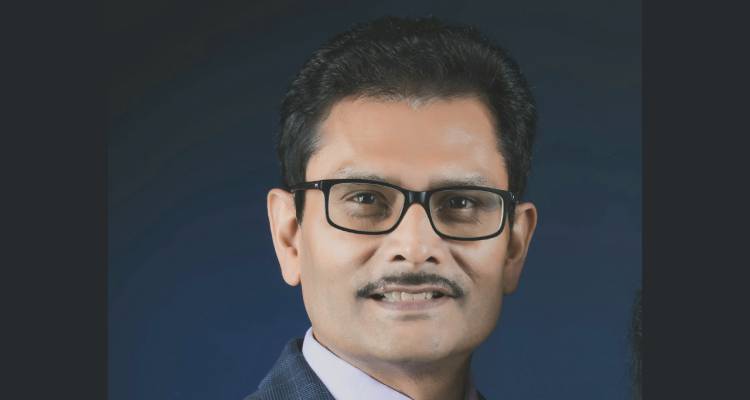
Dr Aloknath De, Founder and CEO, TechCrafter International, explains how India’s healthcare ecosystem is moving beyond fragmented medical records towards a patient-centric digital model, where citizens have greater ownership of their health data


Traditionally, India’s healthcare system revolved around diagnosing illness and treating patients after seeing symptoms. Medical records often remain fragmented across multiple systems, either in hospitals, diagnostic centres, clinics or in folders that are carried by patients themselves. Every health record of a person exists independently but rarely converses or connects with other records. In simple terms, healthcare is never tracked; it often begins with a certain illness and ends with treatment. This has resulted in a disconnected healthcare experience for a long time.
However, now the country’s healthcare ecosystem is shifting from traditional to a more connected and proactive model. The conversation around health, illness and treatment is no longer limited to only digitised health records. It is gradually expanding into a broader aspect, answering important questions- who should own the health data, and how can that ownership improve healthcare outcomes?
The answer lies in empowering citizens to own and control their health data. They should not be just carrying fragmented reports from one set of hospitals and clinics to another set. For professional reasons or otherwise, citizens move across states; such data portability of health information can significantly help them. Health data ultimately belongs to individuals and they should have the ability to securely access, manage and share it based on their needs and consent.
But why is it important to empower citizens with health ownership? Often, it has been seen that when patients visit a new physician or switch hospitals, they are required to narrate their entire medical history all over again. The existing records might be missing, or older records might not be available, so understanding long-term health patterns becomes difficult for doctors because historical data is scattered. Therefore, the shift to health data ownership is becoming increasingly important as healthcare is a continuous journey of information and not a collection of single events.
Healthcare systems are entering into an era of patient-controlled consent with improved interoperability, strict privacy adherence, and proactive management of personal health records. This means that individuals should determine who can access their data and for what purpose, while ensuring strict privacy.
For instance, a doctor treating a patient with liver cirrhosis may need to understand how the condition evolved over time and how the body could respond to a treatment. Doctors can make better healthcare decisions if they can access historical data at one go.
To address these gaps, India is strengthening its digital health infrastructure through initiatives like the Ayushman Bharat Digital Mission (ABDM) and the Ayushman Bharat Health Account (ABHA) ID. These government initiatives are laying an important foundation for connected healthcare ecosystems with the core objective to link multiple health information. This will create a framework where records can move with patients rather than remain confined within distinct institutions, enhancing the ability of the healthcare systems to securely exchange and understand information across various platforms.
Moreover, the nature of health data itself is also evolving rapidly. Earlier, it was just restricted to prescriptions, laboratory reports, diagnostic scans, and hospital summaries. However, healthcare today has moved beyond conventional clinical records. Wearable devices such as smartwatches, fitness bands and health rings are continuously generating health information. These devices track activity patterns, heart-rate variability, sleep quality, oxygen saturation levels, exercise performance, and cardiovascular indicators, contributing to the healthcare data of an individual, while providing valuable insights into overall well-being.
These technologies are also changing how individuals interact with their own health. By tracking footsteps, oxygen level and other health parameters regularly, people are becoming more conscious about preventive healthcare than ever before, as it helps in detecting early warning signs, rates of deterioration, recovery patterns, and long-term health outcomes. There is a growing awareness that health must be understood more holistically.
Further, health information is becoming increasingly multidimensional. Diseases and medical events rarely remain confined to single organs or isolated symptoms, rather they often interact with each other in complex ways. A physician may need to understand relationships across biomarkers, symptoms, organ systems, medications, lifestyle patterns, and family history. Increasingly, genomic information and new biomarker data are also entering healthcare ecosystems, further expanding both opportunities and complexities.
Now the challenge here is not restricted to data storage. The real issue is about aggregating, correlating, analysing, and synthesising information into actionable intelligence. For physicians, the ability to observe interconnected information across multiple health dimensions can significantly improve diagnosis and treatment decisions.
Here, artificial intelligence can play a powerful enabler in this transition, not by replacing doctors but by helping them organise and interpret increasingly complex datasets into actionable intelligence. Intelligent systems can present healthcare information in ways that are easier to understand, identify patterns across multiple reports, visualise long-term health trends, and support proactive interventions.
At TechCrafter International, the focus has been on developing approaches that help in capturing health information in meaningful ways, making them easy to visualise and easy to act upon for both citizens and physicians. The future of digital healthcare will not be defined merely by how much information is collected but by how effectively that information empowers individuals.
- Advertisement -
