

Wockhardt Foundation’s Mobile1000 records over 50 million patient interactions across underserved communities
Programme has recorded 51.1 million patient interactions through 211 Mobile Medical Units operating across 21 states and nearly 2,919 villages

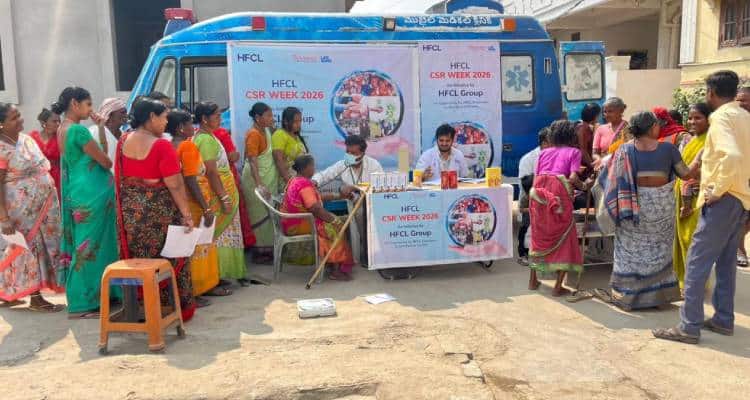

Wockhardt Foundation, the humanitarian arm of Wockhardt Ltd., has announced that its Mobile1000 programme has crossed 50 million patient interactions across India. According to the Foundation, the programme has recorded 51.1 million patient interactions during the first half of 2026 through its network of Mobile Medical Units (MMUs), reflecting the continued use of mobile healthcare services to improve access to primary care in underserved areas.
The development comes as India continues to expand its primary healthcare infrastructure through initiatives such as Ayushman Arogya Mandirs, which now number more than 1.86 lakh operational centres nationwide. While these centres have improved access to comprehensive primary healthcare, reaching geographically remote and underserved populations remains an ongoing challenge. Mobile healthcare services are increasingly being used to supplement existing healthcare infrastructure by providing consultations, basic diagnostics, preventive services and referrals closer to communities.
According to the Foundation, the Mobile1000 programme currently operates 211 Mobile Medical Units across 21 states, nearly 73 districts and around 2,919 villages. The programme follows an Awareness, Diagnosis, Cure and Referral (ADCR) model and provides doctor consultations, basic diagnostic services, generic medicines, preventive health screening, health awareness activities and referrals. Digital patient records and point-of-care diagnostic tools are also integrated into service delivery.
Commenting on the milestone, Dr Huzaifa Khorakiwala, CEO, Wockhardt Foundation, said, “Reaching 50 million patient interactions reflects the scale of India’s need for accessible primary healthcare. Across many parts of the country, delayed diagnosis is often a consequence of distance rather than disease. Mobile healthcare demonstrates that when consultations, diagnostics and referrals are taken closer to communities, healthcare becomes more timely, more preventive and more equitable. As India continues to strengthen its primary healthcare ecosystem, community-based delivery models can complement existing health infrastructure and improve access to care regardless of geography.”
Ajay Somvanshi, Chief Operating Officer, Wockhardt Foundation, said, “Improving healthcare access requires long-term collaboration rather than isolated interventions. Governments, healthcare providers, corporate CSR programmes and local communities each have a role to play in strengthening last-mile healthcare delivery. Mobile1000 has shown that partnerships supported by technology can improve continuity of care and expand access to primary healthcare at scale. As we move towards our vision of 1,000 Mobile Medical Units, our focus will remain on strengthening collaborations that improve access to healthcare closer to communities.”
The Foundation said the programme has supported patients in rural and underserved areas through consultations, diagnostics, follow-up care and referrals for chronic and acute health conditions. It also plans to expand the Mobile1000 network while strengthening digital diagnostics, telemedicine and partnerships with government agencies and CSR programmes to extend healthcare services to additional locations.
- Advertisement -