

IHW Council releases white paper on improving access to infertility care
White paper recommends policy measures on awareness, insurance coverage, public financing and workplace support for infertility care in India

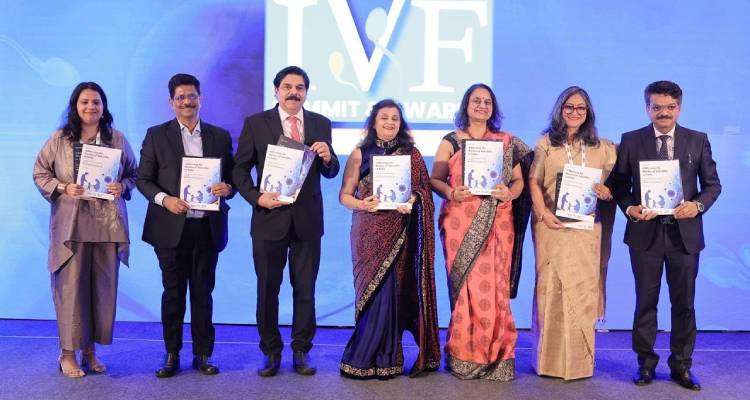

The Integrated Health & Wellbeing (IHW) Council released a white paper outlining policy recommendations to improve access to infertility care in India. The paper was released during the 7th India IVF Summit and proposes measures related to awareness, insurance coverage, public financing and workplace support for fertility care.
The white paper, Beyond the Burden of Infertility in India: Towards Reproductive Equity through Mission Fertility 2.1, was developed in collaboration with IIHMR Delhi. Drawing on data from the World Health Organization (WHO), National Family Health Survey (NFHS-5), Indian Council of Medical Research (ICMR), peer-reviewed literature and national policy frameworks, it presents recommendations aimed at strengthening access to infertility care.
The document recommends recognising infertility as a reproductive health condition, expanding awareness through ASHAs, schools and workplaces with greater attention to male fertility, integrating employer-supported fertility benefits into workplace wellness programmes, reforming private insurance coverage, modernising reimbursement under CGHS, ESIC and public sector undertakings, and strengthening state financing through public-private partnerships. It also proposes a Fertility Benefit Package under PM-JAY for economically vulnerable families and highlights public financing models adopted by Goa, Sikkim and West Bengal.
The white paper was released by Baby Rani Maurya, Cabinet Minister, Women Welfare, Child Development and Nutrition, Government of Uttar Pradesh, in the presence of Dr Sunita Tandulwadkar, President, Indian Society for Assisted Reproduction (ISAR), Dr Rishikesh Pai, Founder and Managing Director, Bloom IVF Group and Immediate Past President, FOGSI, Shivani Sharma, Chief Operating Officer, Bharat Serums and Vaccines (BSV), Pratin Vete, Chief Executive Officer, Universal Nutriscience, Dr Divya Agarwal, Associate Professor, IIHMR Delhi, Ritika Kumari, Public Health Policy Lead, IHW Council, and Kamal Narayan Omer, Chief Executive Officer, IHW Council. The inaugural session also included a video message from Shri G.T. Dhungel, Minister for Health and Family Welfare, Culture and AYUSH, Government of Sikkim.
The annual summit brought together policymakers, clinicians, embryologists, researchers, legal experts, industry representatives, corporate HR leaders and patient advocates to discuss issues related to infertility care and reproductive health. Discussions focused on improving awareness, financial protection and access to fertility services at a time when India’s total fertility rate has fallen below the replacement level of 2.1.
Dr Tandulwadkar said, “Today is much more than a celebration of a scientific achievement. It is a celebration of hope. India is no longer merely following global advances in IVF. India is helping create them. IVF is not about laboratories or incubators. It is about families waiting to hear a heartbeat, and every patient deserves compassion and the very best science we can offer.”
Sharma said, “The gap between what medical science can offer and what many couples can actually access remains one of the biggest challenges before us, and closing that gap will define the next chapter of fertility care in India. Awareness has not progressed at the same pace as science. Fertility conversations remain surrounded by silence and stigma, and by the time couples seek help, valuable time has often been lost.” She also referred to Finding Your Missing Joy, a patient awareness initiative encouraging couples to seek timely guidance from qualified fertility specialists.
Dr Pai said, “India has grown from ten IVF centres in the early days to nearly five thousand today, and the next phase of this journey has to be about access, which rests on four pillars: awareness, availability, affordability and assurance of ethical, quality outcomes. As doctors, we hold real power, the power to give treatment free of charge to those who cannot afford it, and that is a power none of us should be shy of using.”
Vete said, “As per the latest data, 3.5 crore couples in India face the challenge of infertility, and only about 42 lakh can access treatment. A gap this great demands that every stakeholder in the ecosystem come together on a shared agenda of awareness and access.” During the event, Universal Nutriscience also introduced Journey, a patient education platform providing information on fertility and IVF care.
Omer said, “This white paper is more than a policy document. It is a roadmap to ensure that fertility care is recognised as an essential part of reproductive healthcare rather than a privilege. We are calling for reforms that improve awareness, strengthen financial protection, modernise public reimbursement systems, encourage responsible employer participation and build public-private partnerships so that no couple is denied the opportunity to build a family because of where they live or what they can afford.”
- Advertisement -