

Preventing deskilling is the next step in India’s health transformation
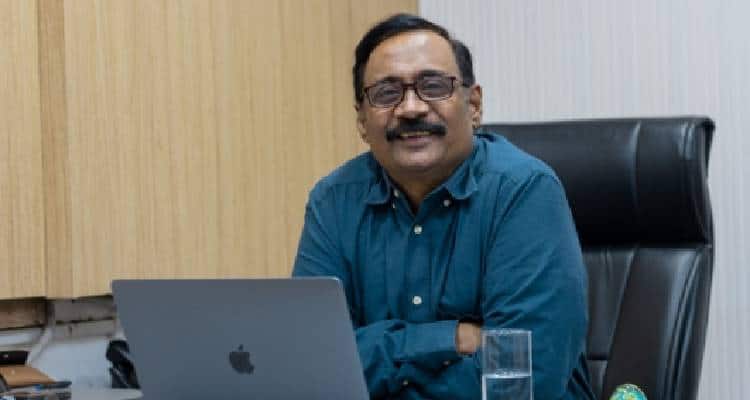
Santanu Mishra, Co-founder, Smile Foundation argues that while AI can enhance efficiency and improve access, maintaining human vigilance and preventing the de-skilling of medical trainees is a profound sociological challenge and very important to the medical workforce


It was in the year 1971 when Dr Dilip Mahalanabis, a paediatrician at a refugee camp in Bongaon, West Bengal, was faced with a rapidly spreading case of cholera, a shortage of intravenous fluids and many more patients than any traditional hospital treatment could possibly cope with. In that moment of crisis, Dr Mahalanabis innovated the science behind oral rehydration therapy. His great insight was that the mixture of water, sugar and salts could be administered at scale safely without the need for doctors and patients’ families would be instructed on how to administer treatment themselves. [1]
It was a critical moment in the history of public health. An intervention that was life-saving in its own right was freed from dependency on specialist knowledge and became an intervention that could be scaled – from clinician to front line practitioner to patient family members and beyond. It is a lesson that is very much relevant to India. The country has made commendable progress in increasing access to healthcare facilities. The next big step is to ensure that knowledge, discretion and human touch of the practice of medicine does not lose out as India develops its system.
A larger health system must also become a learning system
The country has a strong health system, with an increase in the number of medical colleges from 387 in 2014 to more than 800 today. Primary care-wise, 1,81,873 Ayushman Arogya Mandirs were functional by November 2025. These health centres had clocked 494.71 crore footfalls and conducted 41.93 crore teleconsultations besides undertaking massive screening for hypertension, diabetes, and common cancers.[2]
That is the right way to go. Healthcare delivery is becoming more community-oriented with a more diverse bouquet of preventive, promotive, curative, rehabilitative and palliative care. But expansion also creates new dynamics, particularly with the integration of AI in our healthcare system.
Many experts are concerned that AI may welcome instances of overdependence. However, the right use of AI will help the workforce execute their competencies cohesively. This is because doctors are trained to spot the earliest warning signs but are often constrained by a brief, transactional consultations. Nurses might know how to counsel a family about sticking to their medicines, but lack the time to do it. The ASHA, ANM or Community Health Officer could spot the at-risk patient, but never know if there has been diagnosis and treatment following the referral.
The current technologies can do a better job as unlike previous technologies or standard search engines (like Google), Large Language Models (LLMs) can digest complex, unstructured narrative data, such as clinical notes and respond in fluent prose. This allows doctors to interact with AI like a subspecialty consultant rather than a transactional database.
The most important skills in health care are often invisible – active listening, good explanation, early risk recognition, understanding the constraints of the patient’s family, making sure that the patient doesn’t slip through the gaps between screening, referral and cure. They are instrumental to clinical practice.
Technology must strengthen judgement, not displace it
The imperative to defend these competencies has become more pressing because of the growing digitisation of healthcare services. The Indian healthcare system has credible proof of technology integration, with eSanjeevani having provided 48 crore consultations and registered 2.3 lakh healthcare providers by 24 June 2026. [3] It is indeed a promising scenario. A remote consultation may cut off travel time and ensure access to a specialist and faster intervention for a frontline provider. Such examples show that such integration may eliminate unnecessary administrative actions and allow health professionals to concentrate on the patient.
However, when AI is used to analyse medical records, experts are concerned because most AI models act increasingly human and speak articulately. This naturally leads to over-trusting the content generated by such AI models. Experts warn that the technology will be right most of the time, but not all of the time. This is why maintaining human vigilance and preventing the de-skilling of medical trainees is a profound sociological challenge and very important to the medical workforce. [4]
The lesson should not be slowing down the advance of technology, but rather using it in a way that helps the health workers do their job better. An alarm does not know whether the patient has access to transportation. The computer cannot communicate in the language that the family speaks. Therefore, technology must go hand in hand with accountability.
Continuous learning is the next layer of reform
India already has the policies in place for taking this further. The Union Budget 2026-27 has announced a ₹980-crore, three-year scheme to increase and improve education and training of healthcare workers. This scheme aims at creating or upgrading institutions in 10 categories of allied health care professions and producing almost 1 lakh trained professionals within five years along with training 1.5 lakh geriatric caregivers. [5] In this regard, the Safe & Trusted AI pillar of the India AI mission is a guiding model on ensuring the responsible development, deployment, and adoption of AI by implementing Responsible AI projects, developing indigenous tools and frameworks, self-assessment checklists for innovators, among other guidelines.[6]
It can act as a vital realisation that the modern health system has to be led by doctors but never become dependent upon them. Diagnostics, emergency service, rehabilitation, mental health care, palliative care, and geriatric care require a capable team of people.
The next step is to turn continuous learning into a habit and not an episode. Local hospitals and medical schools could become centers of capability, offering case analysis, simulation and mentoring through effective use of AI. Feedback loops can be established with the individual responsible for the initial identification of the risk, thus ensuring that each consultation is a learning event.
India has already created the architecture for wider health access. Preventing deskilling is how that architecture can become more responsive, capable and trusted. Dr Mahalanabis’s legacy reminds us that the most powerful health innovations are those that do not remain with the expert alone. They build the confidence of everyone involved in care. That is how access becomes assurance, and how scale becomes better health outcomes.
REFERENCES
- Mahfuz, Mustafa, et al. “Development of Oral Rehydration Salt Solution: A Triumph of Medical Science.” Indian Journal of Medical Research, vol. 160, no. 1, 2024, pp. 6–9. Scientific Scholar
- Press Information Bureau. “Digital India Programme Completes 11 Years on 1st July 2026, Marking a Major Milestone in India’s Digital Transformation Journey.” Ministry of Electronics & IT, Government of India, 27 June 2026.
- Press Information Bureau. “Skilling India for a Future-Ready Workforce.” Ministry of Finance, Government of India, 29 Apr. 2026.
- Stanford Medicine Communications Staff. “Robert Wachter on the Digital Doctor, the Trust Gap, and Medicine’s Next Giant Leap.” Department of Medicine News, Stanford University, 17 May 2026.
- IndiaAI. “Safe & Trusted AI.” National AI Portal of India, Ministry of Electronics and Information Technology, Government of India.
- Advertisement -