

Hospitals can’t afford to transform too late”: Dr Rajendra Pratap Gupta
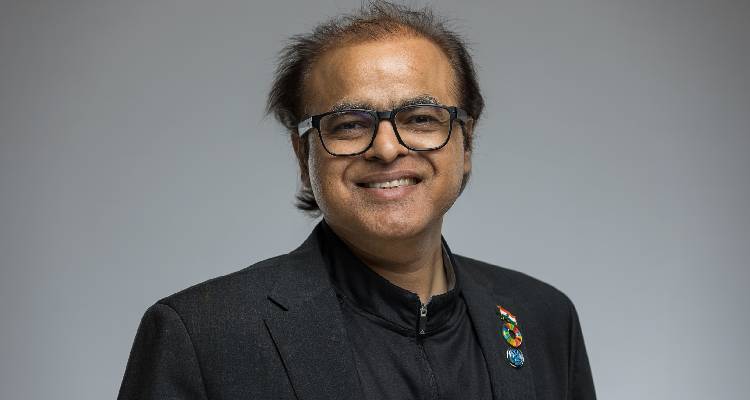
As AI, robotics, precision medicine and digital health reshape healthcare delivery, hospitals are being forced to rethink how they operate and engage with patients. Dr. Rajendra Pratap Gupta, Chairman, Health Parliament, discusses the vision behind the CEOs Council for the Hospitals of the Future, the need for collective leadership, and how hospitals can become more intelligent, connected and patient-centric without losing the human touch.


What is the idea behind the CEOs Council for the Hospitals of the Future?
The idea is simple: the hospital itself is being redefined, and CEOs need a platform where they can collectively shape that future rather than merely react to it.
Artificial intelligence, automation, precision medicine, robotics, hospital-at-home, remote monitoring and intelligent infrastructure are changing how care is delivered. At the same time, patients are becoming far more informed, digitally connected and technology-savvy. They increasingly expect healthcare to be as seamless, transparent, personalised and responsive as the other digital services they use every day. Future plans for digital health from the government would need major upgrades for hospital founders and CEOs, and hence, we need to work together.
The CEOs Council for the Hospitals of the Future is being created as an invitation-only leadership platform for hospital CEOs and institutional leaders to examine these shifts, benchmark their organisations, exchange experience and help define what the hospital of the next decade should look like.
It is not an association. It is a leadership table for those who want to shape the future of hospitals and become future ready.
Why is there a need for such a Council at this particular moment?
Timing is critical. Hospitals are facing multiple transformations simultaneously.
Firstly, we must understand the increasing FDI in healthcare, and it is a clear signal that care delivery has to be world class , medical tourism is a major focus from the government , AI is beginning to influence diagnosis, workflow, operations and decision support. Care is moving beyond hospital walls. Workforce structures are changing. Patients have unprecedented access to information. Capital costs are increasing. Regulations are evolving. And technology companies are entering areas that were once exclusively the domain of healthcare institutions. Historically, hospitals had time to adapt to major shifts. Today, the cycle of change is much shorter. The strategic risk is no longer only adopting a technology too early. The greater risk may be transforming too late. No CEO should have to interpret these changes in isolation. The Council is designed to create a trusted environment where leaders can understand what is coming, learn from peers and make better strategic decisions earlier.
How does the Global Digital Health Summit fit into this vision?
The Global Digital Health Summit (GDHS) provides the ideal platform to take the concept from discussion to demonstration.
At GDHS, we do not want to merely talk about the Hospital of the Future. We want to show what it could look like. We are going to build a modular hospital at the GDHS onsite, this is the first time ever that a summit will have a ‘hospital of the future’ for live experience.
Seeing is believing-The Hospital of the Future showcase can bring together technologies, workflows and new models of care into one integrated experience: AI-enabled clinical decision-making, intelligent command centres, digital patient journeys, remote monitoring, robotics, precision medicine, smart infrastructure, cybersecurity, connected diagnostics and care beyond hospital walls.
The objective is not to create a technology exhibition. It is to demonstrate how these technologies can collectively transform the hospital as an institution. For a CEO, seeing the future operating as a system is far more powerful than seeing twenty technologies separately.
What will be different about the Hospital of the Future showcase at GDHS?
Most technology exhibitions showcase products. We want to showcase a future operating model for healthcare.
The starting point will not be, “What technology can we display?” The starting point will be, “How should the patient experience healthcare in the future and where the journey of healthcare start for the care seeker and how can we make it seamless with most appropriate treatments and outcomes ?”We can then build the experience around the patient’s journey: before entering the hospital, during diagnosis and treatment, during hospitalisation, after discharge and increasingly at home. Visitors should be able to see how digital health including AI, connected devices, automation and data can come together to make healthcare more predictive, personalised, preventive and participatory. This distinction is important. The Hospital of the Future is not a building full of technology. It is a new way of organising care around the patient.
You have spoken about patients becoming increasingly technology-savvy. How does that change hospitals?
This is one of the biggest changes healthcare leaders need to understand. The patient of the future is already emerging. Patients are wearing devices that continuously measure their physiology. They use apps to understand sleep, nutrition and activity. In fact , AI is today the primary doctor, as they consult AI before they consult a doctor. They expect access to their records, digital appointments, remote consultations and personalised communication.
This creates a fascinating possibility: the patient walking into a hospital may increasingly be more digitally enabled than the hospital receiving them. That gap cannot continue. Hospitals will have to move from being institutions patients visit when they are ill to becoming intelligent health partners that engage with people continuously. This is why digital transformation is no longer simply an IT agenda. It is becoming a strategic CEO agenda and this has to get integrated into the strategy of every hospital.
What are the key questions the Council will help hospital CEOs answer?
There are five fundamental questions every hospital CEO should be asking today:
- How intelligent should my hospital become?
- How much care will move beyond my hospital walls?
- What will my workforce look like when humans and AI work together?
- How will my institution remain resilient, sustainable and economically viable?
- And perhaps most importantly, how do we transform without losing patient trust?
These are not questions that can be answered by purchasing technology. They require decisions about strategy, organisational design, capital, workforce, governance, ethics and patient experience.
How can we make our hospitals in smaller towns at par with the best in the world
The Council exists to address these questions collectively.
What role do you see the Council playing beyond the annual Summit?
The Council should become a year-round platform for strategic intelligence and collaboration.The Summit is just the moment when the wider ecosystem comes together, but transformation happens throughout the year. So, while we launch this at the summit, we are going to work the year around.
The Council can enable confidential CEO discussions, peer benchmarking, strategic intelligence briefings, working groups, hospital exchanges, collaborative pilots and research on emerging models. This will enable a confidential environment where leaders can discuss issues that may shape hospital strategy before they become obvious: AI economics, workforce redesign, capital allocation, regulation, patient behaviour and new models of care.
The value of the Council should ultimately be measured by one question: Does a CEO make better decisions because they are part of this table?
Why make the Council invitation-only rather than creating a large membership organisation?
Because leadership conversations require trust and not every hospital is aiming to be world-class. This platform is meant for those who embody the values and vision of a world class hospital. So, we will limit this by invitation only. The dialogue we are going to have becomes difficult in a large open-membership organisation. The Council is therefore deliberately curated. The purpose is not to minimize membership. It is to bring together leaders who can contribute meaningfully to the collective and shape the future of healthcare.
The inaugural group will also have an important responsibility: to help define the priorities, benchmarks and principles for the Hospital of the Future.
So membership should represent not simply access, but a responsibility for shaping the future of hospitals
What would success look like five years from now?
Success would not be measured by the number of Council members or the number of meetings held.
Success would mean that hospitals participating in this initiative are demonstrably ahead in areas such as patient experience, digital maturity, AI adoption, workforce readiness, clinical outcomes, resilience and care beyond hospital walls. More importantly, I would like the Council to contribute to a shared blueprint for the Hospital of the Future that hospitals globally can learn from. The opportunity before us is significant. We are entering a period where healthcare institutions can become more intelligent without becoming less human -That must be the objective.
What is the larger message you want hospital leaders to take away?
The future of hospitals will not arrive on a particular date. It is already being built, decision by decision.
Every investment a hospital makes today; in AI, infrastructure, people, data, cybersecurity or patient engagement is either preparing that institution for the next decade or anchoring it to the previous one. The question for hospital CEOs is therefore no longer whether transformation will happen.
The question is whether they will shape it or inherit it and that is what this council will enable .
- Advertisement -