

Building a stronger paediatric healthcare system beyond metros
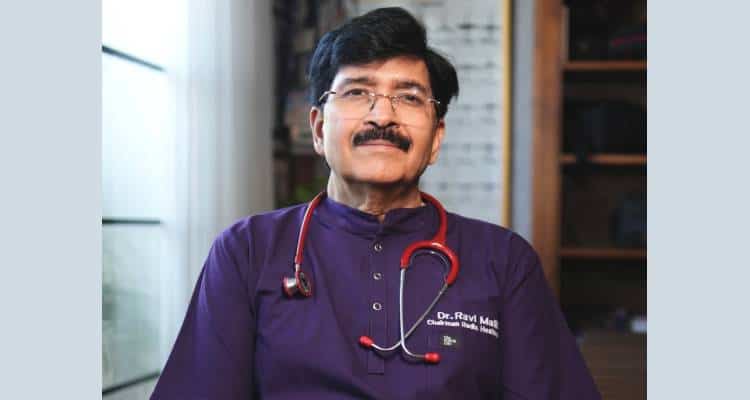
Dr Ravi Malik, Director and Senior Pediatrician, Malik Radix Healthcare, in an interview with Kalyani Sharma, discusses the need to strengthen preventive paediatric care, address gaps in specialised child and neonatal healthcare, and improve policy support to respond to India's changing child health needs


How should paediatric care delivery evolve as lifestyle-related disorders become more prevalent among children?
Paediatric care needs to shift from treating illness to preventing it. Waiting for a child to fall ill is too late. We are seeing more children with obesity, type-2 diabetes and hypertension, and the main causes are sedentary habits and poor nutrition. That’s a lifestyle problem, so the answer has to start with lifestyle.
In practice, this means clinics should bring paediatric nutritionists, behavioural therapists and fitness counsellors into routine care. Families shouldn’t have to look for these services separately. At every wellness visit, paediatricians should also talk to parents about limiting screen time, sleeping well and eating well. These are small conversations, but they add up.
Clinics can’t do this alone, though. Schools and community centres need to team up with healthcare systems so that children get the same message in more places. Prevention works best when it’s built into the places where children spend their time.
Early tracking of metabolic markers is just as important. If something is going wrong, I’d rather we see it in childhood than in adulthood. Catching it early is how we stop this changing disease profile before it takes hold, and it’s much easier to do while children are still young.
What are the biggest structural gaps in India’s paediatric healthcare ecosystem today?
The biggest gap is the divide between urban and rural India, in both infrastructure and talent. Specialised paediatricians and neonatal intensive care beds are available in over 70 per cent of tier-1 metro cities. Rural facilities don’t have the same access. They lack critical care equipment such as advanced ventilators, warmers and paediatric phototherapy units. Without this equipment, local doctors have limited options when a child needs urgent support.
The second problem is a shortage of sub-specialists. India has a serious deficit in areas like paediatric nephrology, oncology and cardiology. Children with complex conditions have very few places to go.
Third, there is no formal, nationwide paediatric referral network. When a child needs higher-level care, there’s no clear path to the right hospital. This leads to delays in critical care. Families, who are already vulnerable, end up travelling very long distances just to get basic, lifesaving tertiary treatment.
Taken together, these gaps mean a child’s chances can depend on where the family lives. For a sick newborn or a seriously ill child, time matters, and every hour spent travelling is an hour lost. Fixing this means building capacity outside the metros and connecting hospitals into one referral system.
Do existing national child health programmes need to be recalibrated to address today’s disease burden? If so, where?
Yes. Programmes like the Rashtriya Bal Swasthya Karyakram (RBSK) need to expand their scope. They have done well in tackling infectious diseases, malnutrition and congenital defects, and that work should continue. But the health problems children face today are different, and these programmes now have to deal with non-communicable conditions too. The scope has to match today’s disease burden.
I would add mandatory screenings for childhood lifestyle disorders, juvenile diabetes and mental health issues. Mental health matters most here. Since the pandemic, we have seen a sharp rise in anxiety and depression among adolescents, and these children need to be identified early so they can get support. Early screening gives us a chance to step in before things get worse.
Screening only works if someone is there to spot the signs. That’s why front-line Anganwadi and ASHA workers need training to recognise early behavioural and metabolic red flags. They are often the first contact a family has with the health system. Once they are equipped for this, we will have a much stronger and more modern primary healthcare defence network. It’s a practical step that builds on what we already have in place.
What policy interventions are needed to improve access to specialised paediatric and neonatal care beyond metro cities?
We need strong policy action, both financial and infrastructural. The government should offer tax incentives, low-interest loans and subsidised land to private operators who set up paediatric ICUs in tier-2 and tier-3 towns. That lowers the cost of getting started, and without it there is little reason for private operators to look beyond the metros.
Public-private partnership (PPP) models can help upgrade the sick newborn care units (SNCUs) in district hospitals quickly. Standardised telemedicine policies would also help. They would let urban paediatric sub-specialists support rural doctors remotely, so a child in a smaller town can get specialist guidance without a long journey first. Both build on what is already there rather than starting from scratch.
The third piece is people. Statutory rural stints for paediatric postgraduates would help spread talent more evenly across the country. But the stints need to come with competitive pay and modern working conditions, otherwise doctors will see them as a burden. If the posting is a good experience, more doctors will be willing to serve outside the metros. Taken together, these steps can bring specialised paediatric and neonatal care closer to the families who need it.
With parents increasingly turning to social media for health advice, how can doctors rebuild trust and counter misinformation?
Parents today read a great deal before they come to the clinic. A mother may have watched several videos on fever or teething before she walks in. Some of that advice is sound and some of it can be harmful. Telling her the internet is wrong rarely helps. She needs to feel heard before she can take in anything else.
Speaking about health in the clinic and on television, I have found that people trust doctors who explain things simply. If a parent understands why the vaccine schedule is spaced the way it is, they are far more likely to follow it. The reasoning matters to them as much as the advice itself.
Doctors in busy OPDs have very little time with each family, so this can’t rest on the consultation alone. Hospitals and medical associations can put out short, verified material in Hindi and regional languages, and share it on WhatsApp and YouTube. Paediatricians who are comfortable speaking to the public should be encouraged to do it more often.
Vaccine hesitancy and the casual use of antibiotics in children are two areas where wrong information does lasting damage. A trusted voice that reaches parents early can prevent much of it.
India has made steady progress on newborn survival. What should the next priority be for neonatal care in the country?
India has done well on newborn survival over the last two decades. Institutional deliveries have gone up, and sick newborn care units now exist in most districts. The next step is to look at how these babies do after they leave the NICU.
Preterm and low birth weight babies carry higher risks of hearing loss, vision problems from retinopathy of prematurity, and delays in growth and development. Many of these can be managed if they are picked up in the first year. In practice, a lot of families stop coming back once the baby is home and feeding well. By the time a delay becomes obvious, the best window for treatment has often passed.
We need structured follow-up for every high-risk newborn. That means routine eye and hearing screening before discharge, a clear schedule of developmental checks, and a named facility the family can return to. Early intervention services such as physiotherapy and speech therapy should be available at the district level, so parents don’t have to travel to a big city for them.
Kangaroo mother care and breastfeeding support also deserve more attention. They cost very little, and they make a real difference to how preterm babies grow.
- Advertisement -
