

CARDIO-India focuses on a community-first, technology-enabled model rather than traditional telemedicine
The University of Leicester and the Centre for Chronic Disease Control (CCDC) have recently launched the CARDIO-India research programme, aimed at transforming cardiovascular care delivery through a community-first, technology-enabled approach. Prof Kamlesh Khunti, Professor of Primary Care and Diabetes and Vascular Medicine at the University of Leicester, and Prof Dorairaj Prabhakaran, Executive Director of the Centre for Chronic Disease Control, speak with Kalyani Sharma on how the initiative seeks to bridge critical gaps in cardiovascular care, particularly for ageing populations in low- and middle-income countries like India

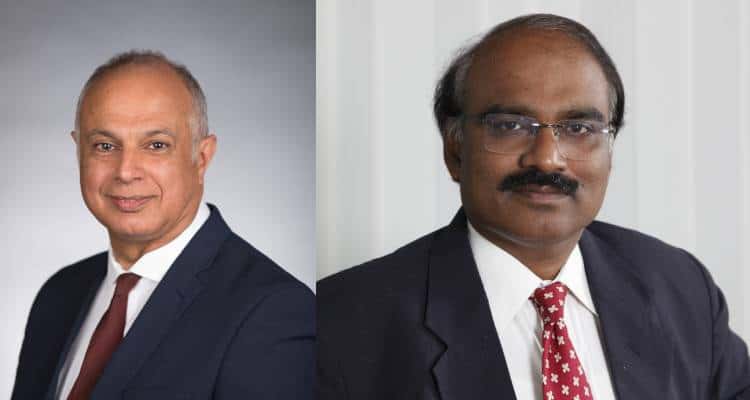

CARDIO-India focuses on a community-first, technology-enabled model rather than traditional telemedicine. How do you see this approach addressing the gaps in cardiovascular care delivery for ageing populations in low and middle-income countries like India?
Prof. Khunti: CARDIO-India is designed to be a community-based rather than a clinic-based model, as traditional telemedicine largely assumes that patients can engage with doctors via remote consultations. Our assisted telemedicine model helps patients who cannot access telemedicine on their own. We are bringing services to people’s doorsteps through mobile health units. This allows us to address the burden of cardiovascular diseases among older adults who may not have had the opportunity to get themselves evaluated. We will also standardise cardiovascular risk assessment and management by using digital decision support developed using evidence-based guidelines for the management of CVD. For older adults in LMICs, where MLTCs, social isolation and financial constraints are common, a community-first model can bridge the gap between secondary/tertiary care and primary care.
With a cluster randomised controlled trial spanning 10 states, what are the key scientific and operational challenges you anticipate, and how will the study design ensure real-world applicability of outcomes?
Prof. Khunti: Conducting a cluster randomised controlled trial (cRCT) across 10 states, which span all parts of India is very ambitious and challenging. However, we do have experience of implementing cRCTs in different states successfully. Scientifically, we see heterogeneity across populations and care models as a challenge. The heterogeneity could be differences in (a) baseline risk; (b) health-seeking behaviour; (c) provider capacity and (d) existing services. That affects both sample size assumptions and interpretation of effect sizes. To overcome this, we plan to stratify the sampling based on states so that the intervention and cluster MHUs are in the same states. Operationally, we foresee challenges like remote locations of MHUs, training and retaining staff, engaging communities who speak different languages and are from different contexts, ensuring fidelity to the intervention and maintaining equipment and connectivity for digital tools. However, all these challenges can be overcome.
Given your experience in cardiometabolic research globally, how can learnings from CARDIO-India inform scalable models for managing cardiovascular risk in other emerging economies facing similar demographic transitions?
Prof. Khunti: CARDIO-India is inherently bi-directional. From India to the UK, we are learning how to manage high CVD risk in populations with early onset disease, multiple comorbidities and a similar cardiovascular disease risk factor profile. There is a large South Asian diaspora in Leicester, Birmingham, and London. Similarly, these lessons can inform models for managing CVD in other LMICs and emerging economies. There will be several key learnings. Firstly, we will know about CVD risk and culturally adapted communication to address those risks. The strategy that we will use may be useful for more effective engagement strategies with South Asian patients in the UK who may under utilise preventive services. Secondly, our model engages frontline health workers and community members. This may be highly relevant to NHS settings facing workforce pressures. Thirdly, effective remote care and monitoring for CVDs using assisted telemedicine. From the UK, we can learn more about experience in governance, data security, and quality standards, which will help CARDIO India design better models that are credible not only in India but also in other countries.
CARDIO-India builds on the Mobile Medical Units under the National Health Mission. What critical gaps in the current system does this programme aim to address, particularly for older adults in underserved regions?
Prof. Prabhakaran: Mobile Medical Units (MMUs) under the National Health Mission provide basic care to underserved and remote populations. However, there are gaps that can be addressed. For e.g., MMUs don’t screen for cardiovascular risk and don’t follow up after a diagnosis is made. There are also no electronic records of the patients visiting the MMUs. Older adults are more likely to have other physical and mental health conditions, which will require integrated management. CARDIO-India will address these gaps through electronic decision support, assisted telemedicine and patient-facing mobile health intervention to help them better self-manage their conditions.
The programme integrates AI-enabled diagnostics and digital health records under the Ayushman Bharat Digital Health Mission. How do you see digital health strengthening continuity of care and long-term management of cardiovascular diseases in India?
Prof. Prabhakaran: The integration of AI-enabled diagnostics and digital health records under the Ayushman Bharat Digital Health Mission is important for improving the detection and management of cardiovascular diseases. AI-enabled tools can assist with risk stratification, early detection and guideline-based management. For example, algorithms can help prioritise which patients need urgent follow-up, flag dangerous drug combinations, or suggest evidence-based treatment intensification when targets are not met. This integration also ensures continuity of care. For e.g., when an older adult visits a different MHU or a clinic, the doctor there will have access to their previous health records. This ensures that the management of the condition is smooth and there is no break in the care. Digital tools may also help send medication reminders and upcoming-visit reminders, as well as deliver tailored self-management messages.
With India’s elderly population set to rise significantly, what policy-level changes or systemic shifts will be necessary to ensure sustainable and scalable cardiovascular care for this demographic?
Prof. Prabhakaran: There is a need to reorient or reimagine primary care towards the management of NCDs, in general, and CVDs, in particular. With an increase in the number of older adults, chronic conditions need to be managed holistically, as they are more likely to have two or more chronic conditions. Primary care must move from an acute, episodic model towards a long-term management of CVDs. We will need to invest in workforce capacity building to manage older adults. This could be doctors, nurses, ASHAs, ANMs and community health officers. They will need to be trained on geriatric principles, polypharmacy, detection and management of MLTCs. Insurance and public financing should incentivise longitudinal care packages for older adults, including medications, monitoring, and rehabilitation, rather than focusing predominantly on high-cost hospitalisations and procedures. Finally, there is a need for integration between different departments and ministries as determinants of cardiovascular risk and outcomes in older adults go beyond health, like agriculture (food security and nutrition), transportation, social support (to address loneliness and isolation), etc.
[email protected]
[email protected]
- Advertisement -
