

Maharashtra National Law University, Mumbai hosts conference on public health and pharma patents
Experts discuss access to medicines, intellectual property and public health frameworks at Cure vs. Commerce conference

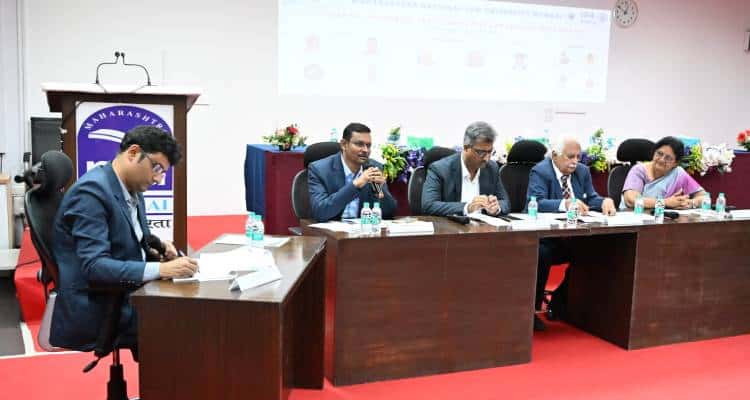

Maharashtra National Law University (MNLU), Mumbai, in collaboration with the Department for Promotion of Industry and Internal Trade (DPIIT- IPR Chair) and its research centres, the Centre for Applied Research in Public Health Law and the Centre for Research in Intellectual Property, hosted a conference titled “Cure vs. Commerce: Public Health and Pharmaceutical Patents” on 30 March 2026.
The conference addressed the question of balancing the need to reward innovation with ensuring access to medicines.
Dilip Ukey, Vice-Chancellor, MNLU Mumbai, in his inaugural address, referred to the Sanskrit maxim “Shariram adyam khalu dharma sadhanam” and stated that a healthy body is the foundation of human endeavour.
He spoke about the relationship between private rights and public welfare and referred to Article 39 of the Constitution, stating that the State is entrusted with protecting public health. He said that when patent rights conflict with the right to life, the judiciary has a role in restoring balance in favour of social justice.
Delivering the keynote address, O. V. Nandimath, Vice-Chancellor, West Bengal National University of Juridical Sciences (WBNUJS) Kolkata, referred to the phrase “putting the cart before the horse” and spoke about the prioritisation of commercial gains over public health outcomes. He acknowledged the role of research, development and intellectual property in healthcare and said that commercialisation has affected the autonomy of medical professionals. He described public health as consisting of preventive, promotive and curative aspects and said that the current system focuses on the curative aspect. He referred to compulsory licensing and government intervention and said policymaking should be guided by rationality.
C. Vivekanandan, Vice-Chancellor, Hidayatullah National Law University (HNLU) Raipur, spoke on the relationship between law and ethics. He said the discussion should focus on how public health and commerce can coexist without affecting human dignity. He stated that medicines are linked to life and referred to the concept of development as freedom. He cited vaccine access during the COVID-19 pandemic and referred to the views of Mahatma Gandhi on resource distribution.
It was followed by an insightful panel discussion comprising of experts Dr Amit Kumar, Assistant Professor of Law, MNLU Mumbai (Moderator) and head of a key academic initiatives including the Centre for Applied Research in Public Health Law, Rights and Policy; Dr Gopakumar G. Nair, Founder and Managing Partner, Gopakumar Nair Associates; Prof. Samir Kulkarni, Tata Chemicals, Darbari Seth Distinguished Professor, Head of the Department of Biological Sciences and Biotechnology, and Coordinator of the DBT-ICT Centre for Biosciences; Dr M. S. Kamath, Honorary General Secretary of the Consumer Guidance Society of India (CGSI); Prof. Uma Bhattad is Professor of Law at Maharashtra National Law University, Mumbai, and Chair Professor of the DPIIT IPR Chair and Dr Jagdish W. Khobragade, Associate Professor of Law and Assistant Registrar, MNLU, Mumbai.

Dr Nair spoke on maintaining India’s position on intellectual property. Prof Kulkarni spoke on the cost and process of drug development and referred to transparency in research spending. Dr Kamath raised the issue of pricing of medicines and its impact on patients.
Dr Bhattad referred to global frameworks such as TRIPS and the use of compulsory licensing and Dr Khobragade spoke on India’s position in pharma manufacturing and the need to engage with international frameworks.
The panel discussed the growing threat of counterfeit medicines across both pharmaceutical and traditional sectors, emphasising that it is a complex issue rooted in supply chain vulnerabilities, low consumer awareness, and uneven adoption of anti-counterfeiting technologies. While solutions such as serialisation, QR codes, holograms, and track-and-trace systems are available, challenges persist due to cost sensitivities, operational complexities, and fragmented distribution networks.
Panelists also highlighted the need for a multi-layered approach combining technology, stronger regulatory mandates, industry collaboration, and consumer participation. They also stressed that awareness campaigns and incentives are critical to encouraging consumers to verify products, while government support through policy alignment and possible subsidies can accelerate adoption. Ultimately, the discussion underscored that ensuring medicine authenticity is a shared responsibility requiring coordinated action from manufacturers, regulators, solution providers, and consumers alike.
- Advertisement -