

From AI reports to clinical trust: Rethinking diagnostics in the age of healthcare AI
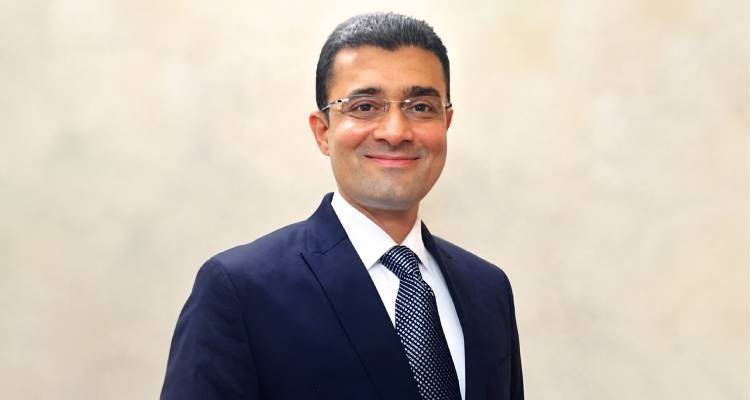
Ashissh Raichura, Founder & CEO, Scanbo Technologies explains as diagnostic AI moves from generating reports to influencing clinical decisions, its success will depend on earning clinicians' trust through transparency, real-world reliability, and seamless workflow integration.


For most of the last decade, diagnostic AI had a fairly limited role. It generated a report. A cardiac reading was interpreted. A radiology image was flagged. A risk score was produced. The clinician reviewed the result, applied judgment and made the final decision. AI stayed in the background.
That is now starting to change. Diagnostic AI is moving deeper into the care pathway. It can help triage a patient, identify urgency, escalate a case and influence what happens next. Once AI starts doing that, accuracy alone is not enough. The real question becomes whether the system can be trusted when a clinical decision is being made.
Earlier, the trust requirement was lower. The AI produced an output, but the clinician remained the final safety layer. If something did not look right, the result could be questioned, ignored or investigated further.
When AI becomes part of the workflow itself, the standard rises. It has to perform in real time. The clinician has to understand what it is showing. And it has to remain dependable even when the environment is not ideal. For years, technology companies asked clinicians to trust their models. Clinicians are now asking for something more reasonable.
Show me why.
That shift matters because trust can no longer be treated as a marketing claim. It has to be demonstrated through use. From my experience, this starts with transparency. A clinician needs to understand why the system has flagged something. A black box that simply says “high risk” is not enough. The output needs to provide context around the signal, the pattern detected and the confidence behind the result. Human accountability must also remain clear.
AI can support a clinical decision, but it should not quietly replace the person responsible for making it. The clinician still carries the responsibility and must remain at the centre of the process.
Then comes real-world validation. A clean dataset and a controlled lab are useful, but they do not reflect the full reality of healthcare. In India, frontline care can mean extreme heat, weak internet, staff rotation, inconsistent power and limited technical support. I have seen systems perform well during testing and then struggle after deployment. In some cases, the model itself was not the main problem.
The signal quality was poor. The alert arrived too late. The staff did not understand how to respond. Or the result appeared on a separate screen that nobody had time to check.
These are not minor operational issues. They directly affect whether the technology is trusted and whether it is used. Workflow fit is therefore just as important as model performance. An insight has value only when it reaches the clinician at the right moment and in a form that can be acted upon. Having spent years building and deploying cardiac AI across more than a million ECG analyses in real clinical environments, this is the lesson that has stayed with me.
Trust does not sit inside the model alone. It is shaped by the quality of the signal, the clarity of the output, the way the system fits into the clinical workflow and the judgment of the person using it. I have watched clinicians adopt systems that respect their role. They use the technology, question it and gradually understand where it helps. Confidence grows through repeated experience, not through a presentation or a demonstration.
Those systems become part of daily care. I have also seen systems that try to replace clinical judgment too quickly. They may appear impressive at first, but usage falls once clinicians realise the technology does not understand the practical reality of care.
That is not resistance to innovation. Clinicians usually recognise very quickly whether a system is helping them or creating another layer of work. Patients may never see the AI, but they experience the result when care becomes faster, clearer and safer.
The next generation of diagnostic AI will have to earn trust through consistent performance in real settings.
The standard is actually simple.
Did the technology make the clinician’s work easier?
Did it help produce a better decision?
Did the patient receive safer care?
That is the real measure.
The healthcare AI industry now needs to move beyond generating reports and focus on supporting meaningful clinical action. The AI that succeeds will not necessarily be the one with the most impressive model. It will be the one that helps the human at the centre of care do a better job.
- Advertisement -
