

India’s first dedicated Human Metabolic Chamber Facility inaugurated at CMC Vellore
Tata Institute of Fundamental Research (TIFR) and CMC Vellore collaborate to advance research on nutrition, diabetes, obesity and metabolic health

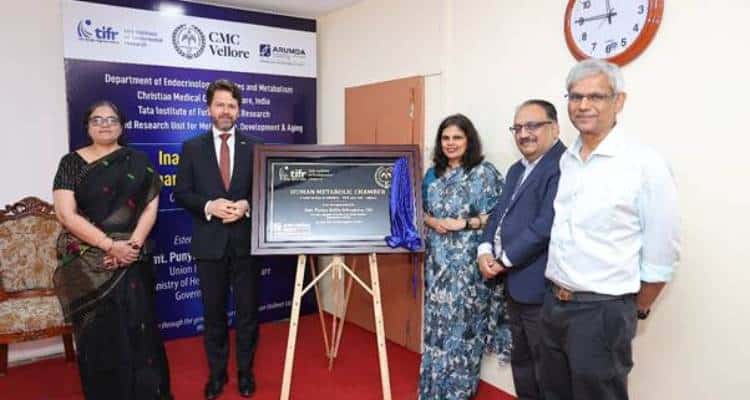

Union Health Secretary Punya Salila Srivastava inaugurated India’s first dedicated Human Metabolic Chamber Facility at Christian Medical College (CMC), Vellore. Established jointly by the Tata Institute of Fundamental Research (TIFR) and CMC Vellore, the facility will strengthen research into human metabolism, nutrition, diabetes, obesity and other metabolic conditions.
Addressing the gathering, Srivastava congratulated TIFR, the Advanced Research Unit on Metabolism, Development & Aging (ARUMDA) and CMC Vellore on the initiative and acknowledged the Department of Atomic Energy for supporting the collaboration. She underscored the importance of generating evidence that reflects the diversity and specific risk profiles of India’s population, noting that findings from other countries may not adequately capture them.
The Human Metabolic Chamber is a room-sized calorimeter that measures oxygen consumption and carbon dioxide production while a volunteer lives, eats and sleeps inside for 24 hours or longer. The measurements help determine total energy expenditure and how the body uses fat and carbohydrates across meals, physical activity and sleep. The facility complements ARUMDA’s National Analytical Facility for Nutrition and Metabolism Research, established last year, enabling researchers to link molecular and biochemical measurements with the body’s energy utilisation.
The facility was set up with funding from the Department of Atomic Energy and Corporate Social Responsibility support from Hindustan Unilever Limited, with expert advice from NUTRIM at Maastricht University and network support from the Embassy of the Kingdom of the Netherlands in India.
Srivastava highlighted the Government’s efforts to strengthen prevention under the Ayushman Bharat Yojana, with 1.87 lakh Ayushman Arogya Mandirs providing primary healthcare and population-based screening for non-communicable diseases and three types of cancers, including a community-based assessment of all individuals above 30 years of age. She said over 781 district NCD clinics and 6,489 NCD clinics at Community Health Centres ensure follow-up and continuum of care, and that the Rashtriya Bal Swasthya Karyakram (RBSK) 2.0 enables early identification of at-risk children. She added that five more diseases, including chronic obstructive pulmonary disease (COPD), stroke and chronic kidney disease (CKD), will also be covered under the National Programme for Non-communicable Diseases.
Underscoring institutional collaboration, Srivastava encouraged TIFR, ARUMDA and CMC Vellore to work with the Ministry of Health and Family Welfare and other national institutions on a focused research agenda addressing the country’s health needs. She also pointed to the potential of the Pan-AIIMS Research Consortium, working with research facilities such as the Human Metabolic Chamber, to strengthen research capabilities and contribute to robust, evidence-based national datasets.
The programme was attended by Prof. Biju George, Director, CMC Vellore; Prof. Jayaram Chengalur, Director, TIFR; Prof. Ullas Kolthur, Director, BRIC-Centre for DNA Fingerprinting and Diagnostics; Prof. Mahendra Sonavane, ARUMDA-TIFR; Prof. Nihal Thomas, Head, Stem Cell Centre, CMC Vellore; Nico Schiettekatte, Health Counsellor, Embassy of the Kingdom of the Netherlands; representatives of Hindustan Unilever Limited; and Prof. Felix Jebasingh, Department of Endocrinology, Diabetes and Metabolism, CMC Vellore, among other faculty members and officials.
- Advertisement -