


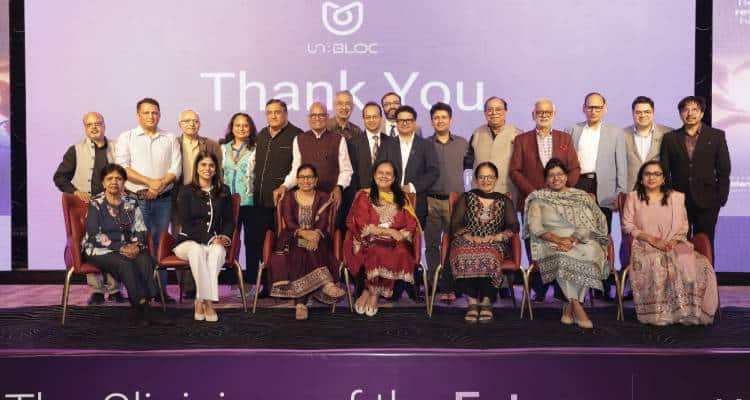

The Indian Medical Association (IMA) Gurgaon and six other medical associations participated in a conference organised by UN to discuss the role of AI and emerging technologies in clinical practice. Titled Clinicians of the Future, the conference was held at Aurum Convention & Resort in Gurugram and brought together medical professionals from multiple specialities to discuss the implications of technology for clinical decision-making and patient care.
More than 200 doctors attended the conference, which focused on AI applications in clinical practice. Representatives from IMA Gurgaon, Association of Physicians of India (API) Gurgaon, Gurgaon Obstetrics and Gynaecological Society (GOGS), Gurgaon Nursing Home and Diagnostic Association (GNHDA), Menopause Society Gurgaon, Association of Surgeons of India (ASI), Gurgaon City Branch, and the Surgical Society of India were among those present. The programme provided a common platform for clinicians from different disciplines to exchange views on technology, clinical practice and patient care.
Speaking at the event, Dr Sushil Khurana, Senior General and Laparoscopic Surgeon, MBBS, MS (General Surgery), PGI Rohtak, said, “In more than fifty years of practice, I have seen that a patient’s history is what gives every test result its meaning. But today doctors hardly have the time to take a full history, and patients rarely get the time to tell it. That is where UN can help. By organising the patient’s history and records into one clear picture, it lets the doctor spend the consultation understanding the patient, not piecing the story together. The tools we use may change, but we must first understand the patient.”
Dr Ashok Taneja, Senior Consultant Cardiologist, Diabetologist and Physician, and President-Elect, National API (2026), said, “Clinical information is growing faster than any one doctor can comfortably process. A patient may walk in with a long history, several reports and opinions from other doctors, and bringing all of that together in a short consultation is difficult. UN organises it into one picture the physician can review, so the doctor can focus on interpretation and the next steps. The decision always stays with the doctor. Calculators, computers and digital payments all felt strange at first. Clinical AI, adopted thoughtfully and evaluated rigorously, can be the next useful tool.”
The programme included a keynote by Dr Ashish Kalla, Founding Clinical Partner & Chief Clinical Officer at UN, on the application of AI in clinical practice. His presentation covered the management of patient information across specialities and the importance of obtaining patient consent when using technology.
Dr Kalla said, “The best way to think of UN is as a digital resident. In any good hospital, the resident is the one who knows each patient’s whole story: the history, the reports, what every specialist has said. When the consultant walks in, the case is ready. UN brings that same consistency to everyday practice. It keeps the patient’s clinical story together across specialities, so nothing is lost between one doctor and the next, and gives the consultant the complete case to work from. Like a good resident, it supports the consultant; it doesn’t replace them. The decision always stays with the doctor, and the patient’s consent comes first.”
Dr Munish Prabhakar, Senior Consultant, Internal Medicine, shared his experience of using UN, including his initial reservations and subsequent experience with the technology in clinical practice.
Deepak Sahni, Founder, UN, said: “This is a significant day for us at UN and, more importantly, for healthcare. Medical associations have traditionally worked within their respective disciplines, but seeing seven leading bodies come together on one platform for a shared purpose is a powerful step forward. Healthcare cannot evolve in silos. We need collective thinking, collaboration and a willingness to embrace new possibilities. At UN, we see this as the beginning of a larger movement to bring clinical expertise, modern science and AI together to transform how we understand and address disease.”
The discussions also covered issues related to technology adoption, including patient consent, data security and physician oversight. A panel discussion titled Clinician of the Future, moderated by Dr Suresh Vashisht, examined how technology, clinical expertise and changing patient needs could influence medical practice. The panel featured Dr Shambhavi Jaiman, MBBS, MD (Psychiatry); Dr PK Kohli, Medicolegal Expert; Deepak Sahni, Founder of UN; Dr Sanjat Chiwane, Cardiologist; Dr Pranaw Kumar Jha, Nephrologist; and Dr Neha Rastogi, Infectious Disease and Infection Control Expert.
The conference brought together clinicians from multiple medical associations to discuss the opportunities and considerations involved in adopting AI and other emerging technologies in healthcare.
- Advertisement -