

What the BRICS New Delhi Declaration means for the next phase of healthcare
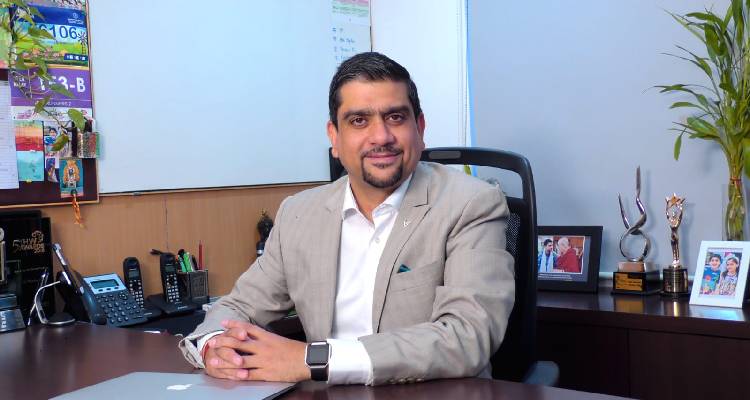
Dr Vikram Thaploo, CEO, Apollo TeleHealth, outlines how telehealth, connected care and responsible use of AI can help translate this digital foundation into more coordinated and accessible healthcare


Healthcare access can no longer be seen just in terms of the existence of a doctor or hospital near where a patient lives. The bigger challenge lies in ensuring that people find the right medical expert and receive timely treatment despite the absence of that expert in their vicinity. Technology has increasingly been playing a role in bridging that gap by connecting patients with doctors over geographical distances.
The BRICS New Delhi Declaration makes this development clear.
It was adopted officially at the 18th BRICS Summit and urges the members to work together in the fields of people oriented digital healthcare systems and the principles of the BRICS Compendium on Digital Health Architecture for Continuum of Care which includes access to healthcare in remote areas.
For India, this is particularly relevant. The country has built significant digital health foundations, but the next challenge is to connect these capabilities into a more continuous care ecosystem. Telemedicine should not be viewed simply as a video consultation. Its greater value lies in connecting patients, clinicians, diagnostic services and specialists across different points of care.
Throughout the country, practices in telehealth are showing how it is possible to make specialised medical expertise available beyond hospital walls. Tele-radiology, telecardiology, tele-ICU, tele-consultations, and connected disease management programs can provide useful remote medical services in small towns and socially deprived areas. What is required now is to combine remote healthcare services into a single continuum instead of treating each digital patient intervention as a separate service.
A patient may begin care at a primary facility, require diagnostic evaluation, need specialist advice and then require regular monitoring. If these interactions remain disconnected, technology can create more digital touchpoints without necessarily improving the patient journey. Interoperable systems, digital health records and secure information exchange can instead allow relevant clinical information to move with the patient. While AI can play an important role in enhancing this ecosystem, its role ought to be confined to the enhancement of clinical capabilities and not the replacement of human judgment in the matters pertaining to medicine.
AI can be of use in huge data analysis, identifying many patterns, assisting in the risk assessment process, helping in the process of clinical decision-making, and allowing intervention at a much earlier stage.
India has also moved towards creating the governance architecture required for responsible health AI. In 2026, the Ministry of Health and Family Welfare launched the Strategy for Artificial Intelligence in Healthcare for India, or SAHI, and the Benchmarking Open Data Platform for Health AI, or BODH. These initiatives emphasise safe, ethical, evidence-based and inclusive adoption, alongside validation, data stewardship and monitoring.
This is critical because healthcare AI cannot be a sessed only by technological performance. Solutions must work across diverse populations and clinical settings, protect patient privacy and remain subject to appropriate clinical oversight. Trust will be as important as innovation.
The opportunity for BRICS is therefore not simply to exchange digital tools, but to share implementation experience, standards, evidence and models that can make technology meaningful at scale. Countries across the grouping face common challenges around specialist availability, chronic disease, rural access and health-system resilience. Collaboration can help translate successful digital health approaches into models suited to different healthcare contexts.
The next phase of India’s digital health journey should focus on scalable, interoperable and clinically meaningful solutions. Telemedicine can extend reach, connected care can strengthen continuity, and AI can augment the capabilities of healthcare professionals. Together, these technologies can help move healthcare from episodic access towards more proactive and coordinated care.
Final thoughts
Ultimately, the success of digital health should not be measured by the number of platforms or algorithms deployed. It should be measured by whether patients receive care sooner, clinicians have better information to make decisions, follow-up becomes more consistent and quality healthcare becomes accessible irrespective of where a person lives. The BRICS New Delhi Declaration provides an important platform for advancing that vision at scale.
- Advertisement -
