

Why patient safety must be non-negotiable in fight against NCDs
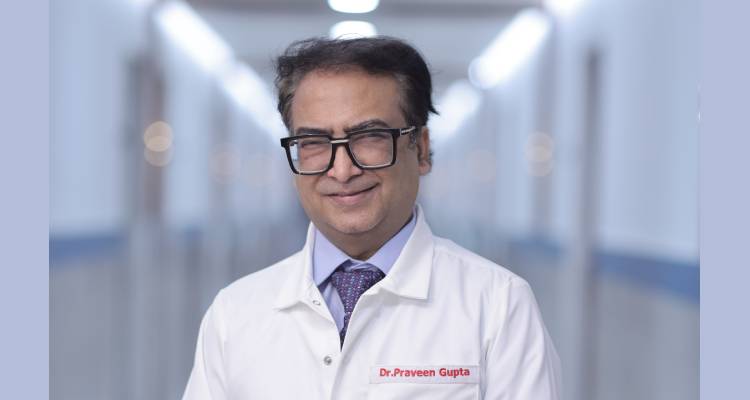
Dr Praveen Gupta, Chairman - Marengo Asia International Institute of Neuro and Spine (MAIINS), Marengo Asia Hospitals, highlights why patient safety must be embedded across the continuum of care for non-communicable diseases, where prolonged treatment, multiple care transitions and complex medication regimens can create persistent safety risks


A recurring pattern is evident in the management of long-term conditions such as stroke, epilepsy, Parkinson’s disease, and chronic migraine: the greatest risks to patients often stem not from the disease itself, but from gaps in the system meant to treat it — a missed drug interaction, a delayed follow-up, or a handover between departments where a crucial detail slips through. These are the quiet failures that patient safety science exists to catch and they are increasingly at the centre of India’s healthcare policy conversation.
Non-communicable diseases such as stroke, diabetes, heart disease, cancer, chronic neurological conditions now account for the majority of India’s disease burden, and unlike infections, they are managed over years, not days. That long arc of care is exactly where safety gaps tend to open up. A stroke patient may pass through an emergency department, a neurology ward, a rehabilitation unit and a primary care clinic, all within a few months. Each transition is a point where information can be lost and errors can creep in. Safety in NCD care, then, is not a single checklist but a discipline that has to be sustained across the entire journey of the patient.
For a long time, healthcare has treated safety failures as a matter of individual blame: a tired doctor, a rushed nurse, a distracted pharmacist. But the more useful lens, and the one modern patient safety science has adopted, is systemic. Errors usually emerge not because people are careless, but because the systems around them make mistakes easy and safeguards hard to build in. That reframing matters enormously for neurology and NCD care, where a single overlooked detail — an anticoagulant dose, a seizure medication clash, a misread scan — can have consequences that unfold over years rather than hours.
India has taken meaningful steps in this direction. National frameworks now call for structured incident reporting, root-cause analysis and dedicated safety governance within hospitals, while accreditation standards push institutions to build these mechanisms into everyday practice rather than treat them as paperwork exercises. Some public hospitals are experimenting with dedicated, multidisciplinary “patient safety cells” that pull together infection control, medication safety, and quality data under one roof, so that lessons from a single incident actually travel across departments instead of staying buried in a committee’s minutes.
This shift is encouraging, but frameworks on paper don’t automatically translate into safer bedsides. What makes the difference is culture — whether a young resident feels safe flagging a near-miss, whether a nurse’s observation about a confused elderly patient is taken seriously, or whether a hospital treats an adverse event as a learning opportunity rather than something to bury. In neurology particularly, where symptoms can be subtle and deterioration can be silent, that culture of vigilance is often what separates a good outcome from a tragic one.
India’s medical education and hospital capacity are expanding rapidly to meet the growing NCD burden. That growth is necessary, but it must not outpace the systems that keep patients safe. Building safety into how we train doctors, structure hospitals and measure quality, not as an afterthought, but as a core pillar of care, is how we ensure that expansion translates into better outcomes rather than more risk.
Patient safety is not a bureaucratic overlay on medicine. For those of us managing lifelong, complex conditions, it is medicine — the invisible architecture that determines whether good clinical judgement actually reaches the patient safely, every single time.
- Advertisement -
