Armed with experience: Defence doctors in civilian care
The feature explores how India’s retired defence-trained doctors, with their operational discipline, crisis-tested skills, and leadership experience, contribute to the broader healthcare ecosystem and how systematically integrating their expertise in civilian hospitals could bolster national healthcare resilience, reports Neha Aathavale
In April 2021, as part of a series of emergency orders issued during the second wave of COVID-19, the Defence Ministry authorised the temporary re-engagement of retired and prematurely retired medical officers of the Armed Forces Medical Services. The contracts were short-term, locationbound, and explicitly linked to pandemic care.
The move was explicitly temporary and crisis-driven. What it did not trigger was a wider assessment of whether retired defence medical professionals could represent a structured human capital resource for civilian healthcare outside emergency situations, leveraging their skills in both operational and management roles so that, in the future, the nation could be better prepared for public health emergencies and other unforeseen challenges.
To explore this, it helps to first examine what defence medical training actually produces and how it differs from civilian medical education.
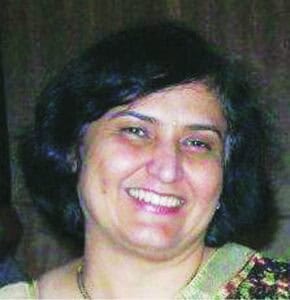
Dr (Lt Col) Priscilla Joshi -Professor and Head of Radiodiagnosis, Bharati Vidyapeeth Medical College, Pune
Beyond medical education, the environment teaches you discipline, soft skills,
punctuality, empathy for the patient, the
ability to interact with your seniors,
peers and colleagues
What defence medicine instills
Defence medicine begins with an assumption that uncertainty is the default condition. It shapes them to function under pressure, with limited resources, and in unpredictable environments. Dr (Lt Col) Priscilla Joshi, now Professor and Head of Radiodiagnosis at Bharati Vidyapeeth Medical College, Pune, traces this conditioning back to her earliest years at the Armed Forces Medical College. She recalls that beyond medical education and training, the environment “teaches you discipline, soft skills, punctuality, empathy for the patient, the ability to interact with your seniors, peers and colleagues.” These, she notes, are not add-ons but traits that become ingrained and persist long after one leaves defence service.
Her clinical career within the Army Medical Corps unfolded across a spectrum of settings, from smaller hospitals in Bhatinda to larger tertiary-care service hospitals like Command Hospital Poona, Army Hospital (Research and Referral) Delhi, and Base Hospital Delhi. “As a radiologist, I supported trauma care, emergency services, and specialty clinical units,” she says. The cumulative effect, she suggests, is an early exposure to the demands of high-stakes, highpressure medical practice.
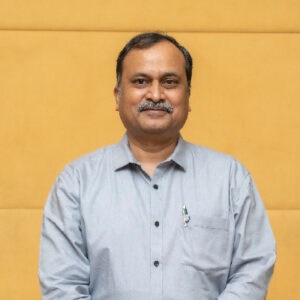
Col. (Dr) Sunil Rao, Medical Director and COO, Sahyadri Hospitals, Pune, underscores the operational diversity of defence medicine. High-altitude postings in Ladakh, Siachen Glacier, and other forward areas brought him face to face with conditions such as high-altitude pulmonary edema, frostbite, hypoxia-related complications, and pulmonary hypertension. Alongside this, battlefield trauma care demanded rapid stabilisation of injuries from mine blasts, bomb explosions, and combat situations, often in field hospitals under constrained conditions. “Defense medicine is inherently diverse and shaped by operational environments,” he summarises.
Preparedness in defence medicine extends beyond clinical acumen. “All defence medical officers are trained in field surgery, emergency response, and trauma stabilisation,” he explains, noting that this training is inseparable from logistics, evacuation planning, and resource optimisation. Whether in aviation medicine, naval hyperbaric care, or routine troop health surveillance, the underlying emphasis remains the same: structured protocols, anticipatory planning, and the ability to function effectively when systems are stretched.
However, what distinguishes this training from civilian pathways is not superior medical knowledge, as Dr Joshi is careful to clarify, but the context in which that knowledge is applied. “The core medical knowledge and clinical standards are comparable,” she says, “but the context and conditioning differ markedly.” Defence-trained doctors are accustomed early on to limited resources, high patient load, time-critical decision-making, and adverse environments.
Clinical composure, adaptability, and prioritisation emerge not as optional skills but as survival tools. “In civilian settings, these traits often develop later and largely through experience rather than structured training,” she notes.
Dr Rao, who has been part of the national quality movement through NABH and was nominated by the Directorate General of Armed Forces Medical Services, further emphasises the structured nature of this preparation; “From the outset, clinicians are trained to work within clearly defined protocols— whether in trauma care, emergency response, or disaster management. The Indian Armed Forces’ structured response during natural disasters is a strong example of protocolled, outcome-focused healthcare delivery. These same principles are highly transferable to civilian hospital networks. Defensetrained clinicians are accustomed to clinical governance, adherence to protocols, and continuous quality improvement.”
Col. (Dr) Sunil Rao – Medical Director and COO, Sahyadri Hospitals, Pune
Defense medicine is inherently diverse
and shaped by operational environments
The transition cliff
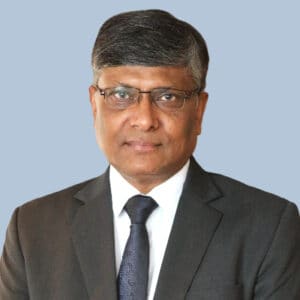
While defence medicine equips doctors with skills that are structured, operationally tested, and context-ready, their transition into civilian healthcare does not follow a similar systemic pathway. Lt Gen (Dr) AK Das, PVSM (Retd), an ENT Surgeon and Presidential Awardee with over four decades of experience spanning healthcare strategy, governance, administration and employee welfare, describes this process; “At present, the transition of retired defence medical professionals into civilian healthcare remains largely ad-hoc and opportunity-driven rather than guided by a structured national hiring or deployment framework.”
He notes that while many hospitals, teaching institutions,and corporate healthcare groups actively engage former defence clinicians for roles in clinical governance, quality assurance, hospital administration, and medical education, these engagements are typically driven by individual reputation, personal networks, or immediate organisational needs. There is currently no dedicated agency, standardised credential-mapping mechanism, or central database that systematically aligns defence medical experience with civilian healthcare opportunities.
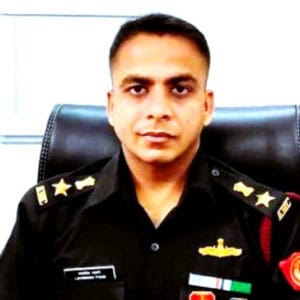
Lt Col (Dr) Lavneesh Tyagi (Retd.), Head of Hospital at Sancheti Institute for Orthopaedics & Rehabilitation, Pune, adds, “At present, the transition of retired defence medical professionals into civilian healthcare remains largely ad-hoc and opportunity-driven, rather than guided by a nationally structured hiring or integration pathway. Though some of the agencies do liaise with the Retirement and Demobilisation section of the Armed Forces, there is no formal bridge mechanism that maps defence-acquired competencies—clinical, administrative, or leadership— onto civilian healthcare roles in a predictable manner. As a result, many highly capable professionals navigate this transition based on personal networks, individual visibility, or chance opportunities.”
Some mechanisms do exist at a broader level. The Directorate General of Resettlement (DGR) and the Army Welfare Placement Organisation (AWPO) organise job fairs and placement initiatives connecting veterans with private employers. Dr Das points out, “these efforts are broad-based and not specifically designed to channel senior medical talent into healthcare leadership, academic, or systemstrengthening roles.”
Lt Gen (Dr) AK Das, PVSM (Retd.) -Army Veteran
At present, the transition of retired defence medical professionals into civilian healthcare remains largely ad-hoc and opportunity-driven rather than guided by a structured national hiring or deployment framework.
What emerges next is less a question of intent, and more one of interpretation: whether this routine transition can be more deliberately situated within India’s evolving healthcare architecture. Viewed at a system level rather than through individual placements, Dr Das suggests the issue intersects with broader structural realities.
He observes that “India’s healthcare system remains fragmented across capacity, quality, governance, and workforce dimensions. For a nation committed to universal health coverage, addressing these structural gaps is a critical policy priority.” From this perspective, retired defence clinicians represent what Dr Das describes as “an emerging policy opportunity rather than a missed one, provided it is deliberately aligned with existing national health programmes.” He emphasises that military medical leaders bring “a distinctive combination of clinical credibility, administrative rigour and crisis management capabilities that translate seamlessly into civilian healthcare environments.”
The practical pathways for such integration, he suggests, include lateral entry into senior governance roles, faculty positions in medical colleges, and advisory roles within institutional or national health frameworks. These avenues, according to Dr Das, could allow the “nationally available expertise [to be] systematically redeployed to strengthen healthcare delivery and governance.” With a sense of where the talent fits, the next question is how the system itself can orchestrate that impact.
Lt Col (Dr) Lavneesh Tyagi (Retd.) -Head of Hospital, Sancheti Institute for Orthopaedics and Rehabilitation, Pune
Defence systems are designed around worst-case scenarios—mass casualties, polytrauma, delayed evacuation, and prolonged rehabilitation, requiring seamless coordination across the entire continuum of care
Orchestrating impact
If retired defence medical professionals are to be more intentionally integrated into civilian healthcare, clarity over collaboration becomes central. Dr Das emphasises that such a model cannot be led by a single stakeholder. “Given that healthcare is a state subject, it requires a government-anchored framework with distributed execution down to the state-level bodies,” he says.
In this vision, the Government of India, through the Ministry of Health and Family Welfare in coordination with the Ministry of Defence, would provide the policy anchor. This includes linking defence medical talent to priority areas such as district hospital strengthening under the National Health Mission, filling faculty and leadership gaps in new AIIMS and government medical colleges, and contributing to emergency preparedness under national and state disaster management plans. The Armed Forces Medical Services (AFMS) could function as the structured talent pipeline, mapping competencies across hospital command, specialty care, public health, and faculty roles, and translating these into civilian-recognisable positions well before retirement. Dr Das notes that this preparation could allow for systematic lateral entry, rather than the current opportunity-driven model.
Regulatory and accreditation bodies, particularly the National Medical Commission, would act as validators. Defence medical experience is already recognised for teaching appointments, and Dr Das suggests that frameworks could evolve to formally acknowledge such experience for institutional leadership, clinical governance, and quality oversight roles, especially in publicly funded institutions.
Finally, public and private hospital networks emerge as the execution layer. These institutions, particularly those empanelled under schemes like Ayushman Bharat, could deploy defence-trained talent to ensure scale, standardisation, and accountability in patient care, administrative efficiency, and emergency response preparedness. Dr Rao observes that in corporate healthcare, defencetrained clinicians bring operational discipline, protocol-driven planning, and leadership experience that can be leveraged in both routine hospital operations and larger system-level programmes.
Scaling readiness
Once the architecture of such a workforce model is discussed, the question naturally shifts from who deploys this talent to where its impact is most visible. While defence-trained clinicians are relevant across healthcare settings, their integration becomes particularly visible in tier2 and tier-3 hospitals, where system depth, emergency preparedness, and leadership frameworks can vary widely.
Dr Das notes that retired defence clinicians are “particularly well suited to play high-impact capacity-building roles in tier-2 and tier-3 hospitals, where their contribution can be both immediate and transformative.”
The emphasis, he suggests, is not only on clinical service but on institutional readiness. Former Armed Forces doctors can strengthen emergency preparedness, introduce SOPdriven workflows, and mentor clinical leaders in structured decision-making and escalation protocols. Their experience in audits, training, and handling human resources contributes to efficiency without major capital investment, allowing outcomes to improve without proportionate cost escalation. In this context, capacity building extends beyond infrastructure to the organisation and leadership of care.
Dr Tyagi, expands on the clinical dimension. In orthopaedics, trauma care, and rehabilitation, the most valuable contributions lie not in any single technique, but in the preparedness mindset that underpins defence medicine. “Defence systems are designed around worst-case scenarios—mass casualties, polytrauma, delayed evacuation, and prolonged rehabilitation—requiring seamless coordination across the entire continuum of care,” he observes.
Dr Sunil Rao situates this discussion within a broader geographic context. “Many regions across India—particularly border and remote areas such as Arunachal Pradesh, Jammu & Kashmir, Kargil, and parts of the Northeast—remain underserved by civilian healthcare infrastructure. Defence medical personnel, especially ex-servicemen and reservists, are highly trained in emergency medicine, trauma care, and disaster management.” In such settings, system-oriented leadership and preparedness can have an outsized impact on care delivery.
Taken together, the contribution of defence-trained medical professionals in tier-2 and tier-3 hospitals demonstrates how system thinking can reshape care delivery at the institutional level. The question that follows is whether these principles can travel further, beyond individual hospitals into the wider architecture of civil–military collaboration that is already taking shape across India.
Bridging the divide
India has seen growing collaboration between the Armed Forces Medical Services and civilian healthcare institutions. These efforts include joint research and development with AIIMS and ICMR, shared infrastructure agreements, dual-use technologies, and even civilian treatment within military hospitals. Yet, as Dr Tyagi observes, these collaborations “still function largely as a collection of well-intentioned but fragmented initiatives, rather than as a fully articulated national strategy.”
He notes that most civil–military medical partnerships remain MoU-driven and institution-specific, dependent on alignment between individual leaders rather than systemic integration. While these arrangements demonstrate intent, they often lack mechanisms for scale, such as structured talent exchange, shared platforms for research and registries, and frameworks for measuring long-term impact.
Dr Tyagi suggests that for convergence to evolve into a strategically scalable model, it would need a formal policy framework recognising civil–military medical integration as a national health asset. Structured talent exchange and secondment programmes could map defence medical experience onto civilian hospital and health system roles, while joint centres of excellence in trauma, rehabilitation, disaster medicine, and medical logistics could provide hubs for knowledge transfer and training. Shared digital infrastructure could facilitate research, outcome analysis, and registries, enabling systematic tracking and assessment.
Viewed in this way, existing collaborations are not a lack of capability but a reflection of fragmented intent. Without national-level coordination, the expertise embedded in defencetrained medical professionals remains underutilised, limiting the potential to strengthen preparedness, trauma care, and governance across civilian healthcare. Dr Tyagi’s assessment points to a pathway where civil–military convergence could be systematised and scaled, translating isolated hospital-level gains into broader, measurable improvements across the national healthcare landscape.
Looking forward
India’s healthcare system has consistently turned to defence medical expertise in moments of strain, even as that expertise remains largely outside routine planning. As Lt Gen (Dr) AK Das notes, the challenge lies not in capability but in how experience is positioned within the system. Whether this expertise continues to surface only when systems are stretched, or finds a place within everyday healthcare architecture, is a question that quietly shapes how institutional memory is built in Indian healthcare.