

India carries a significant burden of vision disorders globally
Dr Mandeep Singh Basu, Director, Dr. Basu Eye Care Centre, in an interview with Kalyani Sharma, discusses how eye care is emerging as a critical public health priority in India

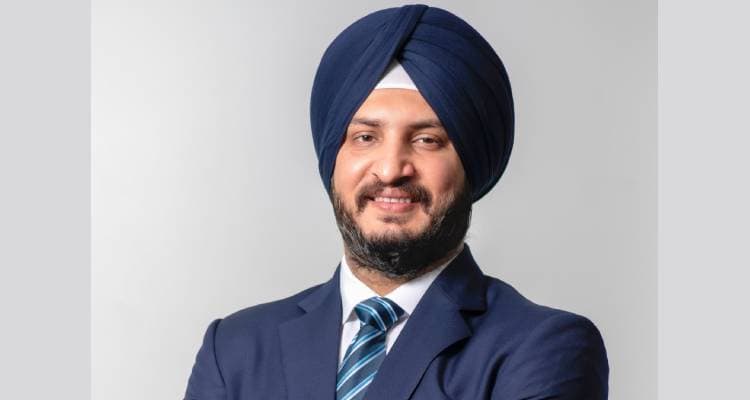

With the rising burden of vision disorders in India, how do you see eye care evolving as a public health priority within the broader healthcare ecosystem?
India carries one of the largest burdens of vision disorders globally, with conditions such as cataracts, refractive errors, diabetic retinopathy, and glaucoma contributing significantly to avoidable blindness. Historically, eye care received limited attention compared to other public health priorities. However, this is now changing due to the rising prevalence of diabetes, an ageing population, and lifestyle-related risks, which have made many eye conditions chronic and long-term in nature.
As a result, eye care is increasingly being recognised as both a health and economic priority, as vision loss directly impacts productivity, quality of life, and financial stability for individuals and families. Going forward, integrating eye care into mainstream public health programs and insurance coverage, along with strengthening preventive screening and community-level interventions, will be critical to reducing the burden of avoidable blindness in India.
From a provider’s perspective, how can integrative models combining Ayurveda and modern ophthalmology be scaled across hospitals and clinical networks?
From a provider’s perspective, scaling integrative models requires moving beyond individual practitioners to establishing standardised clinical frameworks. Integrative care must be supported by clearly defined treatment protocols where Ayurvedic therapies have an evidence-based and complementary role alongside modern ophthalmology. For instance, therapies such as Tarpana or Nasya can be used as supportive interventions for conditions like dry eye or early-stage diabetic eye disease enhancing patient outcomes without replacing conventional treatment.
Hospitals can scale such models by structurally integrating modern medicine and AYUSH services within the same clinical ecosystem, enabling coordinated care delivery. This includes shared patient records, multidisciplinary case discussions, and clearly defined referral pathways between specialties. Technology-enabled health records and outcome tracking systems are also critical, as they allow institutions to monitor effectiveness, maintain consistency in care, and replicate successful integrative models across hospital networks.
What role can Ayurvedic ophthalmology play in reducing the long-term healthcare burden of chronic conditions such as diabetic retinopathy and glaucoma?
Ayurvedic ophthalmology (Netra Chikitsa/Shalakya Tantra) can play a supportive and preventive role in reducing the long-term healthcare burden associated with chronic eye diseases such as diabetic retinopathy and glaucoma. Ayurveda contributes by focusing on slowing disease progression, promoting holistic and low-risk treatment approaches, and supporting overall ocular health.
In certain cases, integrative Ayurvedic care may help reduce the frequency or delay the need for invasive interventions such as intravitreal injections, PRP, or laser treatments, particularly when implemented in the early stages of disease. Rather than offering only temporary relief, Ayurvedic therapies aim to provide gradual and sustained improvement in managing complications of diabetic retinopathy. Additionally, Ayurvedic medications and therapies can support optic nerve health and help stabilise peripheral and central vision, contributing to better long-term management of glaucoma.
How can healthcare institutions standardise and validate traditional therapies to ensure wider acceptance among clinicians, regulators, and insurance providers?
Healthcare institutions can play a critical role in making traditional treatments such as Ayurveda more trusted and widely accepted; however, this requires coordinated efforts on multiple fronts.
First, robust scientific research and clinical testing of eye-related treatments must be conducted across diverse patient populations, using standardised clinical parameters such as visual acuity, intraocular pressure, and retinal imaging. These studies should follow established medical guidelines and be supported by credible institutions such as the Indian Council of Medical Research (ICMR) and the Department of Science and Technology (DST). Building trust in integrative care requires strong clinical evidence, not just claims.
Second, the quality and safety of Ayurvedic medicines must be ensured by manufacturing them in certified facilities that adhere to stringent safety, hygiene, and quality control standards. Consistency in formulation where each batch contains the same ingredients in the same strength is essential to ensure predictable and reliable therapeutic outcomes, thereby strengthening patient confidence.
Next, hospitals should work closely with regulatory bodies such as the Central Drugs Standard Control Organisation (CDSCO) and the Ministry of AYUSH to develop standardized clinical guidelines for the safe integration of Ayurvedic treatments alongside modern medicine, supported by well-documented safety and efficacy data.
Finally, wider insurance coverage regulated by the Insurance Regulatory and Development Authority of India (IRDAI) will depend on strong clinical validation and regulatory approvals. Demonstrating safety, effectiveness, and cost-efficiency will be key to enabling broader financial support and mainstream adoption of integrative therapies.
What are the key challenges and opportunities in integrating preventive eye care into existing healthcare delivery models, especially in tier 2 and tier 3 markets?
Medical systems in Tier 2 and Tier 3 cities are rapidly expanding, and the opportunity is real and under-exploited. They have primary and community health centres that are structurally capable of hosting vision screening—the gaps are in trained personnel, equipment, and referral linkages.
To close these gaps, it is necessary to train ophthalmic assistants and ASHA workers to conduct basic visual acuity checks and diabetic retinopathy screening using smartphone-based fundus cameras, which are now operationally feasible at a modest cost.
The main problem is that once you have conducted the initial screening, there’s no real benefit in checking large numbers of people if the nearest retina specialist is six hours away. A combined approach can only help solve this to some extent.
For example, if we have a trained Ayurvedic doctor at the local (taluka) level who knows how to treat basic issues like refractive errors and dry eye, keep an eye on stable glaucoma patients between visits to specialists, and guide patients on lifestyle changes, this can help to extend the specialist’s reach without replacing them. However, to make this system work at scale, telemedicine (online consultations) is absolutely essential.
Looking ahead, what kind of collaborations between hospitals, research institutions, and policymakers are required to strengthen the future of integrative eye care in India?
The institutional architecture needed is actually fairly clear, even if it is politically difficult to build. Academic medical centres the AIIMS Ayurveda segment is already functioning, along with other regional Ayurvedic ophthalmology institutes but now they need to run clinical trials and build the evidence base.
AYUSH-affiliated institutions, such as the National Institute of Ayurveda, should be official partners, not passive participants. Along with Ayurvedic institutions, pharmaceutical companies with Ayurvedic divisions need to invest in standardized manufacturing procedures and funding for post-market surveillance.
State health departments should start small pilot programs at the district level that combine modern eye care with traditional approaches. A few states, such as Rajasthan, Kerala, and Gujarat, which have well-coordinated medical systems in place, should implement these integrated eye care models.
Policymakers need to develop a programme that enables hospitals and doctors to collaborate to deliver modern and traditional eye care. This could include granting official recognition to integrative care departments, ensuring insurance coverage for proven integrative treatments, and developing comprehensive training programs so eye doctors can learn these methods formally.
The idea is simple: India has many eye health challenges and also a wealth of traditional knowledge that could help. What has been missing is a serious effort to bring the two together through research, clear standards, and long-term support.
- Advertisement -
