

Making diagnostics a continuous health journey
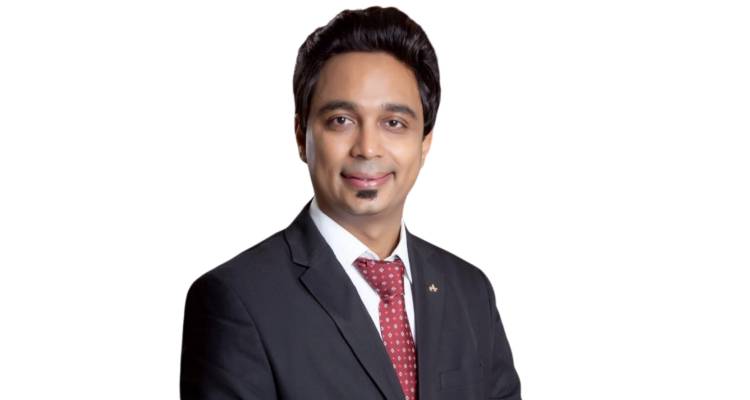
Dr Arpit Jayshwal, Founder and CEO, Curelo, speaks to Kalyani Sharma about improving transparency in diagnostics, the growing role of digital tools in preventive healthcare, and the trends shaping the future of the industry


What inspired you to start Curelo? What gap in the diagnostics ecosystem were you trying to address?
The idea came from a very personal experience. My father was a chronic kidney disease patient undergoing dialysis twice a week, which meant he also had to undergo regular diagnostic tests. Despite my own laboratory being available, he still faced multiple challenges in booking tests, coordinating sample collection, tracking reports and retrieving old records whenever doctors asked for six-month or one-year-old reports before dialysis.
That made me realise that these were not isolated problems. I travelled across the country and met more than 100 diagnostic laboratories in cities including Hyderabad, Bengaluru, Mumbai, Delhi-NCR, Ahmedabad, Indore and Bhopal to understand how the industry functions.
What I found was that a large part of the diagnostics market is still fragmented and unorganised. At the same time, consumers are becoming increasingly health conscious. They invest in wearables, fitness and diet, but none of these can truly reveal what is happening inside the body. Laboratory parameters remain the most reliable indicators of health. Even someone who appears physically fit can suffer a heart attack without warning.
I saw a significant opportunity to transform diagnostic testing from an occasional event into a continuous health habit. That was the foundation of Curelo—a consumer-first platform designed to provide transparency, continuous health monitoring and personalised guidance to help people improve their long-term health.
Despite rapid digitisation and the expansion of organised diagnostic networks, transparency around pricing, quality and test selection continues to be a concern. What structural challenges are preventing the diagnostics sector from becoming more transparent?
The biggest challenge is that a large part of the diagnostics industry still operates in a traditional, transaction-driven manner. The focus is on completing a test rather than building a long-term relationship with the consumer or supporting their health journey.
The industry needs a neutral platform that allows consumers to compare laboratories based on price while also ensuring that listed laboratories meet defined quality standards. A person should be able to see that the same test may cost Rs 300 at one laboratory and Rs 600 at another, and make an informed choice.
Transparency, however, should not stop at pricing. There also needs to be assurance around quality, reliable home sample collection and post-report guidance. Today, many consumers are left confused once they receive their reports. They need support in understanding the results and guidance on what to do next.
The missing layer in diagnostics is continuous engagement. Instead of treating every test as an isolated event, we need to build a longitudinal health journey that encourages regular monitoring and behaviour change.
Artificial intelligence is increasingly being used for report interpretation and clinical decision support. Where do you see AI delivering the greatest value today, and what limitations still need to be be addressed before large-scale adoption?
AI is already changing how consumers interact with diagnostic reports. Recent studies suggest that nearly 85-90 per cent of consumers are using AI to interpret reports before consulting a doctor, with physicians increasingly serving as the second level of validation.
At Curelo, we recently introduced AI Smart Health Insights. When a laboratory report is uploaded, the platform converts a standard PDF into a simplified smart report that explains, in easy-to-understand language, which biomarkers are normal, which require attention and why they matter.
The platform also recommends appropriate lifestyle modifications, dietary changes and suggests how frequently specific biomarkers should be monitored to reduce the risk of chronic diseases.
In addition, we have launched a 24×7 AI Health Assistant that allows users to ask questions through voice or text regarding symptoms, reports or health concerns. The objective is to make complex medical information understandable for everyone.
Within just 10 to 15 days of launch, we recorded more than 75,000 interactions with the AI Health Assistant and over 90 per cent adoption for AI Smart Reports among eligible users.
These early numbers indicate that consumers value AI when it provides simple explanations, personalised guidance and continuity in their healthcare journey.
What is the accuracy level of the AI models powering these features?
AI cannot be defined by a single accuracy percentage because it depends on the application. Our platform is built on established medical knowledge combined with algorithms developed by an expert panel of doctors.
We have also incorporated medical guardrails to ensure that report interpretation remains clinically relevant and focused on validated medical information. The objective is to provide consumers with reliable explanations while supporting not replacing clinical decision-making.
Since Curelo is primarily a consumer platform, could you share some of its growth metrics and future roadmap?
We have crossed 2.5 lakh app downloads and have served over four lakh consumers. The platform has generated insights across more than 10 million biomarkers. We currently record around 40,000 to 50,000 monthly active users and process over 20,000 diagnostic orders every month.
Our next major initiative is the introduction of a Bio-age model. Chronological age simply reflects how many years a person has lived, whereas biological age measures how the body is actually functioning.
Using a clinically validated model based on nine laboratory parameters, we will estimate a person’s biological age and compare it with their chronological age. If someone’s biological age is higher, it indicates accelerated ageing.
We are also building personalised biological timelines using family history, medical history and previous laboratory reports. Based on this information, the platform will identify the biomarkers that are most important for each individual and recommend personalised nutrition, lifestyle modifications and retesting schedules aligned with Indian medical guidelines.
In addition, we plan to integrate with Google Health so users can monitor sleep, physical activity and other health metrics alongside laboratory parameters. This will create a continuous monitoring loop that encourages preventive healthcare instead of episodic testing.
Several healthcare platforms already operate in this space. What differentiates Curelo from existing players?
Our biggest differentiator is that Curelo is a neutral platform. Consumers are free to choose the diagnostic laboratory of their choice rather than being directed towards a specific partner laboratory.
Alongside laboratory choice, we aim to deliver high-quality phlebotomy services, transparent pricing and continuous health monitoring.
Another important differentiator is affordability. Many competing solutions rely on wearable devices that require an investment of Rs 25,000-30,000. Our platform is designed to make preventive healthcare accessible at an entry cost of less than Rs 1,000, making it suitable for large-scale adoption across India.
Our goal is to create meaningful population-level impact by making personalised preventive healthcare affordable and accessible.
There is growing discussion around making diagnostics more data-driven and personalised. What role do you see digital platforms playing in enabling preventive healthcare, and what changes are still needed across the ecosystem to make this approach mainstream?
Digital platforms will become the intelligence layer of preventive healthcare. While diagnostics generate vast amounts of health data, most consumers struggle to understand what it means or what action to take next. AI can convert diagnostic data into personalised insights, guidance and timely follow-ups, making preventive care actionable rather than episodic. To make this mainstream, the ecosystem needs greater interoperability, structured health data, stronger consumer awareness and trusted AI frameworks that complement clinicians instead of replacing them.
India’s diagnostics market is evolving with the expansion of organised chains, digital health platforms and home-based testing services. How do you see the competitive landscape changing over the next three to five years, and what trends should healthcare providers and diagnostic companies prepare for?
The industry is moving beyond a race for collection networks and faster sample collection towards delivering continuous health outcomes. The next phase of competition will be driven by personalised experiences, AI-powered interpretation, longitudinal health tracking and consumer engagement after the report is delivered. Healthcare providers that combine diagnostics with intelligence, guidance and continuity of care will be better positioned than those offering testing alone.
Looking ahead, what do you believe will define the next phase of growth for India’s diagnostics industry? Are there policy, technology or ecosystem
The next decade will be defined by a shift from reactive treatment to continuous health management. Diagnostics will become the primary source of longitudinal health data, while AI will transform that data into personalised guidance, early risk detection and proactive interventions. The winners will be platforms that don’t just deliver reports—they help people continuously understand, improve and manage their health over time.changes that you think will have the biggest impact?
- Advertisement -
