

Investing beyond capital: Building healthcare businesses with clinical excellence at the core
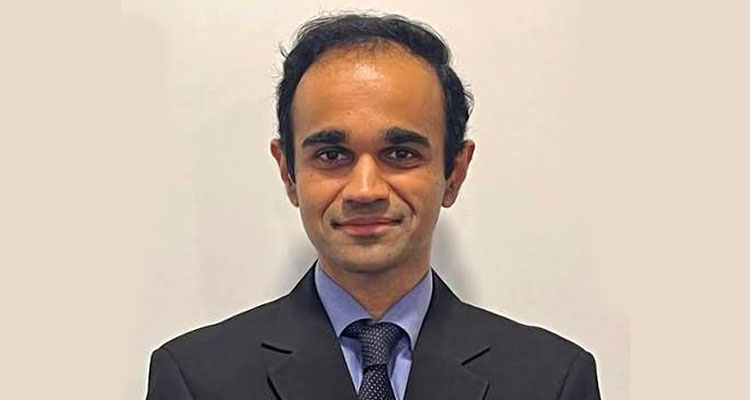
Rakshith Rangarajan, Equity Fund Manager, Inviga Investment Advisors, speaks to Viveka Roychowdhury about the firm's clinician-led investment strategy, why it focuses on the underserved mid-market healthcare segment, and how combining hospital operations with investments in healthtech and innovation aims to create long-term value while improving access and patient outcomes


India’s healthcare sector has attracted considerable PE & VC funding. How is Inviga’s investing philosophy different from other such equity investors and platforms?
India’s healthcare sector is well served by capital today, and the depth of institutional interest is a genuine positive for the industry. Inviga’s difference is one of vantage point. We are one of the very few clinician-led, thematically focused, midmarket healthcare funds in India, and we run a deliberate two-track strategy: control positions in hospital services that we ourselves operate, alongside active minority positions in high-IP healthcare adjacencies – devices, diagnostics, biotech and supply chain – that connect back into those platforms. Critically, we are operators. Our Sponsor, Dr. B S Ajaikumar, built HCG from roughly Rs 20 crore to Rs 2,000 crore over two decades and remains a practising oncologist. Ramesh Balasubramanian, who leads our hospitals, brings 27 years of senior healthcare leadership – he built the CBCC onco-care franchise from inception to monetisation over a fifteen year arc and held several leadership positions within the Apollo Hospitals ecosystem. This gives us an inside-out vantage: we can independently manage and optimise healthcare assets, not merely underwrite them. That capability changes what we are willing to own, and it changes what we place at the centre of the enterprise – the clinician. Top clinicians have entrusted their assets and practices to Curis, our hospital platform, because of the reputation and vintage of Inviga’s leadership. That is a professional relationship outcome, and it is the paradigm we are altering.
The second differentiator is what the two tracks build together. Our hospital platforms create procurement scale, clinical validation sites, and demand infrastructure that directly strengthen our minority investments; those companies in turn bring technology and IP back into our hospitals. For instance, Forus Health’s ophthalmic imaging can be deployed inside Curis, giving Forus a clinical validation site and Curis an advanced diagnostics capability. This is an integrated value creation architecture, available to a fund that operates on both sides of the equation. Holding it together is clinical excellence, which we treat as the primary differentiator in healthcare and our top priority – the mechanism by which the financials work, rather than a compliance layer added after they do. A hospital that delivers reliable outcomes retains clinicians, holds referrals, and keeps patients in their own city. That is what makes a business model sustainable rather than merely profitable in a given year, and it is what ultimately enhances access in catchments that have been underserved for decades.
What are the specific pain points, gaps in India’s healthcare infrastructure that need to be plugged? And what’s Inviga’s strategy to bridge these gaps?
The gaps are structural, and capital scarcity is not the primary one. We have often seen cited, statistics to the effect that India has roughly 1.3 hospital beds per 1,000 people against a WHOrecommended benchmark of 3, and the country’s public health expenditure remains close to 1.9 per cent of GDP – well below comparable emerging economies. But the more binding constraint is fragmentation. India’s top ten hospital operators hold under 15 per cent of the market. The 50-to-300 bed hospitals that serve most of the country are sub-scale individually: they cannot negotiate procurement, fund serious clinical governance, digitise, or professionalise management. Alongside this sits a search-cost barrier that leaves these assets stranded – larger operators face diminishing returns pursuing sub-1,000-bed deals because diligence and integration overheads are disproportionate to the ticket. Growth-stage healthcare innovators face the mirror image: too large for seed VC, too small for bulge-bracket PE. This is the missing middle, and it is where most of India’s real healthcare capacity and innovation actually sits. Layered on top is a clinical depth problem in Tier 2 catchments – infrastructure without anchor specialists does not retain patients, and specialists will not stay in a city without a system around them.
Our strategy addresses each directly. We do not build greenfield; it is the slowest and least capital-efficient route to capacity. Through Curis, we acquire and professionalise quality standalone hospitals in high potential catchments – centralised procurement, digital HIS, specialised clinical protocols, and a governance backbone. The model is deliberately capitallight: assets are acquired substantially via slump sale and long-term lease, real estate is leased, and capital is directed toward revenue generating equipment and working capital, with deployment averaging around Rs 33 lakh per bed against Rs 50–80 lakh typical for comparable hospitals. Curis today operates across Tamil Nadu and Gujarat, with a meaningful presence in significant Tier 2 cities, and is establishing the first Level III NICU in its Trichy cluster – addressing a genuine neonatal emergency gap in that region. A single 100-bed hospital cannot afford centralised clinical governance; a platform of fifteen can, and each new unit joins an operating system rather than starting from zero. On the innovation side, we act as a quasistrategic investor to founders in the missing middle, offering demand-side access, supply chain connect, and clinical validation alongside capital – bridging the distance between good Indian technology and the hospitals that should be using it.
As the primary promoter, how does Dr Ajaikumar’s expertise as a veteran oncologist and Executive Chairman of Healthcare Global Enterprises (HCG) shape investing decisions?
The most consequential influence is thirty-five years of pattern recognition about what makes a healthcare enterprise work, accumulated while building one. Dr Ajaikumar took HCG from roughly Rs 20 crore to Rs 2,000 crore over twenty years, and did so in a manner that dovetailed shareholder value with clinical quality and ethics. Those convictions now sit at the centre of how Inviga underwrites. It is why clinical excellence is our declared first vector of value creation rather than a downstream consideration. It is why we treat the clinician as the enterprise: he has seen first-hand that when the anchor specialist leaves, the referral network, the payer relationships, and the clinical reputation leave with them, and that no term sheet recovers that. And it is why promoter alignment is our most important criterion in a deal. Alternate promoter interests, wavering commitment to the business plan, accounting indiscipline – we have taken a principled view to pursue other opportunities rather than compromise on these, even where the economics were tempting.
Practically, it changes both what we see and what we can offer. Diligence conversations with doctor promoters are peer conversations – a clinician sitting across from a clinician asks different questions and gets different answers than an analyst working from a data room. We can assess whether a hospital’s clinical claims are real, whether its specialist bench is durable or borrowed, and whether its case mix is defensible. It also changes what we can put on the table. For a doctor promoter in a Tier 2 city, the decision to take a partner is rarely primarily about valuation – it is about succession, reputation, and whether the institution they spent thirty years building survives them intact. Top clinicians have joined Curis and entrusted their practices to us precisely because of that lineage. The Sponsor also carries substantial skin in the game through a significant personal commitment into the Fund, which ensures that every investment decision is made by someone whose own capital sits alongside our investors’.
How does Inviga choose companies/hospitals to invest in? Can you give a few examples of existing investments?
We are looking for a specific combination: a business where our operating vantage is genuinely additive, a promoter or founder whose interests are unambiguously aligned, real IP or clinical depth, and a market that is not crowded or carrying overcapacity risk. Our turnoffs are equally clear – promoter misalignment, alternate promoter interests, heavy greenfield components, low IP quotient, and situations where our strategic contribution is not given credence in rights or economics. We would rather walk away than compromise on any of these, and we have.
Four investments are live. Curis Hospitals, our flagship control platform, is rolling up quality multispecialty assets in underserved Tier 2 catchments across Tamil Nadu and Gujarat, moving towards 400-450 beds today, with the first Level III NICU in its Trichy cluster being established through it. Milann, which we have acquired outright from HCG, is Bangalore’s original IVF institution – founded in 1989, over 124,000 families treated, six centres, and an Academy that has trained a significant share of South India’s practising fertility specialists. Forus Health is a Bengaluru medical device company whose ophthalmic screening technology has been used to screen over 22 million patients across 85- plus countries, named among TIME Magazine’s World’s Top 400 HealthTech Companies in 2025, with two global-first products and clinical-grade quality at three-to-four times below incumbent price points. Mynvax, founded by Prof. Raghavan Varadarajan of IISc – a Shanti Swarup Bhatnagar laureate and one of India’s foremost biophysicists – and Dr Gautham Nadig, a biotech veteran who has been central to translating the platform’s discovery science into clinical-stage programmes, is developing a domestically manufactured influenza vaccine in a country that imports roughly 85 per cent of its flu vaccines. Every rupee has a thesis, and every thesis has a clear clinical advancement driving it.
What is the horizon/timeline of investing? Does Inviga offer patient capital?
Inviga Healthcare Fund I is a SEBI-registered Category II AIF with a ten-year term and a five-year commitment period, with provision for extension. Individual holds run roughly four to five years for our minority positions and five to seven years for the hospital platform. So the honest answer on patient capital is more precise than the question usually allows. We are not patient in the sense of having no clock – that discipline matters, and our investors are entitled to it. We are patient in the sense that we decline to force an asset to perform against a timeline it structurally cannot meet. Indian healthcare’s chronic failure mode is exactly that mismatch: when a hospital is pushed to demonstrate a turn faster than the institution can bear, the operator defers equipment, under-invests in the clinical bench, and chases volume over case mix. We will not underwrite a deal that requires that trade.
What makes the discipline workable is that our value creation sequence is real, and each stage is an economic event in its own right rather than a promise deferred to exit. In Curis, capital is deployed in phases – seed the platform, deepen the catchment, season it and demonstrate ROCE, then monetise. A hospital that adds a credible tertiary programme in year two is a materially better institution in year three whether or not anyone sells it. Our deployment pace reflects the same philosophy. We invested a lot of time assembling operating teams, seeding Curis, and building proprietary deal flow before accelerating – and we deliberately commenced external LP fundraising only once the portfolio architecture had taken shape, so that incoming investors had visibility rather than a promise. That is what patience means at Inviga: not an indefinite horizon, but a refusal to let the clock dictate clinical or operational shortcuts. And where an institution’s own horizon runs longer than ours, as it usually does, we structure so that its continuity does not depend on our exit. Our exit should be a change of shareholder, not an event the hospital has to survive.
How does Inviga balance profit with patient outcomes and affordability beyond the metros? What are the metrics that are tracked and how important are patient outcomes?
We would resist the premise that there is a balance to be struck, because in this asset class the trade-off is largely illusory. A hospital in a Tier 2 city has no captive market – its patients can and do travel to a metro for anything serious. The only thing that keeps them local is the belief that the outcome will be as good, and that belief is built on clinical results. Outcomes are therefore the mechanism of profitability, not a constraint on it, which is why clinical excellence is the first of our six vectors of growth and our stated top priority The same logic runs through the minority portfolio. Forus Health has built a durable global franchise precisely by delivering cutting edge clinical-grade ophthalmic technology at far below incumbent price points – that combination of quality and accessibility is what has carried it into 85-plus countries and 22 million patient screenings. Mynvax’s thesis rests on the same principle: India imports roughly 85% of its influenza vaccines at retail prices near Rs 2,000 a shot, and a domestically manufactured vaccine at half that price is both a public health advance and a substantial commercial opportunity. In our portfolio, affordability is a growth engine.
gine. On metrics, we track clinical and financial performance as one dashboard rather than two. Clinically, we hold our platforms to measurable outcomes and value-based health – accreditation standing, clinical success rates that sit in the top quartile of the market, protocol adherence, and case-appropriate quality and safety indicators. Operationally, we track the variables that connect clinical performance to economics: occupancy, ARPOB, EBITDA per bed, ROCE, procurement cost, and capital deployed per bed. We weight clinician retention most heavily of all – physician attrition is the most reliable leading indicator of value destruction in a Tier 2 hospital, and it typically surfaces in the clinical data well before it appears in the P&L. Access, quality of care, reducing the cost of care, and egalitarianism are the explicit pillars of our impact thesis, and we are candid that formal ESG scoring frameworks will be built out further as the businesses mature. What is not aspirational is the operating rule: no financial target may be met by degrading a clinical one.
India has many health tech startups as well as clinicians turned entrepreneurs. Does Inviga also invest in such companies and innovative products?
Yes – this is Track Two of our strategy, where we act as a quasi-strategic investor. We take active minority positions in high-IP, highgrowth healthcare adjacencies: devices, diagnostics, biotech, supply chain. The gap we fill is specific. Growth-stage healthcare innovators in India are too large for seed VC and too small for bulgebracket PE, and even when they raise, they struggle with the thing that actually determines survival – selling into hospitals. Healthcare sales in India is nebulous and slow, and search costs are punishing. Our advantage is that we know the demand side. We can connect a portfolio company into hospital networks, shorten its sales cycle, validate its product clinically within our own platforms, and help it professionalise its supply chain. Forus Health’s ophthalmic devices can be deployed inside Curis, giving Forus a clinical validation site and Curis an advanced diagnostics capability at preferential terms. We are one of very few funds in India positioned to offer that, because it requires owning and operating hospitals as well as investing in the companies that sell into them.
What we look for is evidence. We test concepts by wearing the hat of the consumer – would we, as operators of hospitals, actually buy this and keep using it? We want real IP rather than repackaged commodity; genuine clinical or workflow deltas with clinician endorsement; unit economics that survive real procurement cycles; and a regulatory spine that has been built rather than retrofitted. Our two live Track Two positions illustrate the standard. Forus is a fifteen-year IP creator, profitable for six consecutive years, self funding some of the best R&D we have come across in recent times, with two global-first products and CDSCO SaMD clearances for its AI platforms. Mynvax is a science-led vaccine platform backed by BIRAC and EU research consortia, now advancing to Indian Phase 1 trials under an ICMR Memorandum of Agreement. Both are Make in India, Make for India and Make for the World propositions with global impact and affordability at their core.
What is the checklist of healthcare organisations hoping to attract Inviga’s interest as an investor?
Five things, in order. First, promoter or founder alignment – non-negotiable, and the reason we have declined more deals than for any other cause. We look for genuine intent to institutionalise. Alternate promoter interests, wavering commitment to the business plan, accounting indiscipline, or related-party dealings will end a conversation regardless of the economics on offer. Second, clinical credibility. In hospitals, that means a real specialist bench and a defensible case mix. In devices and diagnostics, it means IP that a clinician would actually endorse – we are turned off by low IP quotient and by products that cannot survive our own internal validation as operators. Third, an underserved and defensible market: high-growth catchments with genuine unmet need, and an absence of overcapacity risk.
Fourth, a business we can meaningfully help. Our capital is not the scarce input – our operating vantage is. For control assets, that means situations where centralised procurement, clinical governance, digitisation and professional management can visibly move the needle. For minority positions, it means companies where our hospital network, supply chain connect and clinical relationships create real acceleration, and where that contribution is given credence in rights and economics. A founder who wants only the cheque will find us the wrong partner. Fifth, capital discipline. We are structurally cautious about heavy greenfield components; our preference is for asset-right models where capital goes into revenue-generating equipment and clinical capability rather than land and buildings. Finally, a word on what the checklist is really testing: whether the institution and Inviga can agree on a clear, measurable strategic plan upfront, with defined end-points and honest ratchets for adherence and divergence. Organisations that find that conversation uncomfortable are usually telling us something important.
[email protected]
[email protected]
- Advertisement -