

India-UK CETA opens new opportunities for Indian medtech, healthcare services
For the healthcare sector, one of the key provisions is the elimination of tariffs on a significant range of Indian medical devices exported to the UK

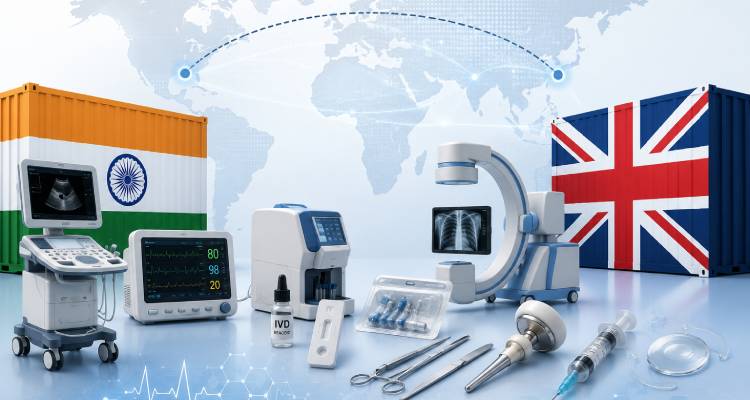

The India-UK Comprehensive Economic and Trade Agreement (CETA), which came into force on July 15, is expected to create fresh opportunities for India’s medical devices industry, pharmaceutical exports and healthcare services by easing market access and strengthening regulatory cooperation between the two countries.
For the healthcare sector, one of the key provisions is the elimination of tariffs on a significant range of Indian medical devices exported to the UK. Products such as surgical instruments, diagnostic equipment, ECG machines and X-ray systems, which earlier attracted tariffs of 2-6 per cent, will now enjoy zero-duty access, improving the competitiveness of Indian manufacturers in the UK market. The agreement also establishes a framework for mutual recognition of medical device certifications, allowing devices certified by the Central Drugs Standard Control Organisation (CDSCO) or the Indian Certification of Medical Devices (ICMED) to access the UK market through a more streamlined regulatory pathway.
The agreement is also expected to benefit India’s pharmaceutical sector. Zero-duty access is likely to strengthen the position of Indian generic medicines in the UK, India’s largest pharmaceutical export destination in Europe. Beyond goods, the pact provides extensive market access across healthcare and professional services, creating opportunities for Indian healthcare providers and professionals while encouraging greater collaboration in digital health, research and innovation.
According to the government, the UK medical devices market was valued at an estimated USD 32 billion in 2024 and is projected to reach USD 69 billion by 2035, presenting a sizeable opportunity for Indian manufacturers seeking to expand exports.
Industry stakeholders have welcomed the agreement while emphasising that its long-term impact will depend on implementation and regulatory safeguards.
Dhrubaa Ghosh, Partner, Healthcare, Management Consulting, BDO India, said, “The India–UK FTA is a positive step for the life sciences sector as it has the potential to deepen collaboration in medical devices, pharmaceuticals, innovation and research. For Indian medical device manufacturers, it could create new export opportunities, but the real gains will depend on how effectively the agreement is implemented. Regulatory alignment, robust Rules of Origin and a level playing field for market access will be essential to ensure that the benefits accrue to genuine manufacturers on both sides. At the same time, the agreement should encourage greater investment, technology transfer and joint innovation, helping India strengthen its manufacturing capabilities and move up the medical technology value chain.”
Sanjaya Mariwala, Executive Chairman and Managing Director, OmniActive Health Technologies shares, “With the India–UK FTA now in force, the focus must shift from market access to market leadership. India and the UK are among the world’s largest consumption-driven economies, making this partnership particularly significant for sectors such as preventive healthcare. The next phase should be centered on stronger research collaborations, joint clinical studies and greater alignment of quality standards so that science-backed products can move seamlessly across markets. India has the manufacturing scale, scientific capability and natural resource base to emerge as a global hub for preventive healthcare. The opportunity now is to convert this agreement into long-term innovation, not just higher trade.”
Pavan Choudary, Chairman, Medical Technology Association of India (MTaI), said, “With the India-UK CETA there will be nearly 99 per cent of Indian product lines now enter the UK duty-free, and phased tariff cuts on UK imports from the 7.5-15 per cent band down to roughly 3 per cent. But the more consequential provision is structural: a Mutual Recognition Agreement streamlining certification for India-approved devices, paired with new pathways for R&D, digital health and skilling collaboration reinforcing India’s ambition to become a top-five global MedTech manufacturing hub by 2030. This is also a proof-of-concept India can replicate with the EU’s $572.3 billion pharma and MedTech market. The binding question now is execution: whether Indian firms realign procurement, manufacturing and partnerships fast enough to capture the upside, rather than simply absorb lower tariffs.”
Chandra Ganjoo, Group Chief Executive Officer, Trivitron Healthcare, said, “The India-UK Free Trade Agreement (FTA) marks a major step forward in strengthening healthcare innovation, expanding market reach, and driving trade collaboration between the two nations.
For the medical technology sector, three primary strategic opportunities stand out:
• Enhanced market access and global competitiveness: The agreement facilitates smoother, more predictable trade by systematically reducing both tariff and non-tariff barriers. This enables Indian medtech manufacturers to scale up their export footprint within the UK market while simultaneously accelerating the availability of advanced global technologies within India. These changes directly elevate the international competitiveness of domestic manufacturers.
• Deepened collaboration in innovation and R&D: The treaty establishes a solid institutional framework for long-term partnerships across research and development, product design, digital health ecosystems, advanced diagnostics, and cutting-edge medical hardware. Joining these collaborative capabilities helps cross-border partners accelerate the delivery of affordable, high-quality healthcare solutions to both regions.
• Strengthening resilient and localised supply chains: As global healthcare entities actively focus on diversifying risks within their logistics chains, this bilateral pact incentivises cross-border manufacturing alliances, steady capital investment flows, and technology transfers. These shifts present a clear opportunity to drive domestic production capabilities and position India as a highly trusted global hub for dependable medical hardware production.
While this trade agreement represents a vital strategic milestone, resolving critical implementation guidelines for medical equipment remains essential to maximize its operational impact. Moving forward, the manufacturing sector requires detailed, transparent blueprints regarding:
• Regulatory alignment: Standardising frameworks for faster cross-border product reviews.
• Conformity assessments: Establishing clear, mutually recognised testing and auditing procedures to reduce duplicate approvals.
• Quality standards and compliance: Creating unified baselines that allow clear business forecasting.
A predictable, well-defined roadmap will empower medtech enterprises to confidently deploy capital, structure long-term investments, expedite technology development, and seamlessly unlock the treaty’s full economic advantages.”
Echoing similar concerns, Rajiv Nath, Forum Coordinator, AiMeD, said, “The UK–India CETA marks a pivotal moment for Indian medical devices. While the agreement opens doors for export growth and fair competition with British manufacturers, AiMeD cautions against the risk of third-party producers exploiting reduced duty access via the UK. Strict Rules of Origin Customs Safeguards are essential to protect India’s nascent, import-dependent industry at this critical stage, ensuring Make in India gains are consolidated rather than undermined.”
Nath noted that India’s major imports from the UK include diagnostic analysers, IVD reagents and kits, X-ray imaging equipment, oxygen therapy equipment and contact lenses. The country’s key exports comprise spectacle lenses, intraocular lenses, single-use plastic disposables and implants.
He further said, “Our concern is not limited to Chinese origin goods but extends to EU products that may exploit lower duty access. India has already experienced this with Singapore and Netherlands. Notably, Singapore and the Netherlands rank among the top five suppliers of medical devices to India despite limited domestic manufacturing because their efficient ports and tax regimes make them competitive transit hubs. By contrast, stronger production economies like Japan, Korea, Taiwan in Asia and France, Italy, and Spain in EU are surprisingly not as prominent suppliers.”
He also pointed out that India’s medical device imports increased 17 per cent over the past year to Rs 89,000 crore, while exports remain at around USD 4 billion. Exports to the UK are currently estimated at approximately USD 130 million, compared with imports of around USD 227 million. The industry body said the agreement could help improve bilateral trade, provided implementation is supported by strong Rules of Origin, customs safeguards and a balanced regulatory framework.
Suresh Nair, Partner-Indirect Tax, EY India also shares, “The entry into force of the India-UK CETA on 15 July 2026 marks a significant milestone for India’s pharmaceutical and healthcare sectors. By providing duty-free access for nearly all Indian exports to the UK, including pharmaceutical products, the agreement is expected to strengthen the competitiveness of Indian pharmaceuticals, including generics, APIs and finished formulations, in an important healthcare market. It also creates opportunities for Indian companies to deepen their participation in UK healthcare supply chains, including public procurement opportunities and partnerships across the healthcare ecosystem.
Importantly, the agreement preserves India’s public-health safeguards and existing patent framework, providing continued support to the country’s globally competitive generic pharmaceutical industry and its role in ensuring access to affordable medicines.
Looking ahead, CETA is expected to strengthen bilateral pharmaceutical supply chains, facilitate greater collaboration in contract development and manufacturing (CDMO), research, innovation and technology partnerships and support deeper life sciences collaboration between the two countries. The agreement further reinforces India’s position as a trusted, high quality and cost effective healthcare and life sciences partner as the UK continues to diversify and strengthen its healthcare and pharmaceutical supply chains.”
- Advertisement -