

Mental health in education: Why knowing what works is only the beginning
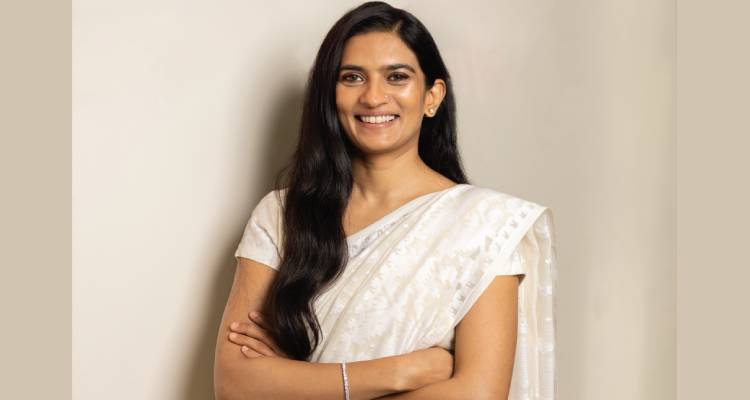
Dr Tristha Ramamurthy, Founder, Ekya Schools, Provost, CMR University and Vice President, CMR Group of Institutions, highlights the gaps in school mental health support, from a shortage of trained professionals to the need for better teacher training and stronger links between schools and healthcare providers


Every school has a child who goes quiet. A teenager whose grades slip without explanation. A six-year-old with a stomach ache every Monday morning. Teachers usually notice first, because they see children every day. But noticing is only the beginning. What happens next depends on whether the teacher knows how to respond, whether a trained professional is available, and whether the system around the child is built to help.
Healthcare learned this lesson years ago. Medicine has an entire discipline, implementation science, devoted to the gap between what research proves and what patients actually receive. Education is only beginning to ask the same question, and children’s mental health is where the answer matters most.
A mandate without a workforce
In July 2025, the Supreme Court directed every educational institution with 100 or more students to appoint or engage at least one qualified counsellor, psychologist or social worker trained in child and adolescent mental health. Smaller schools must set up formal referral links. The National Education Policy 2020 had already recognised the need for counsellors in schools.
The intent is right. The arithmetic is daunting. India has about 14.71 lakh schools serving 24.69 crore students, an average of roughly 168 per school, according to UDISE+ 2024–25. Even if only a third of schools cross the 100-student threshold, the directive implies close to five lakh trained professionals.
For children who need specialist care, the gap is sharper still. The Rehabilitation Council of India counts about 4,309 registered clinical psychologists, and a 2023 Parliamentary Standing Committee report put the number of psychiatrists at around 9,000, roughly 0.75 per lakh people. RCI-approved clinical psychology programmes admit small cohorts, so the pipeline cannot close this gap quickly. A policy can set the expectation. Only sustained investment in training and recruitment can meet it.
The teacher in the middle
Into this gap steps the teacher. We expect teachers to spot distress first, but spotting a concern and knowing how to respond are different skills.
There is a temptation to treat implementation as a box we can hand to every classroom: one programme, one checklist, and the job is done. It doesn’t work that way. A teacher has to understand the principle behind a practice, adapt it to the children in front of her and stay faithful to what the evidence supports, all while managing 25 or 30 children at once. That tension, between adapting to each child and staying true to the evidence, is where most good intentions fall apart.
And teachers are already stretched. A 2025 review of Indian research in the International Journal of Indian Psychology points to workload, societal expectations and limited institutional support as major drivers of teacher stress. Parents expect more, and a changing education sector asks teachers to adopt new methods while carrying full timetables.
Teacher training has long centred on pedagogy and classroom management. If we want teachers to notice, listen and refer, we must give them mental health literacy, practical guidance and someone to hand the child to. We should never ask them to diagnose or provide therapy.
Children carrying too much
As a society, we have overburdened our children with our expectations. Good marks, good behaviour, the right career, the right friends, constant achievement. Between parents, teachers, peers and their own social media feeds, children barely get the space to simply be children.
The counsellor’s desk reflects this. In a single day, a school counsellor may handle a behavioural concern, a child struggling under exam pressure and a workshop for parents. Gender-related concerns, family conflict, the isolation some children feel in nuclear families, social media addiction and ADHD all reach the same person, and each is a specialism in itself.
Here too, no single approach fits every child. We cannot expect one counsellor to be an expert in everything, and we should not treat every concern as a diagnosis.
A continuum, not a referral list
This is why school–healthcare partnerships matter, but only if they work as a continuum. Teachers build supportive classrooms and learn to read a change in behaviour as a signal. Simple practices help: a few quiet minutes to journal can help a child organise their thoughts, as long as it never becomes another graded task.
Counsellors hold the daily relationship and judge when a concern has moved beyond the school. Outside the gates, psychologists assess and offer therapy, psychiatrists evaluate whether clinical care is needed, and paediatricians, who see children regularly, can catch early signs such as disturbed sleep or recurring stomach aches.
The links between these layers must be real. Referral pathways should be agreed before a crisis, not during one. Information should move between school and clinician only with parental consent, and only what is necessary. And a clinician’s guidance on seating, workload or exams should reach the teacher who sees the child every day.
A responsibility we share
On World Mental Health Day, awareness is not enough. We need more trained professionals and more capacity in higher education to prepare them. We need teacher education that includes mental health literacy, schools resourced to implement support well, healthcare providers willing to work alongside educators, and families willing to rethink what they ask of their children. Policymakers must connect these through workforce planning, funding and accountability. Schools cannot bridge these gaps alone.
None of this asks schools to do therapy. It asks us to stop working alone. Our children carry enough already. They don’t need more pressure. They need more understanding, and understanding is far easier to offer when a teacher, a counsellor and a clinician are working together.
Knowing what works is essential. Building the capacity to make it work for every child is the task ahead.
- Advertisement -
