

Alcon’s broader commitment is helping people see brilliantly
Amar Vyas, Country Head – India, Alcon analyses the recently launched Alcon Unity VCS and CS platforms, focusing on the purpose and engineering driving the future of phaco‑vit treatment

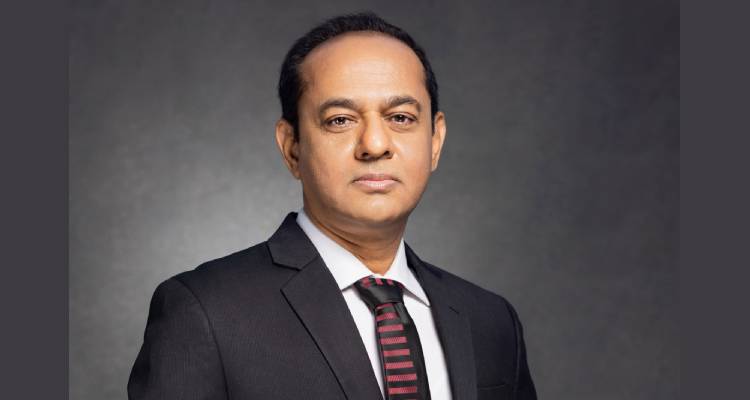

Give us an overview of Alcon and where it fits into India’s need for good quality eye care.
Alcon has a legacy of more than 75 years globally. Over more than seven decades, we have evolved from a small pharmacy that started with pharmaceuticals to the world leader in eye care.
We are the market leader across almost every segment where we operate in surgical —whether cataract, vitreoretinal (VR), or refractive. Over the past few decades we have seen significant innovation, not only from an industry perspective but also in the way surgeries are performed—from relatively basic procedures to highly innovative, technology-intensive surgeries today.
Alcon has played a very significant role in each of these segments. When it comes to phaco was one of the biggest game-changers in how cataract operations are performed. Alcon has been a pioneer in that segment, bringing new and innovative products over the years—from legacy systems to newer platforms developed over the past three decades, including INFINITY®, CENTURION® Vision System, and now UNITY® Cataract System (CS).
In vitreoretinal surgery as well, we have moved from the ACCURUS® Surgical System to the CONSTELLATION® Vision System, and now to the UNITY® Vitreoretinal Cataract System (VCS). The same holds true for refractive lasers—from LASIK equipment to WaveLight® Plus, a fully personalised LASIK solution powered by ray tracing technology.
There has been a great deal of innovation, and Alcon has always been at the forefront in bringing best-in-class technologies. When we talk about the best technology, it ultimately translates into greater comfort for surgeons, better outcomes, and higher patient satisfaction. That is where we are now leading with our latest innovation—the Unity portfolio, especially the Unity VCS and CS.
The Alcon Unity VCS and CS introduced more than a dozen first-to-market innovations. What core surgical challenges were you aiming to solve with this platform? What was the engineering philosophy guiding its development?
Like most innovations from industry leaders, Alcon’s development process incorporates multiple perspectives. Most importantly, we continuously take inputs from surgeons who understand what is required to deliver the best outcomes for patients.
If I were to highlight a few key considerations that guided the development of this platform, one would be high surgical volumes. As populations grow and age, surgical demand continues to increase.
Second is the aging population. While India today has one of the youngest populations globally, over time we will also become one of the countries with a very large aging population.
The third factor is throughput demand, which is particularly relevant in countries like India. India performs the highest number of cataract surgeries globally around 8 million procedures annually. At the same time, we have an estimated ratio of about one ophthalmologist per 100,000 people. This places considerable pressure on surgeons not only to perform surgeries effectively but also to perform them at higher volumes.
Platforms like the Unity VCS and CS help address these challenges by delivering superior efficiency that supports both vitreoretinal and cataract procedures. They also help streamline operating room workflows and system set-up for surgical procedures when used as directed, based on documented workflow evaluations.
Another important factor in India is the prevalence of complex cases. Many patients seek medical attention when the disease has already progressed significantly. In such cases, especially dense or complicated cataracts, having stable and highly efficient equipment becomes critical.
For us, this aligns with the broader public health goal of restoring vision safely and quickly. Alcon’s commitment has always been to bring next-generation technologies that transform the way eye care is delivered—not just incremental improvements, but meaningful advances that change the landscape of ophthalmic surgery. The Unity VCS and CS platforms are designed with that goal in mind.

What has been the market response to these systems?
We introduced the Unity VCS, which is the combined platform for both vitreoretinal and cataract surgery in August 2025 in India at the Asia-Pacific Association of Cataract and Refractive Surgeons (APACRS) Annual Meeting. Later, in December, we commercially launched the standalone cataract system, the Unity CS.
The response has been phenomenal. I would also like to credit Indian surgeons for this. Surgeons in India are highly innovative and are always willing to adopt the best technologies. They are willing to invest if the technology delivers real value.
In the last few months, we have already seen a good number of installations across India which is a very encouraging start. The feedback from surgeons has been extremely positive. Many feel this represents a transformational improvement compared to earlier technologies.
Are these installations mainly in metro cities?
Over the past decade we have seen tremendous transformation in India’s healthcare landscape. When I started my career almost three decades ago, advanced technology was largely limited to metro cities and economically developed states.
Today, even smaller towns are performing world-class surgeries. It is not uncommon to see top-quality procedures in Tier-3 or even smaller cities.
The adoption of technology has spread widely across the country. With Unity VCS and CS, we are seeing the same trend. The installations are not limited to metros like Mumbai, Bengaluru, or Chennai. For example, we already have installations in Meerut, and others in places like Bihar and several other regions.
So adoption is happening across the country, not limited by city tier.
So in a sense, this is democratising high technology and taking advanced eye care to smaller cities.
That is absolutely correct. It is very heartening to see that patients no longer need to travel long distances to access quality eye care.
Cataract care and eye care in general has become widely available across India. Patients usually just need to identify the right doctor or facility, but in most cases they no longer need to travel long distances, which was common earlier.
Moving to your next technology—HyperVit 30K. It is the world’s fastest vitrectomy probe at 30,000 cuts per minute. Beyond speed, what makes this advancement transformative for vitreoretinal surgery?
The HyperVit 30K cutter, which is part of the Unity VCS system, is used in vitreoretinal surgeries. As you mentioned, it operates at 30,000 cuts per minute, making it extremely fast—about 50 per cent faster than current cutters.
But it is not just about speed. The cutter has been engineered to deliver both speed and control. It enables surgeons to perform vitreous removal with smoother, more controlled motion, delivering efficient and stable performance.
From the surgeon’s perspective, the combination of speed and control increases confidence especially in complex cases. Confidence becomes very important when dealing with difficult surgical situations.
From the patient’s perspective, faster procedures can reduce surgical time, which improves comfort and reduces anxiety.
Overall, the benefits extend to the entire surgical ecosystem—surgeons, operating room staff, and patients—because the workflow becomes stable and efficient. The result is faster nucleus removal than OZIL, precise control IOP, and excellent outcomes.
As this is a very high tech system, it brings speed and stability, so you need to be more precise, etc. Is there a training aspect to the services that Alcon provides?
The fundamental procedures for phaco or vitrectomy surgery remain the same, so most surgeons are already well-versed in the techniques.
However, with new technology there are certain nuances—such as parameter adjustments, workflow changes, and machine settings. Our trained specialists and engineers work closely with surgeons and operating room staff during the transition phase to ensure they are comfortable with the system.
Indian surgeons adapt very quickly, so the transition period is usually short.
In addition, as installations grow, we also plan to establish Centres of Excellence where surgeons can observe procedures and gain deeper familiarity with the technology. But in most cases, our in-house teams provide all the necessary training and support.
Moving to the Unity 4D phaco system. It delivers up to twice-as-fast nucleus removal than Ozil with significantly less energy. What is fundamentally different about this technology?
I will compare it with our current technology on phaco and nucleus removal, called the Ozil technology, which has long been considered Alcon gold standard in phaco systems for ultrasound delivery during nucleus removal.
The 4D phaco technology represents a new modality of ultrasound delivery inside the eye.
Internal bench testing suggests that nucleus removal can be up to two times faster compared to Ozil technology. At the same time, the energy delivered into the eye is around 41 per cent lower.
This has several implications. Faster surgery improves patient comfort and allows surgeons to perform procedures efficiently within the existing operating schedules—important in a country like India with very high surgical demand.
Lower energy delivery also means less stress on ocular tissue, which can reduce complications and support faster post-operative recovery.
This can be particularly helpful for patients who travel for surgery or come from remote areas. With faster recovery times, they do not need to remain in the city for extended follow-up periods.
The Unity Intelligent Fluidics system allows surgery at more physiological intraocular pressure (IOP). How does this work?
The Unity Intelligent Fluidics system represents an advancement in real-time pressure and flow control. It continuously monitors parameters inside the eye, including intraocular pressure.
The system intelligently regulates IOP throughout the procedure.
Operating under more physiologic IOP makes the procedure comfortable for patients particularly during complex cases.
At the same time, the system allows surgeons to maintain stable performance across a wide range of surgeon selected settings within labeled limits, including the use of higher vacuum levels when necessary, while maintaining stability.
Features like Unity Intelligent Sentry introduce active monitoring during surgery. How do these innovations improve safety?
These technologies provide active anterior chamber surge mitigation.
During cataract surgery, fluid flows into and out of the eye. Maintaining the right balance is critical. If the balance is disrupted, it can cause fluctuations and chamber instability.
The system uses proprietary sensors and dual-vent valve technology to actively monitor and maintain intraocular pressure, enabling stable chamber behavior without compromising followability during surgery.
This is especially important during occlusion break events, when the nucleus fragment being emulsified suddenly releases. These moments can cause pressure fluctuations.
The real-time sensing system stabilises the chamber, ensuring the surgeon can continue the procedure with confidence.
While this stability may not be critical in straightforward cases, it becomes extremely important in complex surgeries or pathological eye conditions.
How do Unity VCS and CS strengthen Alcon’s leadership in ophthalmic innovation?
Unity VCS and CS are the first technologies in what will become a Unity platform ecosystem.
It is designed to create a seamlessly integrated environment connecting operating room systems and diagnostic equipment in the outpatient department. All these platforms will communicate with each other, allowing clinicians to access integrated data across systems.
Ultimately, the goal is to create a future-ready ophthalmic operating room where surgical systems and diagnostics work together seamlessly.
This reflects Alcon’s unwavering purpose: helping people See Brilliantly, a commitment that guides everything we do. As the global leader in eye care, we continuously advance bold innovation and bring best-in-class technologies across cataract, refractive, vitreoretinal, and emerging areas such as glaucoma. And Alcon has a long legacy of advancing phacoemulsification and vitreoretinal technology for surgical ophthalmology.
Backed by one of the industry’s most robust R&D engines, and powered by advanced technologies seamlessly integrated across our platforms, we are committed elevating clinical practice while expanding access to life changing vision solutions for patients in India.
- Advertisement -