

Ageing needs dedicated institutional attention rather than fragmented interventions
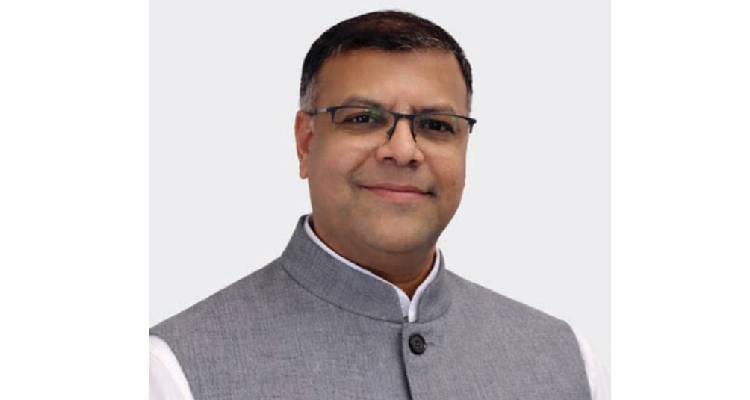
Rajagopal G, Group Director & CEO - KITES Senior Care, Lifebridge Group and Current Chairman, Association for Senior Living India ( ASLI) explains to Viveka Roychowdhury why India’s policy makers need to move toward integrated ageing frameworks as investments made today in preventive health, active ageing, community care, geriatric training, age-friendly infrastructure, and digital health systems will significantly reduce future healthcare burdens.


What are the latest statistics of India’s rapidly growing senior population? Are certain states ageing faster and how is this impacting delivery of healthcare services?
India is undergoing a major demographic transition. Today, nearly 11% of the population is above 60 years of age, and this is expected to cross 20% by 2050, translating into more than 320 million senior citizens.
However, ageing in India is not uniform. States such as Kerala, Tamil Nadu, Himachal Pradesh, and Punjab are ageing faster due to lower fertility rates, better life expectancy, and migration patterns. Kerala, in particular, is already approaching a stage where nearly one in five residents is elderly.
This shift is significantly impacting healthcare delivery. India’s healthcare ecosystem was historically designed around acute and episodic care, whereas ageing populations require long-term, continuous, and multidisciplinary support. We are witnessing a sharp rise in chronic diseases, dementia, frailty, mobility limitations, and the need for assisted living, rehabilitation, palliative care, and homebased healthcare. At the same time, caregiver availability is shrinking because of migration, nuclear families, and changing social structures.
The challenge is no longer just about increasing lifespan, but about supporting healthy ageing, dignity, and quality of life.
What has been India’s policy response to this demographic shift, at the centre and state level?
India’s policy response has evolved steadily over the years, though implementation remains uneven across states.
At the national level, initiatives such as the National Policy on Older Persons, the Maintenance and Welfare of Parents and Senior Citizens Act, Ayushman Bharat, and the National Programme for Health Care of the Elderly (NPHCE) have created an important foundation. There is also increasing recognition of geriatric care, palliative care, and community-based elder support within the public health framework.
What is changing now is that ageing is no longer viewed only as a welfare issue. It is increasingly being recognised as a healthcare, economic, urban planning, and social infrastructure priority.
At the state level, some governments have moved faster because demographic pressures are already visible. Kerala has emerged as one of the most proactive states with policies focused on active ageing, elderly healthcare, community support systems, and agefriendly governance.
The next phase of policymaking must move toward integrated ageing frameworks that combine healthcare, housing, social participation, mental wellness, digital inclusion, and financial security.
What were the triggers for the Kerala government’s recent announcement for a dedicated department for senior citizens? How has it been operationalised?
Kerala’s decision reflects demographic reality more than symbolism. The state has one of the highest proportions of elderly citizens in India, along with rising longevity, migration of younger populations, increasing numbers of elderly people living alone, and growing care dependency.
The announcement also comes at a time when the conversation around ageing has become more urgent.
Traditional family caregiving structures are changing, while demand for geriatric care, dementia support, assisted living, and community-based services is increasing rapidly.
Kerala has already built several elder-focused initiatives over the years, including Vayomithram, palliative care networks, senior citizen welfare programmes, and a dedicated elderly budget. The new department appears to be an effort to bring these efforts under a more coordinated administrative framework.
Operationally, the focus is expected to be on integrating healthcare, welfare delivery, protection mechanisms, and community support for senior citizens through a more structured governance model.
Was it modelled on similar initiatives in other countries?
While Kerala’s approach is rooted in local demographic realities, the broader thinking aligns with international trends where ageing is treated as a dedicated policy area rather than a fragmented welfare issue.
Countries such as Japan, Singapore, and several European nations have already developed specialised frameworks around ageing populations, long-term care systems, dementia support, assisted living, and age-friendly communities. Japan, in particular, has integrated healthcare, social support, and community care very effectively in response to rapid ageing.
Kerala’s model is not a direct replication of any one country, but it reflects a growing global recognition that ageing societies require specialised governance structures and long-term planning.
Is this scalable to a national ageing policy implementable in other states, given that each state has its own demographic realities?
Yes, but the implementation model cannot be identical across India.
India is ageing at different speeds across states. Southern states are already dealing with advanced ageing-related pressures, while some northern states are still relatively younger demographically. Therefore, policies must be adaptable rather than uniform.
What can certainly be scaled nationally is the broader framework:
- integrated geriatric healthcare,
- community care systems,
- caregiver support,
- dementia preparedness,
- age-friendly infrastructure,
- Insurance framework,
- and senior-focused social services.
States should have the flexibility to prioritise based on their demographic profile and healthcare capacity.
The larger lesson from Kerala is not merely the creation of a department, but the acknowledgement that ageing needs dedicated institutional attention rather than fragmented interventions.
At an individual level, has senior living and healthcare become more affordable?
Affordability has improved in some areas, but significant gaps remain.
Healthcare access has improved through insurance expansion, diagnostics, telemedicine, home healthcare, and government schemes. Similarly, senior living today is available across multiple formats — independent living, assisted living, memory care, and continuum care communities.
However, affordability remains a major concern for middle-income families. Long-term care is still largely financed out-of-pocket in India, and there is limited insurance coverage for assisted living, dementia care, rehabilitation, and chronic caregiving support.
At the same time, there is a growing shift in perception. Earlier, senior living was often viewed as niche or luxury-oriented. Today, more families are recognising it as a structured support ecosystem that combines healthcare access, safety, companionship, and quality of life.
The sector is gradually becoming more accessible, but India still requires far greater policy support, financing models, and longterm care planning to make eldercare affordable at scale.
What are the gaps in healthcare, housing, mental wellness, and assisted living for seniors? Can these be bridged by healthtech customised for senior citizens?
The biggest gap is that India’s systems are still not fully designed around ageing.
There is a shortage of geriatric specialists, trained caregivers, dementia support services, rehabilitation infrastructure, and organised long-term care systems. Mental wellness among seniors also remains underrecognised despite rising loneliness, depression, cognitive decline, and social isolation.
Housing is another major challenge. Most homes in India are not age-friendly in terms of mobility, accessibility, emergency response, or assisted care integration.
Healthtech can certainly help bridge some of these gaps. Remote monitoring, AI enabled diagnostics, wearable devices, medication adherence systems, teleconsultations, emergency response systems, and digital health records can improve continuity of care and independent living.
However, technology alone cannot solve ageing related challenges. Seniors still require human interaction, emotional support, community engagement, and trusted caregiving ecosystems. The future lies in combining technology with compassionate, person centred care models.
Are there any examples of public-private collaboration models or opportunities in elder care?
Japan’s “community integrated care” system is often seen as a strong example of effective publicprivate collaboration in elder care. The model brings together local governments, private care providers, hospitals, insurers, volunteers and technology firms to deliver decentralised and continuous support for seniors, while the government focuses on regulation, funding and policy direction.
There is significant opportunity for similar collaborations in India as well, particularly in states like Kerala, where strong local governance systems, a robust public health network and high literacy levels create a favourable environment for integrated eldercare models. Publicprivate-community partnerships can help expand access to senior living, rehabilitation, home healthcare, dementia care and assisted living services in a more sustainable and coordinated manner.
Given tight healthcare budget allocations and multiple health priorities, how can policymakers proactively prepare for the “silver economy” and longevity-led demographic shifts?
The key shift required is to stop viewing ageing only as a future welfare burden. Longevity is also an economic, healthcare, and social transformation opportunity.
India still has time to prepare proactively. Investments made today in preventive health, active ageing, community care, geriatric training, agefriendly infrastructure, and digital health systems will significantly reduce future healthcare burdens.
Policymakers should focus on:
- strengthening primary healthcare for chronic disease management,
- integrating geriatric care into public health systems,
- expanding palliative and home healthcare,
- building caregiver capacity,
- incentivising seniorfriendly housing,
- and supporting publicprivate partnerships in eldercare.
The “silver economy” will create demand across healthcare, technology, housing, wellness, financial services, mobility, and community living. Countries that prepare early will not only improve quality of life for seniors but also unlock major economic and employment opportunities.
Ultimately, the goal should not simply be adding years to life, but ensuring dignity, independence, participation, and wellbeing in later years.
[email protected]
[email protected]
- Advertisement -