

Expanding the reach of quality healthcare
Dr Rakesh Gupta, Chairman, Sarvodaya Healthcare, speaks to Kalyani Sharma about the evolving hospital landscape, expansion into Tier 2 markets, access to specialist care, technology adoption and the challenges of scaling healthcare delivery

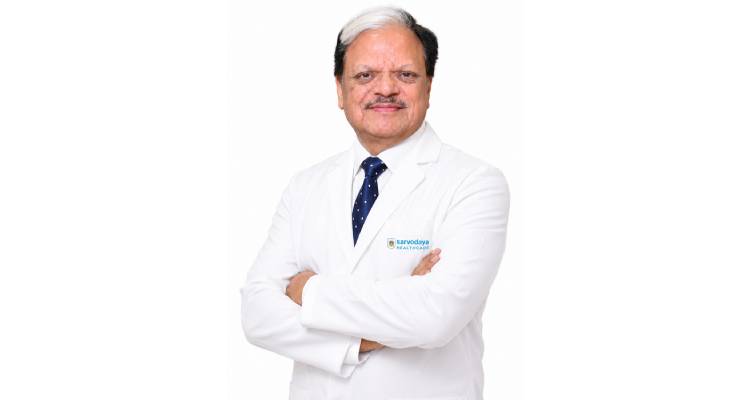

Sarvodaya’s acquisition of Nayati Hospital comes at a time when consolidation in the hospital sector is gaining pace. What does this acquisition tell us about the opportunities and challenges in the hospital market beyond the major metros?
The acquisition reflects a significant shift in Indian healthcare; quality superspeciality care is no longer limited to metropolitan cities. Tier 2 cities like Mathura have a large patient population, rising healthcare awareness, and increasing demand for advanced medical services, yet many patients still travel to Delhi NCR for complex treatments.
For Sarvodaya Healthcare, this is not simply an expansion; it is about extending a 35-year legacy of ethical, patient-centric healthcare to an underserved region. The opportunity lies in bringing experienced specialists, standardised clinical protocols, and advanced technology closer to patients, while the challenge is ensuring that metro-level quality is delivered consistently in a regional setting.
Taking over an existing hospital can involve challenges around infrastructure, clinical practices, workforce and operations. What are the key issues you expect to address as part of the transition in Mathura?
Our priority is to ensure a seamless transition for both patients and healthcare professionals. The focus is on integrating Sarvodaya’s clinical protocols, strengthening quality and patient safety standards, upgrading infrastructure and advanced medical technology, and creating a unified culture of compassionate, patient-first care.
Equally important is investing in people, supporting the existing workforce through training, multidisciplinary collaboration, and standardised operating processes so that patients receive the same trusted experience associated with every Sarvodaya hospital.
As hospital groups expand into Tier 2 and Tier 3 cities, how do you see the expectations and healthcare needs of patients in these markets changing?
Patients today are far more informed and quality-conscious than ever before. They expect experienced specialists, advanced diagnostics, transparent treatment, digital convenience, and compassionate care—all within their own city.
The biggest change is that people no longer want to travel hundreds of kilometres for quality healthcare. They want world-class treatment closer to home, where families can remain involved in care while reducing the financial and emotional burden of long-distance travel.
We aim to bring all such advanced facilities to Mathura to serve the people of the city and nearby areas. Everything from consultation to major surgeries, ER and critical care is available under one roof.
Access to specialists and experienced clinical professionals remains a concern outside the larger cities. What needs to change to make quality specialist care more consistently available in these markets?
Building infrastructure alone is not enough; healthcare ecosystems must attract and retain clinical talent. That requires modern medical facilities, advanced technology, collaborative clinical environments, continuous medical education, and strong institutional protocols.
At Sarvodaya Hospital, Mathura, we have combined a dedicated team of full-time specialists with the clinical expertise and standardised care pathways developed across Sarvodaya Healthcare. This allows patients in Western Uttar Pradesh and peripheral areas to access consistent, evidence-based superspeciality care locally.
Hospitals are investing heavily in technology, but adoption does not always translate into better patient outcomes. Where do you think technology is genuinely making a difference in hospital care, and where does it risk becoming an unnecessary expense?
Technology creates value only when it improves clinical outcomes and patient experience. Its greatest impact is in precision diagnosis, minimally invasive surgery, advanced cancer treatment, robotic joint replacement, digital patient records, and continuity of care through integrated healthcare systems.
However, technology should never become an end in itself. Investing in expensive equipment without skilled clinicians, robust protocols, or appropriate patient selection does little to improve outcomes. The real differentiator is the combination of expert doctors, evidence-based medicine, and meaningful technology.
With consolidation and expansion continuing across India’s hospital sector, what do you see as the bigger challenges for hospital operators over the next three to five years, and how might these affect the way healthcare is delivered?
The next few years will be defined by three major priorities: maintaining quality while expanding, addressing the shortage of skilled healthcare professionals, and making advanced care more affordable and accessible.
Successful hospital groups will be those that scale responsibly through standardised clinical governance, digital integration, preventive healthcare, and patient-centric models of care. Ultimately, healthcare delivery will become more regionalised, bringing superspeciality services closer to communities rather than expecting patients to travel to metropolitan centres for every complex treatment.
- Advertisement -
