

Making metro-grade diagnostic care accessible and affordable across India
V Govindarajan Founder and Managing Director, Aarthi Scans & Labs, reflects on his journey of expanding affordable, metro-grade diagnostic services across India and explains how technology, operational efficiency, and a patient-centric approach can help bridge the country's diagnostic access gap

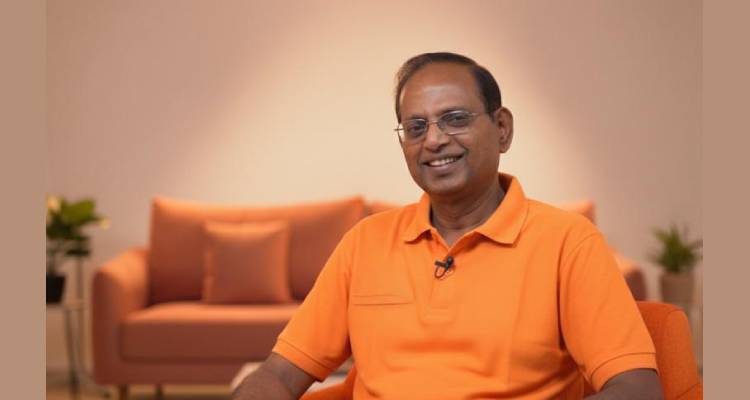

When I started my journey in diagnostics over two decades ago, one question stayed with me: why should a patient from a small town have to travel overnight to a metro, spend a month’s income on transport and lodging, and still struggle to get a single scan done? The cost of diagnosis was not just financial. It was physical, emotional, and often deeply disruptive for families. It delayed treatment, pushed households into debt, and left many people feeling that modern healthcare was simply not meant for them. Today, as India’s health system evolves, making metro-grade diagnostic care accessible and affordable across the country is no longer just an aspiration. It is a responsibility.
The affordability crisis in diagnostics
Despite progress in public health schemes and wider insurance coverage, out-of-pocket expenditure still accounts for a significant share of health spending in India, and diagnostics remains a major part of that burden. In my experience, many patients do not avoid tests because they distrust doctors. They avoid them because they are afraid of the bill. That hesitation can have serious consequences: a delayed diagnosis often turns a manageable condition into a life-threatening one, while the cost of treatment rises sharply. If diagnosing a disease becomes too expensive for the patient to act on it, then the system has failed in one of its most basic duties.
Balancing affordability and sustainability
Aarthi Scans and Laboratories was built from this reality. What began as a modest effort to bring MRI, CT, and ultrasound closer to people in southern Tamil Nadu has grown into one of India’s integrated diagnostic networks, with a presence across multiple states and centres. Our aim has always been simple: to deliver the same quality of work that metro hospitals offer, at a lower cost, without compromising on safety or accuracy.
To achieve this, we adopted a high-volume, low-margin model. By standardising protocols, centralising reporting, and improving equipment utilisation, we were able to keep prices significantly lower than those of many private diagnostic centres in comparable markets. That model works only when efficiency is paired with discipline, consistency, and a long-term view of patient trust.
One India, one standard of care
Everything we do is guided by one core belief: quality should never be a postcode privilege. A patient in a Tier 3 town deserves the same standard of care and access to medical testing as a patient walking into a flagship centre in any metro. That is why we continue to invest in advanced imaging equipment and stringent accreditation processes across our network, from Chennai to districts beyond the major urban corridors. We also believe in transparent, standardised pricing regardless of geography. A patient should not pay more simply because they live in a place with fewer options.
Technology as the great equaliser
Modern imaging platforms, supported by artificial intelligence and cloud-based reporting, now allow consistent quality to be delivered across a distributed network. A radiologist in Bengaluru can review scans from a town hundreds of kilometres away with the same precision and turnaround time as if the patient were sitting next door. As AI tools mature, they can help triage cases, flag abnormalities, and support radiologists in managing higher volumes without compromising quality. The goal is not to replace clinicians. It is to make sure expertise reaches the patient faster.
Taking diagnostics to all of India
The real progress in Indian diagnostics will not come from opening more centres in large cities alone. It will come from expanding deeper into Tier 2 and Tier 3 towns, as well as peri-urban areas where demand is high and access remains uneven. When quality testing becomes available locally, more people use it, and referrals to larger city centres become more timely and clinically appropriate. But this is not as simple as installing machines in new locations. Reliable power, trained staff, maintenance support, and connected reporting systems are equally important. Only when all these pieces come together can metro-grade diagnostics truly reach India beyond its urban core.
India stands at an important inflection point. With the right technology, business discipline, and policy support, diagnostics can become more inclusive, more efficient, and more patient friendly. The challenge is ensuring that progress does not remain confined to large cities. From my own journey, I have seen how even one MRI centre in a small town can improve clinical outcomes and strengthen community confidence in the healthcare system. Accessible, cost-effective, and high-quality diagnostics can quietly transform healthcare from the ground up. That is the future we are building toward, and it is the only one worth building.
- Advertisement -
