

Speed without reliability is counterproductive in healthcare
MrMed is expanding its city-based fulfilment model to improve availability and delivery timelines for patients managing complex health conditions. Devashish Singh, CEO and Co-Founder, MrMed in an interview with Kalyani Sharma, discusses the company's Bengaluru expansion, the challenges of specialty medicine distribution and the role of technology in healthcare fulfilment

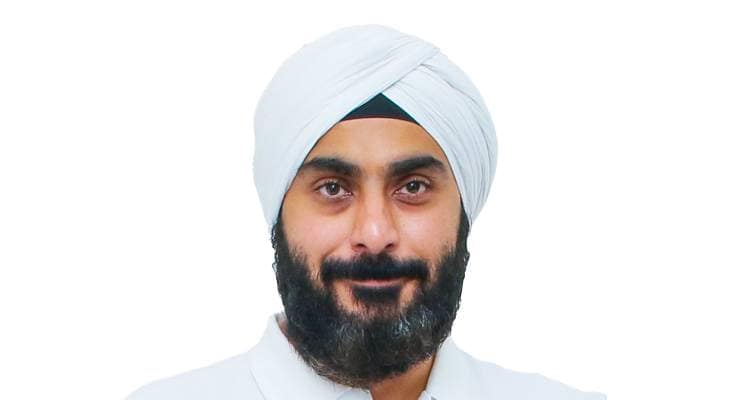

MrMed is positioning its Bengaluru hub as a blueprint for expansion. What factors give you confidence that this model can be adapted effectively across cities with varying demand and supply dynamics?
The Bengaluru model was built around four things that don’t depend on any single city’s characteristics: localised hub inventory, deeper sourcing alliances with city-level distributors and manufacturers, technology-streamlined operations across billing, packing, and dispatch, and a reliable last-mile delivery network.
We chose Bengaluru as the proving ground because the demand intensity here would stress-test the model under real conditions. What it validated is that the operational logic holds at volume and across a high-complexity catalogue. We’re now applying the same template to Delhi and Chennai, followed by Guwahati, Mumbai, and Hyderabad.
Where cities differ, we’re not guessing. Five years of order data gives us a detailed read on demand patterns by geography, so inventory at each hub is optimised for that city’s catalogue, not simply held in bulk. The infrastructure gets city-fitted. The model stays consistent.
The 24-hour delivery promise across multiple pincodes is a significant commitment. How does MrMed plan to maintain consistency and reliability as it scales this service?
The 24-hour commitment isn’t sustainable if it’s only built on logistics speed. Consistency has to run across the entire order lifecycle: from real-time availability confirmation through billing, dispatch, and last-mile delivery. We’ve addressed each stage: higher inventory holding so availability isn’t the bottleneck, reduced procurement lag through local sourcing alliances, and technology-driven internal operations that reduce manual errors and delays.
Coverage in Bengaluru and Chennai already spans approximately 110 and 120 pincodes respectively, with full geographic coverage expected within the next month or two. The operational challenge was never just speed. It was making sure speed didn’t come at the cost of reliability.
Despite the growth of digital health platforms, access to specialty medicines can still be uneven. What are some of the key challenges that continue to impact availability?
Specialty and super-specialty medicines face structural challenges that most general e-pharmacies don’t encounter: complex sourcing, strict government regulatory and pharmaceutical company specific patient assistance programs related compliance, cold-chain requirements, and concentration of supply within large hospital pharmacies. That last point is the one that concerns us most. A patient managing cancer, an autoimmune condition, or a rare disease isn’t just inconvenienced by unavailability, they’re at clinical risk.
A missed dose in an active treatment cycle has real health consequences.
MrMed was built specifically around this problem: reaching patients who previously had no option outside geographically concentrated hospital pharmacies, through a platform that combines verified supply, prescription validation, and end-to-end fulfilment for high-value, tightly regulated medicines.
While speed is an important factor, consistency and accuracy are equally critical in healthcare delivery. How can current models better balance these priorities?
Speed without reliability is counterproductive in healthcare. It creates expectations that, when unmet, erode trust and interrupt treatment continuity. The way we think about it: speed has to be built on top of operational consistency, not traded off against it. That means getting the full order journey right, verifying availability before confirming the order, handling prescription validation accurately, ensuring correct packing and dispatch, delivering within committed timelines.
Our technology investments in Bengaluru didn’t just make us faster. They reduced error rates across the fulfilment process.
For a patient on immunosuppressants or a GLP-1 therapy, receiving the right medicine on time, every time, is the standard we’re working toward, not an aspirational one.
Many platforms are working to optimise last-mile delivery. What are some of the practical challenges in the specialty medicine segment?
Last-mile delivery in specialty medicines is a materially harder problem than in general e-commerce or even standard pharma. Prescription validation, controlled substance compliance, and documentation requirements add regulatory layers that slow fulfilment if not integrated tightly into operations.
Many specialty medicines have cold-chain requirements and low order frequency, which makes hub-based inventory decisions more complex. And economically, delivering high-value, low-volume medicines at speed requires investment in owned infrastructure that most platforms aren’t willing to make.We’ve addressed this through a combination of strategic delivery partnerships and our own agent network with owned vehicles and storage.
The goal is reliability that doesn’t depend entirely on third-party availability.
Technology is playing a growing role in healthcare delivery. What are some of the limitations or considerations when using tech to streamline prescription validation and fulfilment?
Technology is a strong enabler here, but it has to operate within boundaries that don’t apply in most other sectors. Prescription validation has regulatory and clinical dimensions; technology can accelerate the process, but it cannot replace qualified review. Errors at that step have patient safety implications.
On the fulfilment side, our investments have focused on streamlining billing, packing, and dispatch, reducing manual intervention and processing time. The meaningful constraint that remains is on the supply side: for ultra-rare drugs or low-frequency SKUs, sourcing timelines of 24 to 48 hours are sometimes unavoidable regardless of how efficient the downstream process is.
Technology’s job is to minimise lag everywhere it can be minimised, surface availability accurately in real time, and ensure the clinical and compliance steps are executed without error, not to shortcut them.
- Advertisement -
