

Building India’s emergency care ecosystem: The next healthcare priority
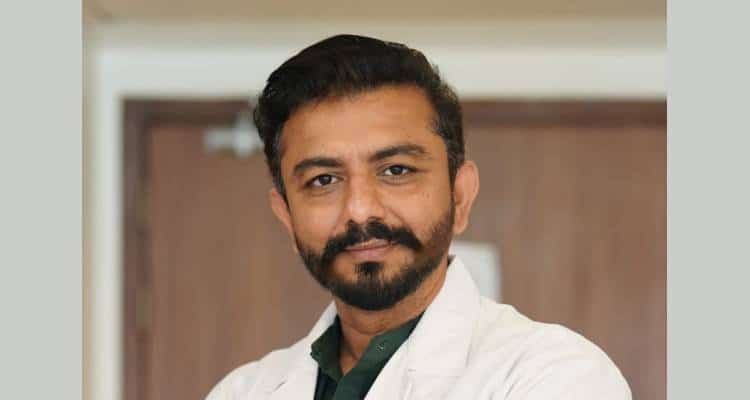
Dr Sandeep B. Gore, Director-Emergency Medicine at Fortis Hospital Mulund, Chairman of the Emergency Medicine Council at Fortis Healthcare and Organising Chairman of EMCON 2026, highlights how Emergency Medicine has evolved into one of the most critical pillars of modern healthcare


In the world of modern healthcare, the Emergency Department is often called the “front door of the hospital.” But it is far more than that. It is the first battlefield where life, time, and decision-making converge, and the most decisive point of contact a patient will ever have with the healthcare system.
Every minute in emergency medicine carries enormous clinical significance. A blocked coronary artery, a ruptured intracranial vessel, a septic patient going into shock, a polytrauma victim fighting for survival; these conditions do not wait for appointments or referrals. They arrive unannounced, often in the most fragile state. Emergency Medicine is the discipline designed to meet these moments head-on.
For decades, emergency care, particularly in India, was fragmented. Patients were received by whichever specialty happened to be available, and critical early minutes were lost navigating departments. The evolution of Emergency Medicine as a dedicated specialty has fundamentally changed that. Emergency physicians are trained to recognise, resuscitate, stabilise, and initiate definitive pathways for time-sensitive conditions. In this specialty, the first decision very often determines the final outcome.
The golden minutes that change lives: Emergency Medicine is built on the principle of time-bound, protocol-driven care. Consider the most common life-threatening presentations:
-
Acute Myocardial Infarction — Early ECG interpretation and rapid reperfusion can save myocardium and lives
-
Acute Stroke — Every minute of untreated ischaemia destroys nearly two million neurons. Time is brain, quite literally
-
Sepsis and Septic Shock — Early recognition and bundle-driven resuscitation dramatically reduce mortality
-
Trauma — The golden hour is not a metaphor. Immediate resuscitation and rapid surgical pathways are the difference between survival and loss
Across the world, when emergency care is organized, physician-led, and protocol-driven, mortality decreases, complications are reduced, and patient outcomes improve, consistently and measurably.
The science of early recognition: Modern Emergency Medicine is a highly protocolized, evidence-driven, resuscitation-based specialty. Today’s emergency departments integrate rapid diagnostic tools, advanced monitoring, and precision clinical pathways in ways that were unimaginable a generation ago.
Point-of-care ultrasound (POCUS) has revolutionized bedside diagnosis. Within minutes, an emergency physician can identify fluid-filled lungs, severe cardiac dysfunction, internal bleeding, cardiac tamponade, or pneumothorax; these conditions previously required multiple imaging referrals and precious time was lost. High-sensitivity troponin protocols now allow rapid rule-in or rule-out of myocardial infarction within hours rather than days. Emergency Medicine today is not merely reactive. It is precision-driven resuscitation and acute care at its most demanding.
The orchestrator of acute care: A modern hospital functions like a complex orchestra. Specialists are masters of their respective instruments, but the emergency physician is the conductor, coordinating the symphony at the moment of greatest chaos.
This influence extends well beyond the ER. Strong emergency systems improve hospital efficiency, patient flow, ICU utilization, and overall healthcare outcomes at an institutional level. Countries that have invested in robust emergency medicine infrastructure have demonstrated measurably improved survival rates. In India, where acute medical emergencies represent an enormous share of the disease burden, strengthening emergency care is the most urgent priority in healthcare today.
Building India’s emergency care ecosystem requires a coordinated approach that extends far beyond hospital walls. Timely emergency response depends on seamless integration between ambulance services, trained first responders, trauma networks, emergency departments, and emergency care pathways. In a country as vast and diverse as India, strengthening this ecosystem also means improving emergency access in tier-2 and tier-3 cities, standardizing emergency response protocols, investing in paramedic training, and creating public awareness around recognizing medical emergencies early. A robust emergency care ecosystem is not merely a healthcare upgrade; it is a national public health priority that directly determines survival, disability outcomes, and the resilience of the healthcare system itself.
There is a significant demand-supply gap in emergency departments across the healthcare system, with less than 10% of the requirements currently being met. Addressing this gap will require a collaborative effort between governing bodies and healthcare providers, with a strong focus on capacity building, infrastructure development, and specialized training programs.
The human dimension: Emergency Medicine is also one of the most profoundly human branches of medicine. Emergency physicians meet patients and families at their most vulnerable time, when fear, uncertainty, and urgency converge in the same moment. What that moment demands is calm leadership, courageous disposition, clear communication, and compassionate care; these need to be delivered simultaneously, not sequentially.
The emergency physician must make complex decisions rapidly while reassuring an anxious family, coordinating a multidisciplinary team, and resuscitating a patient — all at once. It is a discipline where science and humanity meet, unrehearsed, at the bedside.
The future of emergency medicine: The future of this specialty will be shaped by innovation and systems thinking. AI-assisted clinical decision-making, AI-integrated electronic medical records for real-time governance, tele-emergency networks, advanced pre-hospital care, and data-driven quality dashboards are already transforming emergency care delivery. POCUS integration in resuscitation, simulation-based training, and ECMO-capable emergency departments are redefining what emergency care can achieve.
The goal is simple: deliver the right intervention to the right patient at the right time.
A call to the medical community: Emergency Medicine cannot function in isolation. It thrives through collaboration; from the general practitioner who recognizes early warning signs, to the super-specialist who delivers definitive care. The entire medical ecosystem determines the success of emergency systems.
For India, strengthening Emergency Medicine means investing in training programs, standardized protocols, integrated trauma systems, and pre-hospital emergency networks. Because when an emergency occurs, the healthcare system is judged by its preparedness. Infrastructure matters, but trained manpower and well-placed systems matter more.
Behind every emergency patient is a story: a heart that must beat again, a brain that must be protected, a life that must return to its family. Emergency Medicine is the first promise made to that life. Behind every successful resuscitation is an emergency physician who chose not to give up.
We do not merely treat disease. We begin survival. We are the masters of resuscitation.
World Emergency Medicine Day on 27th May is a commemoration of that indomitable spirit, of emergency medicine doctors working tirelessly across the globe, often unseen, always essential.
EMCON 2026 — 28th National Conference of the Society for Emergency Medicine India: To advance public and policy awareness of Emergency Medicine’s vital role in modern healthcare, we are proud to host EMCON 2026 — the 28th National Conference of the Society for Emergency Medicine India — in Mumbai on 30–31 October and 1 November 2026, Mumbai. This prestigious conference will bring together emergency medicine experts, leaders, innovators, and strategists from across India and around the world to share best practices, debate new advances, and shape the future of the specialty.
- Advertisement -
